Wednesday, October 7, 2026
Subscribe
The Brief | Namibia's Leading Business & Financial News
  • Home
  • Companies
    • Finance
    • Agriculture
    • Technology
    • Property
    • Trade
    • Tourism
  • Business & Economy
  • E-PAPERreader
  • Mining & Energy
  • Opinions
    • Analysis
    • Columnists
  • Africa
No Result
View All Result
The Brief | Namibia's Leading Business & Financial News
  • Home
  • Companies
    • Finance
    • Agriculture
    • Technology
    • Property
    • Trade
    • Tourism
  • Business & Economy
  • E-PAPERreader
  • Mining & Energy
  • Opinions
    • Analysis
    • Columnists
  • Africa
No Result
View All Result
The Brief | Namibia's Leading Business & Financial News
Subscribe
No Result
View All Result
Home Latest

Namibia’s Green Schemes spend up to N$1 million each a month on power

by reporter
November 10, 2025
in Latest
10
A A

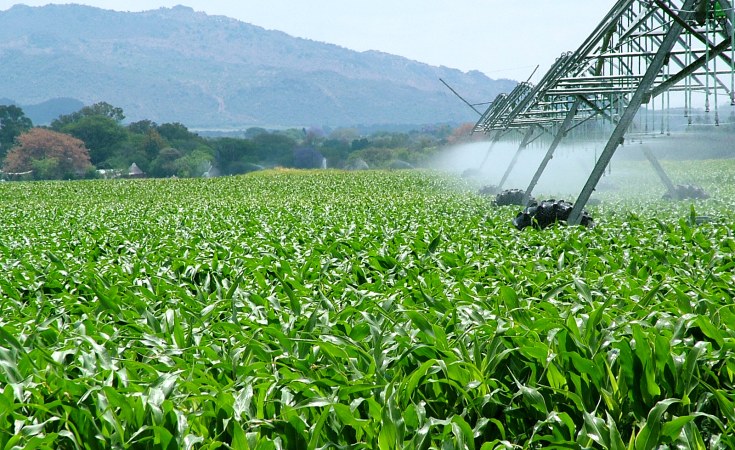
Namibia’s Green Scheme irrigation projects are spending up to N$1 million each per month on electricity, with power costs now accounting for as much as 35% of total revenue, according to the Ministry of Agriculture, Water, Fisheries and Land Reform.

The Ministry has warned that the rising cost of electricity threatens the long-term sustainability of the country’s irrigated agriculture programme, calling for urgent and sustainable energy solutions to reduce operating costs.

Speaking at the National Workshop on Green Schemes in Rundu, the Ministry’s Executive Director, Ndiyakupi Nghituwamata, said embracing renewable energy is critical to ensuring food security and affordability in irrigation farming.

“The escalating cost of electricity continues to place immense financial strain on farmers and threatens the overall sustainability of our Green Schemes. Each project spends close to one million Namibia dollars per month on electricity alone — a burden that severely impacts profitability and long-term operational viability,” Nghituwamata said.

She said the workshop, held under the theme “Balancing Energy Costs and Food Security – Sustainable Tariff Solutions for Green Schemes,” aimed to identify practical measures to address high energy costs that have undermined agricultural productivity.

“Our discussion today is not merely about reducing energy costs but about securing the future of food production in Namibia. Energy affordability and efficiency are strategic enablers for agricultural development, poverty reduction and rural industrialisation,” Nghituwamata added.

She said the Ministry has invested in improving energy efficiency through technologies such as Variable Speed Drives (VSDs), power factor correction systems and high-efficiency motors. However, electricity costs remain a persistent challenge, prompting the need for new approaches, including solar hybrid systems, energy storage and specialised agricultural tariffs.

“This workshop gives us an important opportunity to determine and execute practical interventions that can improve energy efficiency and reduce operational costs. These may include special agricultural tariff structures and promoting public-private partnerships in renewable energy generation,” she said.

Abraham Hangula, Deputy Director for Energy Planning and Research in the Ministry of Mines and Energy, said energy policy reforms must align with national food security goals, stressing that reliable and affordable power is central to agricultural resilience.

“Food security and affordable, reliable electricity must progress together. They are not competing priorities but mutually reinforcing goals that shape the well-being of our citizens and the strength of our economy,” Hangula said.

He said the Ministry of Mines and Energy, in collaboration with the Electricity Control Board (ECB), NamPower, NORED, and the Ministry of Agriculture, is reviewing tariffs for Green Schemes in line with Cabinet’s directive to enhance food production. He added that the challenge lies not only in tariff levels but also in operational efficiency and energy management.

“The challenge is not only about the tariff level but about how electricity is used. When pumps and irrigation systems start simultaneously or during peak hours, the measured power demand rises sharply, resulting in high charges. Smarter scheduling and better operational management can make a major difference,” Hangula explained.

He said integrating solar power for self-consumption during the day could ease daytime energy costs and reduce strain on the national grid.

“Self-generation through solar energy can provide relief if it is properly managed. When solar is used for self-consumption during the day, it can reduce daytime costs and relieve strain on the grid,” Hangula said.

Hangula added that additional measures such as water storage systems and energy-efficient equipment would further strengthen sustainability and productivity at Namibia’s Green Schemes.


author avatar
reporter
See Full Bio
Previous Post

Appointment of Information Commissioner set to boost procurement transparency

Next Post

Namibia to raise N$28.5 billion locally to support climate projects

Must Read

Blue citizen ID card being held, featuring a QR code and printed personal details on a light background
Latest

Rural access concerns emerge over Namibia’s planned electronic IDs

October 6, 2026
Wooden letter blocks spell 'GRANTS' on a desk with money in the foreground.
Latest

Basic income grant registrations stalled as funding runs out

October 6, 2026
Side-by-side portraits: an older man in a dark suit and tie on the left, and a woman wearing glasses and a colorful patterned top on the right.
Latest

OPM moves to unlock N$15bn investment projects stalled by bottlenecks

October 5, 2026
DBN rules out increasing stake or buying Ohorongo Cement
Latest

High Court overturns minister’s approval of Ohorongo cement merger

October 5, 2026
Govt moves to prioritise local manufacturers in procurement overhaul
Latest

Only 84 of 260 public entities submit procurement plans on time

October 5, 2026
Three people at an award ceremony holding a large check from Capricorn Foundation for ₦500,000 to One Economy Foundation, smiling on stage.
Latest

Capricorn Foundation supports skills development for 2,400 youths

October 5, 2026
Load More

Related News

Barclays finally exits Absa

Barclays finally exits Absa

September 2, 2022
Who owns Namibia’s green future?

Who owns Namibia’s green future?

January 24, 2025
Windhoek records lowest value of approved building plans in 11 years

Windhoek records lowest value of approved building plans in 11 years

February 5, 2023

Browse by Category

  • Africa
  • Agriculture
  • Analysis
  • Business & Economy
  • Columnists
  • Companies
  • e-edition
  • Finance
  • Finance
  • Fisheries
  • Green Hydrogen
  • Health
  • Investing
  • Latest
  • Market
  • Mining & Energy
  • Namibia
  • namibia
  • News
  • Opinions
  • Property
  • Retail
  • Technology
  • Tourism
  • Trade
The Brief | Namibia's Leading Business & Financial News

The Brief is Namibia's leading daily business, finance and economic news publication.

CATEGORIES

  • Business & Economy
  • Companies
    • Agriculture
    • Finance
    • Fisheries
    • Health
    • Property
    • Retail
    • Technology
    • Tourism
    • Trade
  • e-edition
  • Finance
  • Green Hydrogen
  • Investing
  • Latest
  • Market
  • Mining & Energy
  • namibia
  • News
    • Africa
    • Namibia
  • Opinions
    • Analysis
    • Columnists

CONTACT US

Cell: +264814612969

Email: newsdesk@thebrief.com.na

© 2026 The Brief | All Rights Reserved. Namibian Business News, Current Affairs, Analysis and Commentary

Welcome Back!

Login to your account below

Forgotten Password?

Retrieve your password

Please enter your username or email address to reset your password.

Log In
No Result
View All Result
  • Home
  • Companies
  • Mining & Energy
  • Business & Economy
  • Opinions
    • Analysis
    • Columnists
  • Africa

© 2026 The Brief | All Rights Reserved. Namibian Business News, Current Affairs, Analysis and Commentary

This website uses cookies. By continuing to use this website you are giving consent to cookies being used. Visit our Privacy and Cookie Policy.