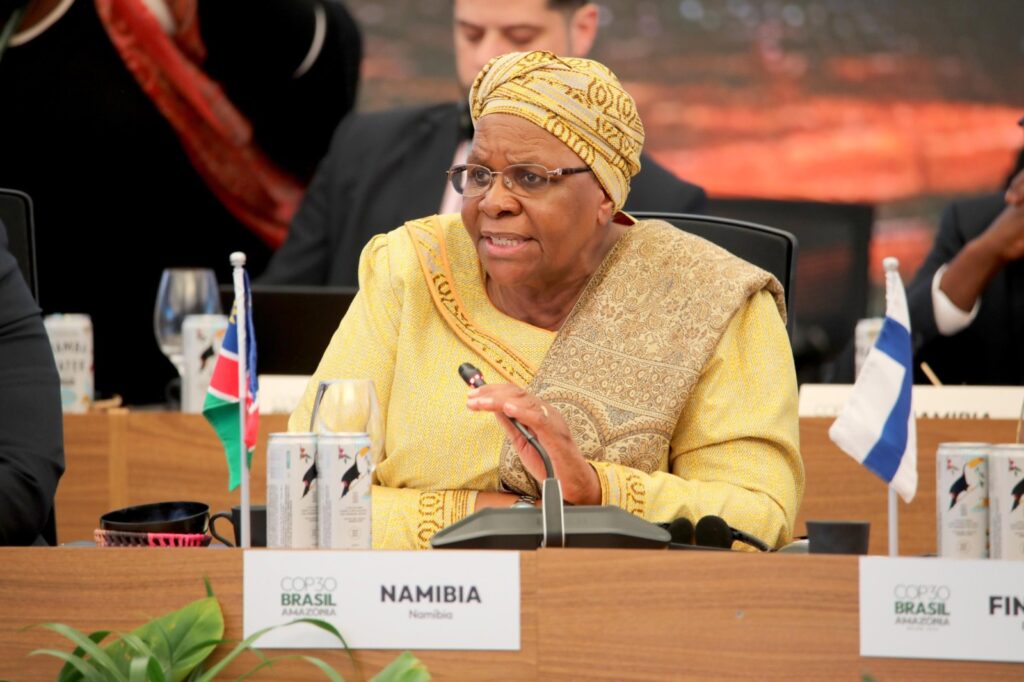
Namibia plans to raise N$28.5 billion (US$1.5 billion) from domestic resources to support climate projects under its updated Nationally Determined Contributions (NDCs), President Netumbo Nandi-Ndaitwah announced at the COP30 Heads of State Summit.
She said the domestic funds will complement international support to implement projects aimed at cutting emissions and strengthening climate resilience by 2030.
“Adaptation in these sectors requires an estimated six billion USD, of which about ninety percent depends on international support.
At the same time, mitigation across various sectors is estimated to cost US$9 billion, of which 10% is expected to come from domestic resources,” Nandi-Ndaitwah said.
The President said Namibia’s total climate financing requirement stands at US$15 billion (N$285 billion), with approximately ten percent expected to come from international partners.
She added that Namibia’s local mobilisation efforts will focus on renewable energy, green industry, agriculture, and climate-resilient infrastructure.
“In order to meet its targets on climate change by 2030, a robust resource mobilisation based on common but differentiated responsibility must be implemented without failure,” she said.
Nandi-Ndaitwah said domestic financing will prioritise projects already underway, including the Oshivela Green Iron Plant, climate-resilient agriculture, and integrated water resource management initiatives.
She noted that these efforts are intended to safeguard livelihoods and promote green industrialisation while maintaining Namibia’s position as a net carbon sink.
The President said the mobilisation of local funds would depend on targeted public investment, private sector participation, and partnerships with financial institutions to accelerate project delivery.
She also stressed that while Namibia is demonstrating leadership through its domestic commitments, international partners must honour their pledges to ensure developing nations can meet global climate targets.
“We call upon Member States, multilateral development banks and private investors to provide predictable, sustainable and accessible finance at affordable cost, to support technology transfer and to strengthen national and community capacities,” Nandi-Ndaitwah said.
She further urged that the New Collective Quantified Goal on Climate Finance (NCQG) ,set at USD 1.3 trillion, be operationalised with clear mechanisms for direct access by developing countries. “The future will not judge us on the number of COP conferences we hosted, but on the concrete actions we have taken to save mother earth for her to be able to take care of us now and in future,” President Nandi-Ndaitwah said.