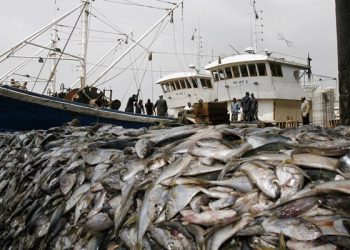
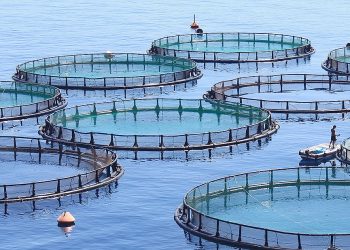
The Namibian government generated approximately N$300 million in revenue from the fisheries sector during the 2024-2025 financial year.
According to the Minister of Agriculture, Fisheries, Water and Land Reform, Inge Zaamwani, this revenue came from quota levies and licence fees collected under Section 44 of the Marine Resources Act (Act No. 27 of 2000).
“In terms of fisheries administration, during the 2024/2025 financial year, the fisheries sector generated approximately N$300 million in revenue for the government. This marks a significant increase from the N$264 million collected in 2023/2024 financial year,” she said.
The Minister noted that the increase in revenue is indicative of the sector’s improved efficiency and productivity.
“This positive trend in revenue generation underscores the growing efficiency and productivity of the fisheries sector, as well as the successful implementation of policies that promote sustainability and economic growth,” Zaamwani said.
Levies collected from the fishing industry were also channelled into the Marine Resources Fund, which supports research, education, and workforce training.
“This fund is specifically dedicated to supporting crucial activities related to fisheries research, training, education, and development,” the minister said.
Meanwhile, over 2,000 surveillance patrols and inspections were conducted along-and-on sea and rivers/waterbodies within the national jurisdiction during the reporting period, resulting in 679 fines totalling N$365,790 and 22 criminal cases being opened.
“This effort equates to a measure of about 70 percent efficiency in executing the mandate of reducing Illegal, Unreported, and Unregulated (IUU) fishing to 10 percent of expected transgressions,” the minister said.
She attributed this to collaborative enforcement carried out in coordination with the Namibian Navy, Namibian Police, and regional partners.
For the 2025/2026 financial year, N$99 million has been allocated to support the ministry’s surveillance operations, which aim to conduct 3,076 patrols and maintain an 80% deployment rate of patrol craft.
“The objective is to reduce incidences of IUU fishing by 10 percent relative to recent recordings while ensuring that patrol craft are available for at least 80 percent of the scheduled operations,” Zaamwani added.