African Aquaculture Company (AAC) has signed a partnership with Norway’s AKVA group to establish Africa’s first commercial sea-based salmon farming facility at Lüderitz Bay.
The project, licensed for 51,000 tonnes of production, is set to become one of the largest aquaculture ventures in the southern hemisphere.
AAC Chief Executive Officer Helge Krøgenes said the collaboration builds on more than two years of joint development, during which the concept was tailored to local conditions.
“For us it has been crucial to align with a solid partner who can contribute with experience, technology and understanding of international deliveries. AKVA group shares our vision of building a robust industry in Namibia, and this collaboration agreement is an important first step,” he said.
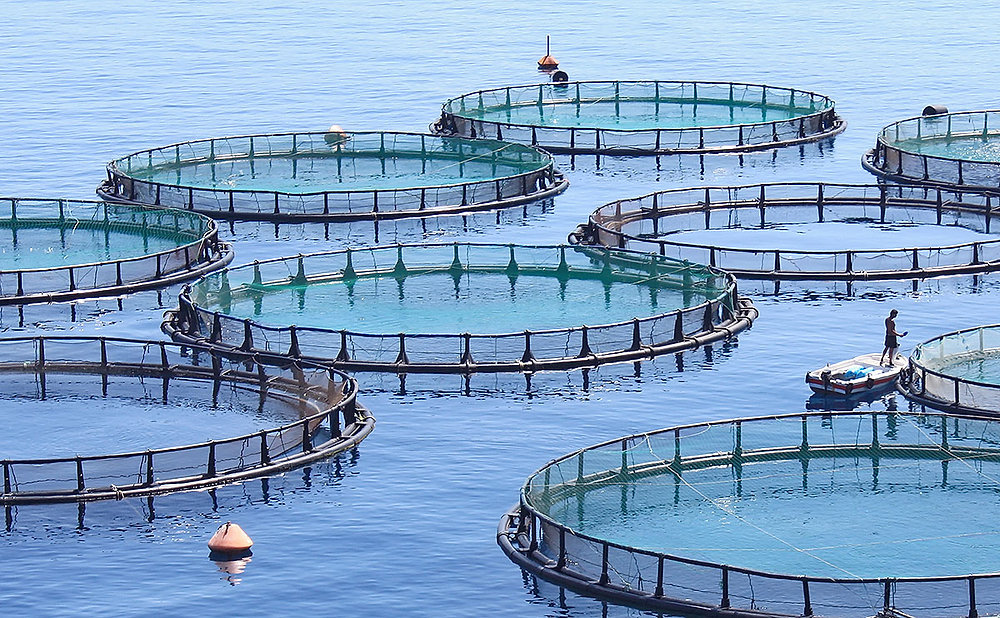
Under the agreement, AKVA will supply five floating pens equipped with mooring systems, automated feeding, cameras and digital monitoring technology. The first smolt will be stocked in 2026, with the inaugural harvest expected in 2027.
Krøgenes emphasised the wider significance of the project.
“This is not only about producing salmon. It is about introducing a new industry to a new continent in a responsible way – with environmental care, local value creation and strong partners by our side,” he said.
Export Director at AKVA group, Kjell Egil Riska, said Lüderitz Bay’s ocean conditions made it suitable for salmon farming.
“We have worked closely together to find solutions suited both to the environment and to local challenges. The collaboration agreement marks the beginning of a development process that can pave the way for future deliveries and a new industry in Africa,” he said.
Riska highlighted that Lüderitz Bay provides stable ocean currents, year-round temperatures of 10–16°C, and existing infrastructure such as a harbour, processing facilities and logistics support.
AAC’s long-term plan is to scale up production to 100,000 tonnes of Atlantic salmon through both offshore and onshore facilities.
The total investment is estimated at N$8.5 billion, with around N$100 million earmarked for the Offshore Pilot Phase.
Full-field offshore development will require N$1.25 billion, with a production capacity of 50,000 tonnes across three sites, each hosting 16 cages.