

Namibia’s agricultural small and medium-sized enterprises (SMEs) are struggling to access financing as traditional banking requirements, including collateral and fixed repayment schedules, continue to exclude businesses from credit markets.
Stellenbosch University Business School Professor Elizabeth Nanziri said conventional lending models were failing to accommodate the financial needs of agricultural SMEs, particularly those exposed to drought, unpredictable rainfall and other climate-related risks.
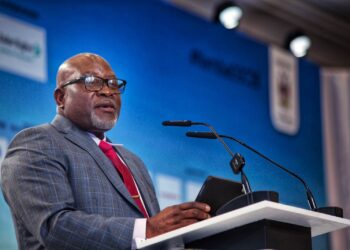
Speaking during a presentation titled Financing the Green Horizon: Bridging SME Gaps for Climate-Smart Agribusiness in Namibia, Nanziri said many agricultural businesses were unable to secure funding because they did not meet commercial banks’ lending requirements.
She said these enterprises often fell into the financing category known as the “missing middle”, where businesses were too large to qualify for certain microfinance programmes but lacked the financial capacity and collateral required by commercial banks.
“So your SMEs that are in the middle [they] cannot be funded by either of them. They are not too small to be funded by the government or any entity that is working through the government, and they’re not large enough or relatively, you know, lucrative to get the funding from a private sector,” she said.
Nanziri said the financing gap was limiting the ability of agricultural SMEs to expand production, invest in climate-smart technologies and improve productivity.
She explained that commercial banks generally prioritised borrowers with predictable cash flows, sufficient collateral and the ability to meet fixed repayment schedules, conditions that many agricultural enterprises struggle to satisfy.
The situation was being compounded by prolonged droughts, changing rainfall patterns and bush encroachment, which increased the risks associated with agricultural lending.
“Unfortunately, traditional balance sheet lending models treat these environmental issues as high risk. And what does this do? It makes these commercial banks rather shrink the credit, you know, at the time or in exactly the places where it should be dispersed or expanded, which is a challenge…But the core hurdle is not the lack of the technological solution. It is actually the structural financing gap,” she said.
Nanziri said conventional repayment structures also failed to account for the seasonal nature of agriculture, where businesses often require extended production periods before generating sufficient revenue to service loans.
She added that the absence of specialised agricultural risk assessment tools among financial institutions contributed to higher borrowing costs and restricted access to finance.
To address the financing gap, Nanziri called for the introduction of alternative funding mechanisms, including blended finance, agricultural credit guarantee schemes and climate-related insurance products.
She said blended finance could combine public and private capital to reduce lending risks and encourage commercial financial institutions to support agricultural enterprises that would otherwise struggle to qualify for financing.
Nanziri also proposed targeted credit guarantee schemes designed specifically for climate-smart agricultural businesses, alongside weather-index insurance products.
Under weather-index insurance, farmers would receive payouts when predetermined weather conditions, such as rainfall falling below an agreed threshold, were recorded.
“The second one is a targeted risk mitigation type of instrument. Here, we need instruments that are structured in such a way that the special credit guarantee schemes, you know, designed specifically for the green agribusinesses. So we would like to pair this with some parametric weather index insurance. And these parametric models, what do we do? There’s an immediate payout that is triggered by predefined weather thresholds, if, you know, a calamity occurs,” Nanziri said.
She said such instruments could reduce the financial exposure of both farmers and lenders, particularly during periods of severe drought and other climate-related disruptions.
Another proposed financing mechanism was warehouse receipt financing, which allows agricultural producers to use stored produce as collateral to obtain loans.
Citing Ethiopia’s Commodity Exchange as an example, Nanziri said the model could enable farmers to access working capital without immediately selling their produce, allowing them to wait for more favourable market prices.
She further urged financial institutions to introduce flexible repayment arrangements aligned with agricultural production cycles, rather than applying standard lending terms across different sectors.
Nanziri also recommended the use of digital technologies to improve agricultural risk assessments and evaluate borrowers’ financial activities, potentially allowing lenders to make financing decisions using information beyond traditional collateral requirements.
However, she cautioned that improving access to credit alone would not guarantee better economic outcomes for agricultural SMEs, highlighting the need for financing mechanisms suited to the operational and climate-related challenges facing the sector.