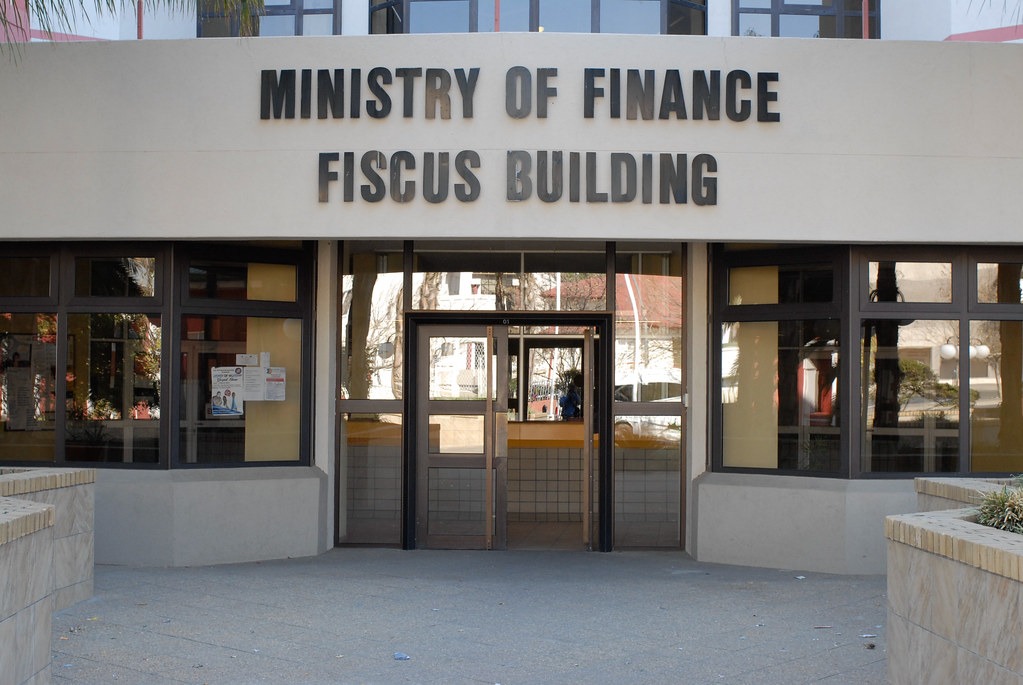
The Namibian government has rejected N$13 billion in additional spending requests in an effort to contain public debt amid a N$1.5 billion revenue shortfall in the 2026/27 financial year.
Finance Minister Ericah Shafudah said the government had instead revised total expenditure downwards by 0.9% to N$105 billion, while revenue is projected at N$88.1 billion.
Speaking in Parliament on Wednesday during her response to contributions on the 2026/27 Mid-Year Budget Review and Appropriation Amendment Bill, Shafudah said the decision reflected the government’s commitment to fiscal discipline amid mounting economic pressures.
“Despite a revenue shortfall of N$1.5 billion, Government has not responded by borrowing more to cater for additional requested amount of N$13 billion. Instead, total expenditure has been revised down by 0.9% to N$105 billion,” she said.
Shafudah acknowledged concerns raised by Members of Parliament over the country’s growing public debt and the increasing cost of servicing it.
She noted that interest payments were more than double the N$6.6 billion allocated to development projects through the State Revenue Fund, limiting resources available for infrastructure and other development priorities.
“Concerns were raised about the growing public debt and the cost of servicing it. Honourable Members rightly observed that interest payments amount is more than twice the N$6.6 billion allocated to development projects through the State Revenue Fund,” she said.
“However, we must also take into account infrastructure projects whose funding is sourced outside the State Revenue Fund. The government fully agrees that high interest payments crowd out the space for development. Hence, the strongest call for fiscal discipline across all OMAs, by budgeting within our means.”
The Minister said the government remained committed to the Southern African Development Community’s (SADC) debt-to-GDP benchmark of 60%, which it aims to achieve by the final year of the next Medium-Term Expenditure Framework.
To manage spending pressures, the government has also redirected N$685 million from underperforming projects and government offices towards more urgent priorities.
Shafudah explained that the reallocation did not represent lost funding but rather resources that could not be utilised during the current financial year.
The redirected funds will support priorities including foot-and-mouth disease containment, grain reserves, the public servants’ medical aid scheme and the replenishment of the Contingency Fund.
“Honourable Members questioned the reallocation of N$685 million from projects and offices classified as non-performing. This is not money lost. It is funding that could not be spent within this financial year, redirected to where it can be spent now,” she said.
“To address under-execution, I enumerated various strategic expenditure proposals in my statement, including prioritising ready-to-implement projects and finalisation of ongoing projects.”
The Minister further acknowledged that Namibia’s economic growth had slowed, while lower-than-expected revenue, rising fuel prices and foot-and-mouth disease outbreaks had placed additional pressure on public finances.
She said the government would continue prioritising projects ready for implementation, completing ongoing infrastructure developments and strengthening expenditure management to ensure that available resources deliver measurable economic and social benefits.