Chief executive officers and senior managers of Namibia’s local authorities will be required to sign performance agreements linking their performance to measurable targets for serviced land delivery, revenue collection, debt reduction, housing construction and improved financial management.
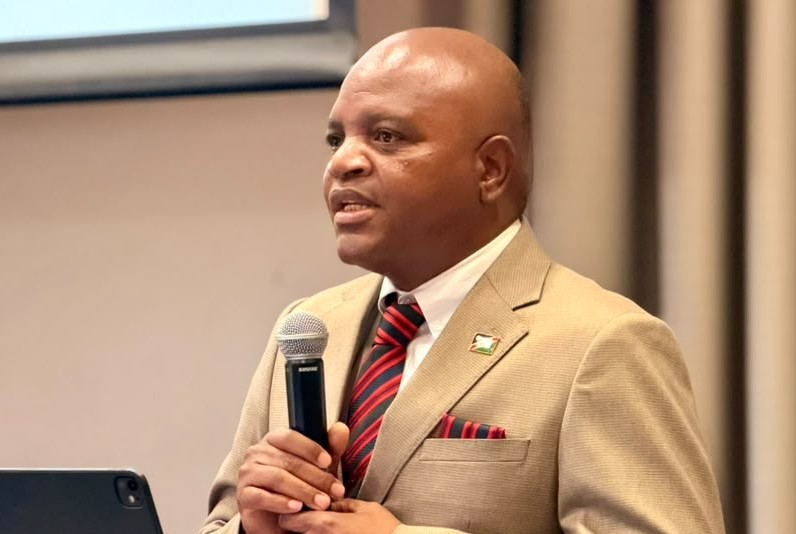
Executive Director in the Office of the Prime Minister (OPM) and Acting Accounting Officer Petrus Sikongo Sindimba said the agreements would introduce greater accountability in local government, with quarterly performance reviews to assess whether councils were meeting their service delivery commitments.
Speaking on Monday at the opening of a five-day Performance Management System (PMS) workshop at the Namibia Institute of Public Administration and Management (NIPAM) in Windhoek, Sindimba said local authorities must demonstrate measurable improvements in service delivery rather than focusing solely on administrative activities.
“The emphasis should not simply be on what has been done, but on what has been achieved and how those achievements have improved the lives of our communities,” he said.
Sindimba said every local authority chief executive officer would be required to sign a performance agreement with their respective council, while heads of departments would enter into similar agreements with their chief executive officers.
The agreements will include targets for the delivery of serviced land, revenue collection, reduction of outstanding debt, annual housing construction and the resolution of audit findings to achieve clean audits.
He said the government expected local authorities to take responsibility for the resources allocated to them and demonstrate results, particularly in addressing shortages of serviced land, potable water, housing and electricity.
“When Government allocates public funds for infrastructure development, the expectation is that the intended infrastructure will be delivered within the relevant Local Authority. Public resources must translate into visible improvements in the lives of our citizens,” Sindimba said.
He said local authorities would also be required to conduct quarterly performance assessments and make their targets accessible to the public, allowing residents to monitor progress against service delivery commitments.
Councils will be expected to provide regular progress reports through community meetings and other communication platforms to improve transparency and public accountability.
Sindimba said the performance management framework would move local authorities away from making excuses for poor performance towards taking responsibility for achieving agreed development targets.
The workshop, running from 2 to 6 November 2026, brings together representatives from five local authorities, namely Ruacana, Bethanie, Okongo, Gibeon and Aroab.
Participants will receive training in strategic planning, annual performance planning, individual performance agreements and the development of measurable performance indicators.
“The workshop will focus on strategic planning, annual planning and individual performance planning, equipping participants with practical skills to develop measurable performance indicators and conduct objective performance assessments,” Sindimba said.
He said participants would also be trained to develop specific, measurable, achievable, relevant and time-bound (SMART) performance indicators and conduct objective assessments to determine whether agreed targets had been achieved.
The performance management system will also provide a basis for recognising strong performance and introducing corrective measures where institutions or individuals fail to meet their obligations.
Following the training, each participating local authority will be expected to develop a strategic plan aligned with the Sixth National Development Plan (NDP6) and the government’s broader development priorities.
Chief executive officers will be required to formalise performance agreements with their councils, while departmental heads must conclude agreements with their respective chief executive officers.
Quarterly performance reviews will also have to be documented and submitted through the appropriate reporting channels.
Sindimba said the Office of the Prime Minister, through the Department of Public Service Management, would continue providing technical guidance and monitoring the implementation of the framework.
He said the initiative formed part of the government’s efforts to extend performance management systems beyond central government to local authorities, where public services directly affect communities.
“Today, we are extending these efforts to Local Authorities because this is where government policies and programmes directly affect the daily lives of our citizens,” he said.
Sindimba also linked the initiative to President Netumbo Nandi-Ndaitwah’s leadership principles of pragmatism, integrity, accountability, meritocracy and inclusivity, known as PIAMI.
He said the principles should guide public sector leadership and ensure that service delivery decisions were based on accountability, competence and the needs of communities.
Sindimba warned that the success of the system would depend on implementation, rather than the preparation of plans and administrative documents alone.
He urged participating local authorities to apply the performance management framework consistently to improve service delivery, strengthen financial accountability and ensure that public resources produce measurable development outcomes.