Tuesday, October 27, 2026
Subscribe
The Brief | Namibia's Leading Business & Financial News
  • Home
  • Companies
    • Finance
    • Agriculture
    • Technology
    • Property
    • Trade
    • Tourism
  • Business & Economy
  • E-PAPERreader
  • Mining & Energy
  • Opinions
    • Analysis
    • Columnists
  • Africa
No Result
View All Result
The Brief | Namibia's Leading Business & Financial News
Subscribe
No Result
View All Result
Home Latest

TransNamib turns to leased locomotives amid fleet renewal delays

by reporter
October 27, 2026
in Latest
5
A A
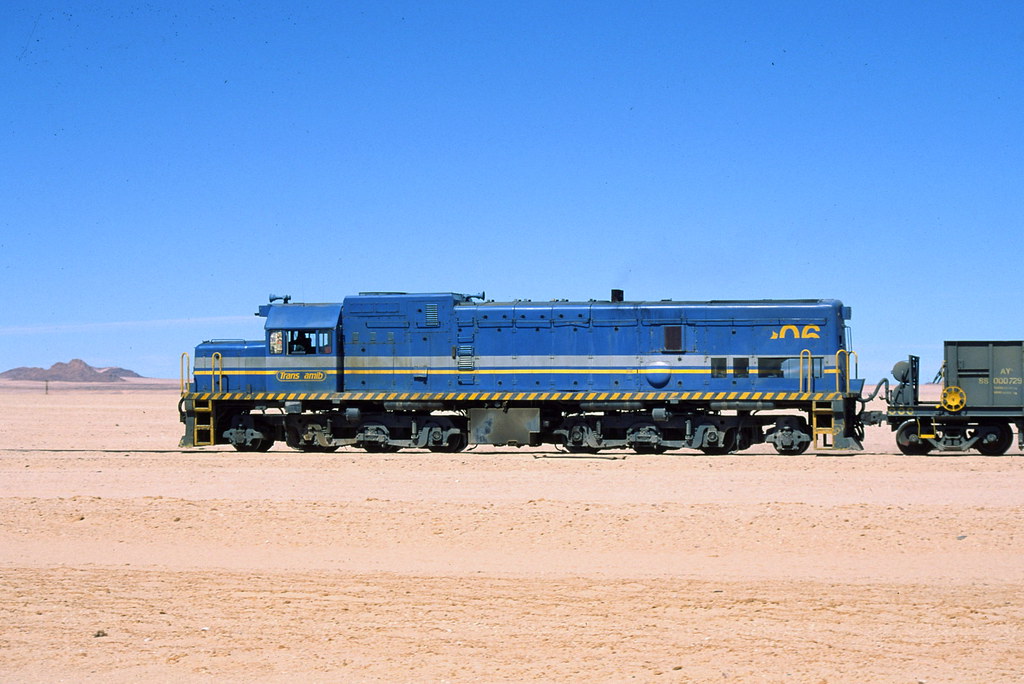
Blue diesel locomotive with yellow stripe parked on a desert track, pulling a railcar under a clear blue sky in a barren landscape.

TransNamib has resorted to leasing locomotives to sustain freight operations as its planned N$2.6 billion fleet renewal programme remains subject to procurement approvals and financing requirements.

The national rail operator currently has four leased locomotives in service and is negotiating to secure at least two additional units as it struggles with a shortage of operational locomotives.

TransNamib Chief Executive Officer Desmond van Jaarsveld told The Brief that the company has approximately 16 locomotives operating on its main line, against a requirement of 25 to 26 units to meet freight demand.

“At the moment, I have about 16 locomotives operating on the main line. I need 25 to 26 for operations,” van Jaarsveld said.

The shortage comes as approximately 80% of TransNamib’s fleet of 67 locomotives is more than 50 years old, resulting in frequent breakdowns, delivery delays and reduced operational reliability.

Van Jaarsveld said the ageing fleet was undermining the company’s ability to meet customer delivery schedules, with mechanical failures disrupting freight movements.

“My old locomotives run at 16% efficiency, and they break down. We tell a customer that we will arrive at 10:00 the next morning, but we arrive at noon because the locomotive has broken down,” he said.

To address the operational constraints, TransNamib plans to acquire 15 new locomotives and remanufacture 17 existing units under a revised procurement strategy supported by a N$2.6 billion loan facility from the Development Bank of Namibia (DBN) and the Development Bank of Southern Africa (DBSA).

Approximately N$1.9 billion of the financing will be allocated to locomotives, while the remaining N$700 million is earmarked for wagons and other freight-handling equipment.

However, the revised procurement programme must still meet the requirements of the two development banks and undergo the necessary approvals, including the Central Procurement Board of Namibia process.

Van Jaarsveld said TransNamib was engaging its financiers to ensure the revised strategy aligned with the conditions attached to the loan facility.

“We are meeting with the development banks to share with them the mandate from our shareholder and board on the way forward. Because they are providing a loan, it must be ensured that they are aligned with the process,” he said.

The company faces an estimated 24-month lead time for newly manufactured locomotives, making the leasing of additional units and remanufacturing of existing equipment critical to maintaining operations in the interim.

Under the revised strategy, TransNamib intends to rebuild 17 locomotives at its Windhoek workshop at an estimated cost of between N$50 million and N$55 million per unit.

Van Jaarsveld said each remanufactured locomotive would take approximately nine months to complete, significantly less than the time required to acquire new units.

“Remanufacturing is cheaper, and it takes about nine months to bring a locomotive back into service. It is almost new, because everything apart from the chassis and bogies is replaced,” he said.

Beyond locomotives, TransNamib requires approximately 300 additional wagons, including fuel tankers and container wagons, as well as equipment to facilitate the movement of containers between trains and other transport modes.

The company expects the new locomotives to achieve operating efficiency of approximately 90%, while the combined acquisition and remanufacturing programme is projected to improve overall service delivery efficiency to about 85%.

Until the procurement programme is approved and new or remanufactured locomotives enter service, TransNamib will continue relying on leased units and its ageing fleet to meet freight transport demand.

author avatar
reporter
See Full Bio
Previous Post

Youth fund disburses just N$110m of N$317m

Next Post

Institutional investors back N$1.6bn Diaz Wind Farm

Must Read

NPC reports 48% execution of N$11.8bn development budget
Latest

Youth fund disburses just N$110m of N$317m

October 27, 2026
Name badge reading 'Hello, my name is INTERN' being shown by a person in a shirt and tie.
Latest

Govt increases internship allowances to N$3,769 for graduates, N$2,692 for students

October 25, 2026
Namibia raises manual visa-on-arrival fee, adds more eligible countries
Latest

Namibia generates N$583.8m from visa-on-arrival platform

October 23, 2026
Smiling man wearing glasses stands in front of a bookshelf filled with colorful books.
Latest

Arandis Dry Fish Factory drives value addition in Namibia’s fishing industry

October 23, 2026
Modern campus building with a curved beige roof, glass walls, and a foreground sign reading NSFAF with an orange dot logo.
Latest

NSFAF pays out N$2.15bn in student funding in six months

October 22, 2026
Woman wearing a light patterned hijab and glasses sits at a table with a microphone, water bottle, and glass in front, in a conference setting.
Latest

Govt urges traditional leaders to unlock communal land for investment and jobs

October 22, 2026
Load More

Related News

NWR’s key resorts achieve full occupancy

NWR’s key resorts achieve full occupancy

August 21, 2023
Namibia Critical Metals to pilot test Lofdal rare earth elements deposit

Namibia Critical Metals to pilot test Lofdal rare earth elements deposit

March 3, 2023
IDToday relocates operations to Paratus Armada data center

IDToday relocates operations to Paratus Armada data center

June 15, 2023

Browse by Category

  • Africa
  • Agriculture
  • Analysis
  • Business & Economy
  • Columnists
  • Companies
  • e-edition
  • Finance
  • Finance
  • Fisheries
  • Green Hydrogen
  • Health
  • Investing
  • Latest
  • Market
  • Mining & Energy
  • namibia
  • Namibia
  • News
  • Opinions
  • Property
  • Retail
  • Technology
  • Tourism
  • Trade
The Brief | Namibia's Leading Business & Financial News

The Brief is Namibia's leading daily business, finance and economic news publication.

CATEGORIES

  • Business & Economy
  • Companies
    • Agriculture
    • Finance
    • Fisheries
    • Health
    • Property
    • Retail
    • Technology
    • Tourism
    • Trade
  • e-edition
  • Finance
  • Green Hydrogen
  • Investing
  • Latest
  • Market
  • Mining & Energy
  • namibia
  • News
    • Africa
    • Namibia
  • Opinions
    • Analysis
    • Columnists

CONTACT US

Cell: +264814612969

Email: newsdesk@thebrief.com.na

© 2026 The Brief | All Rights Reserved. Namibian Business News, Current Affairs, Analysis and Commentary

Welcome Back!

Login to your account below

Forgotten Password?

Retrieve your password

Please enter your username or email address to reset your password.

Log In
No Result
View All Result
  • Home
  • Companies
  • Mining & Energy
  • Business & Economy
  • Opinions
    • Analysis
    • Columnists
  • Africa

© 2026 The Brief | All Rights Reserved. Namibian Business News, Current Affairs, Analysis and Commentary

This website uses cookies. By continuing to use this website you are giving consent to cookies being used. Visit our Privacy and Cookie Policy.