Namibia’s foot-and-mouth disease (FMD) outbreak has now been detected on five farms in the Karasburg district, although authorities say the disease remains localised within the //Kharas Region.
Agriculture, Fisheries, Water and Land Reform Minister Inge Zaamwani disclosed the latest extent of the outbreak in the National Assembly on Wednesday, following intensified surveillance, livestock inspections and tracing activities.
“The latest assessment indicates that the disease is now detected in five farms but remains localised in the Karasburg district in the //Kharas Region,” Zaamwani said.
The disclosure provides a clearer indication of the geographic spread of the outbreak, which was initially confirmed after cattle from the affected area tested positive for FMD.
Zaamwani said livestock that had moved from the original infected farm to the Otjozondjupa Region before the outbreak was detected had been traced and tested negative for FMD. The affected herd has subsequently been cleared.
The Directorate of Veterinary Services has also found no evidence from livestock inspections and traceability data suggesting a risk of transmission to areas north of the Veterinary Cordon Fence.
As a result, restrictions on the movement of cloven-hoofed animals and their products within areas north of the Veterinary Cordon Fence have been lifted, although specified movements from south to north remain restricted.
The partial lifting of restrictions has also allowed processed animal products to move countrywide and permitted slaughter at abattoirs under prescribed veterinary and biosecurity requirements.
Restrictions on animals and animal products in the northern communal areas have also been lifted to allow domestic trade to resume.
The Government is meanwhile engaging Namibia’s trading partners over the outbreak and is seeking to negotiate the resumption or continuation of trade in animals and animal products where importing-country requirements can be met.
“The Ministry has engaged trading partners to inform them of the current animal health situation. The Ministry is now in the process to negotiate and facilitate trade in animal and animal product where requirements can be met,” Zaamwani said.
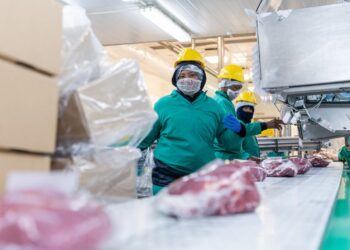
The Minister said restrictions imposed after the outbreak were affecting the wider livestock value chain, including farm income, livestock sales, transporters, abattoirs, meat processors, workers and related businesses.
She said the Government intends to progressively restore economic activity where surveillance and scientific evidence show that restrictions can safely be eased, rather than maintaining the same measures across the entire country.
The Ministry also plans to strengthen the Namibia Livestock Identification and Traceability System (NamLITS), electronic movement controls, laboratory capacity, field veterinary services and emergency preparedness beyond the current outbreak.
Zaamwani said additional resources may need to be mobilised for Veterinary Services as surveillance, laboratory testing, livestock tracing, movement controls and biosecurity measures place increased demands on government resources.
The Government said its immediate objective remains to contain and eradicate the outbreak while limiting unnecessary disruption to livelihoods and economic activity.