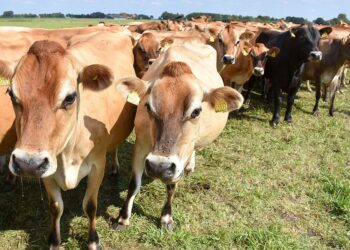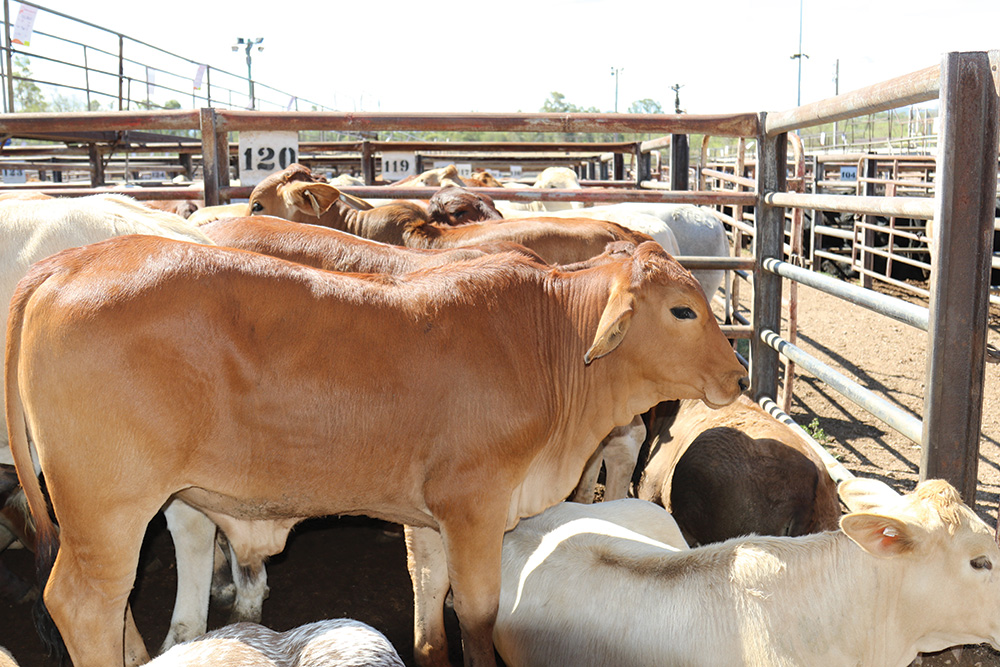
Namibia’s live cattle exports surged by 151.61% year on year to 13,008 head in July 2026, driven largely by strong demand for 140–250kg weaners from South African feedlots preparing for the year-end season, as the country entered its June-to-September weaner marketing period.
According to the Livestock and Livestock Products Board’s July Market Watch report, the increase in live exports was also significant on a monthly basis, rising 73.14% from June. Feedlot cattle accounted for the vast majority of exports at 12,480 head, or 95.94%, with most destined for South Africa. Breeding cattle accounted for 76 head, while other categories made up 452 head.
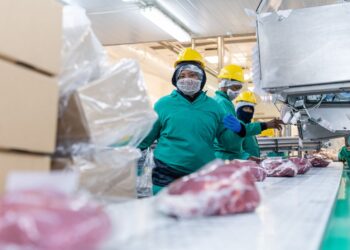
“The increase was primarily driven by live cattle exports, which rose by 151.61% y/y and 73.14% m/m to 13,008 head. A-class export abattoir slaughter also increased by 50.68% y/y and 18.51% m/m to 15,585 head, while B&C class abattoir throughput declined by 60.26% y/y and 20.31% m/m to 2,060 head. Overall, the increase in cattle marketing during July was concentrated in export-oriented channels, particularly live exports and A-class export abattoir slaughter,” the report said.
The domestic slaughter market also recorded strong growth in some categories. A-class slaughter increased by 50.68% year on year to 15,585 head, while B&C-class slaughter declined sharply by 60.26% to 2,060 head.
The stronger cattle market was reflected in producer prices, with the weaner auction price increasing by 8.74% year on year to N$32.58 per kilogram. Slaughter ox prices rose by 11.16% to N$38.15/kg, while the Namibian Class B2 price increased by 9.66% to N$77.88/kg.
The all-grade carcass price also strengthened by 6.39% year on year to N$74.48/kg. The weaner-to-B2 price ratio improved from 39.63% in June to 41.83% in July, although it remained below the benchmark of 64%.
“Across slaughter classes, producer prices recorded mixed m/m movements during the review period, while all grades strengthened y/y. Class A, AB, B and C prices increased by 0.34%, 3.45%, 6.22% and 7.76% y/y, respectively. On a m/m basis, Class A declined by 2.02%, Class AB by 0.78%, and Class C by 1.86%, while Class B remained relatively stable, increasing marginally by 0.11%,” the report said.
Meanwhile, Namibia’s pork market recorded higher slaughter volumes but weaker prices. Pig slaughter increased by 13.08% year on year to 4,754 head, bringing year-to-date slaughter to 32,698 head, up 9.97%.
Despite the increase in slaughter, the calculated pork price fell by 13.23% year on year to N$38.91/kg, while the South African RMAA pork price declined by 12.55% to N$28.84/kg. The board-approved pork ceiling price was also reduced by 8.65% to N$47.61/kg.