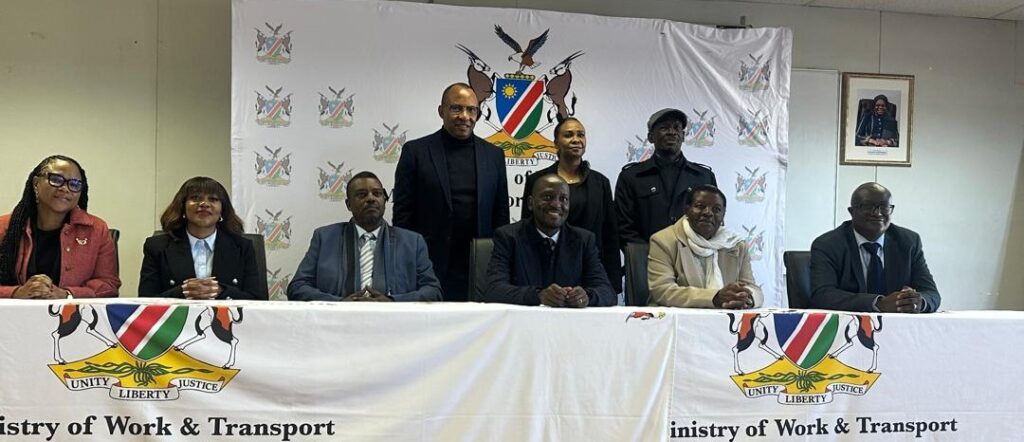
Works and Transport Minister Veikko Nekundi has ordered the Namibia Airports Company (NAC) to transform itself from a caretaker of airport infrastructure into a commercially driven state-owned enterprise, giving its board 30 days to address failures identified in an investigation report.
Speaking to the NAC’s temporary board, Nekundi said the company must move beyond simply maintaining airport facilities and begin generating greater economic value from its assets.
He instructed the board to urgently implement the recommendations contained in the investigation report and resolve governance and operational shortcomings within the next 30 days.
“The company and the temporary board have a responsibility. This is your mandate and your responsibility to deal with the findings of the investigation and address the issues identified. This is an investigation report with all the findings. You have 30 days to address all these issues,” he said.
The minister said airports should function as economic hubs that support trade, exports, tourism and investment, rather than serving solely as transport infrastructure.
He pointed to the continued absence of a fast-moving goods and fresh produce terminal as evidence that the NAC is failing to unlock commercial opportunities.
Nekundi criticised the fact that Namibian blueberries are still transported to South Africa before being exported to international markets, despite Namibia having its own international airport.
“If blueberries produced in this country must again go to South Africa to be exported, just bring your resignation letters. It cannot be,” he said.
He also instructed the board to accelerate airport infrastructure projects and demonstrate measurable progress instead of repeatedly reporting that projects remain works in progress.
Nekundi further called for stricter financial discipline, warning the company against spending public funds on luxury office developments.
He said infrastructure investment must be justified, focused on improving service delivery and delivering value to the public, with surplus funds returned to the state through dividends where appropriate.
“That office must be developed, but it must not be a luxury office. It must be an office designed to deliver services, not for any other purpose. It must be enhanced infrastructure, not luxury. Any money that you need must be justified. We cannot spend money on luxury facilities when those resources could be used elsewhere, including building schools,” he said.
The minister also reminded the board that it is accountable for sound governance, prudent financial management and compliance with the Constitution and the State Finance Act, warning that conflicts of interest, corruption and mismanagement would not be tolerated.