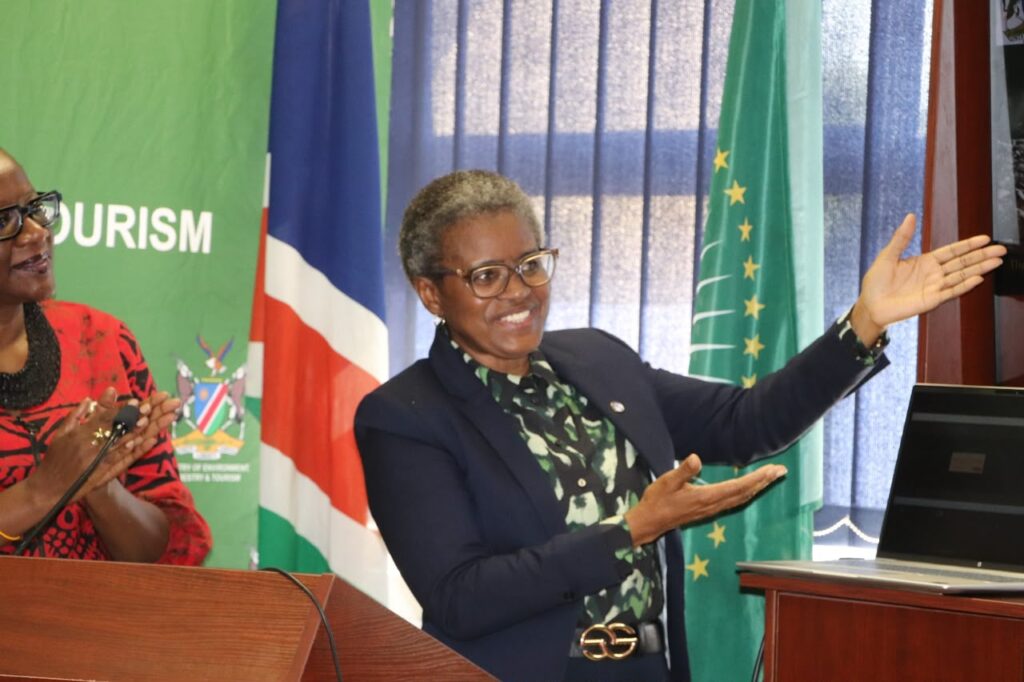
Namibia has launched a centralised environmental database designed to improve how government collects, manages and uses environmental information to support policy decisions, conservation planning and international reporting.
The Multilateral Environmental Agreements (MEA) Monitoring and Reporting Platform, launched by the Ministry of Environment, Forestry and Tourism (MEFT) in Windhoek, consolidates environmental information into a single government-managed system, replacing fragmented data sources with a unified platform.
Environment, Forestry and Tourism Minister Indileni Daniel said access to reliable, centralised information is essential for responding to environmental challenges such as climate change, biodiversity loss and land degradation.
“The platform being launched today is a Government resource owned by the Ministry of Environment, Forestry and Tourism. It brings environmental information into one place and presents it in a form that can support planning, research, decision-making and national reporting,” Daniel said.
She said the platform will allow government to track environmental performance, identify gaps in policy implementation and prioritise interventions using a common national information base.
The Department of Environmental Affairs will manage the system and ensure it remains up to date and aligned with Namibia’s environmental commitments and policy objectives.
The platform was developed through a partnership between MEFT and the University of Namibia under the Namibia Integrated Landscape Approach for Enhancing Livelihoods and Environmental Governance (NILALEG) Project.
The initiative also established an MEA Monitoring Unit and a national environmental monitoring framework while supporting consultations with government agencies, researchers and other stakeholders.
Daniel said the platform will strengthen collaboration between government and research institutions by making environmental information more accessible and useful for evidence-based decision-making.
She also announced an expanded partnership with UNAM covering joint research, postgraduate supervision, training, data sharing and resource mobilisation to ensure the platform continues evolving after the NILALEG Project concludes.
The minister said the long-term objective is to build a trusted national environmental information system that supports sustainable development, conservation planning and informed policymaking across government.