By Zenzi Awases
There’s an old image from the natural world worth borrowing for this moment: the plover and the crocodile. The crocodile is by far the larger, more powerful animal. It could end the relationship in an instant.
And yet it opens its jaws and lets the small bird pick clean the debris caught in its teeth. The crocodile gets health it cannot give itself and the plover gets a meal it could find nowhere else.
Neither pretends the other is equal in size or strength. The relationship works because each is honest about what it needs and what it gives, and because it visibly, measurably benefits both.
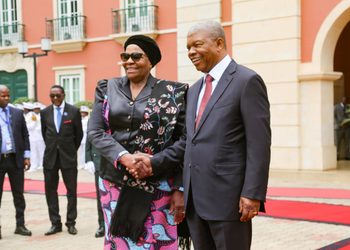
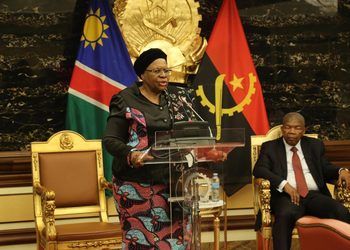
That is the standard I want to hold up as Namibia deepens two of its most significant external relationships at once: the strategic partnership with the European Union, now approaching its fourth year, and the newly elevated “community with a shared future” agreed with China during President Nandi-Ndaitwah’s state visit this month.
Both are worth having and both can work for Namibians. The question isn’t which partner is more virtuous, it’s whether either relationship is currently built the way the plover and the crocodile build theirs: openly, reciprocally, with the smaller party’s benefit as visible as the larger one’s.
The two relationships move at different speeds.The EU partnership, signed at COP27 in 2022, is the more institutionally developed: six pillars, a formal roadmap, financing that has grown from an initial €500 million EIB commitment toward a €1 billion Team Europe package.
China’s approach moves faster and more directly: the state visit produced a wide-ranging new agenda across industry, mining, agriculture and technology, on top of bilateral trade that reached a record N$40.64 billion in 2025 and continued Chinese capital moving into strategic sectors like uranium and water infrastructure.
With the EU, the test is whether its stated commitment to local beneficiation becomes actual processing capacity on Namibian soil.
European manufacturers still largely source processed material from China rather than investing in African beneficiation directly, which is the very gap the partnership was meant to close.
With China, the test is whether investment in extraction is matched by equivalent investment in Namibian industrial capacity, skills and ownership, not just the infrastructure that makes extraction itself more efficient.
Neither test is a verdict. Both are simply what a fair partnership should be able to answer without hesitation.
This is exactly where ESG belongs; not as a European import to accept or resist, but as Namibia’s own definition of what “for the people” means in practice.
Environmental, social and governance (ESG) standards, properly understood, are what keeps a partnership a partnership rather than extraction with better branding.
They are how Namibia ensures that whichever crocodile it opens its jaws to, the arrangement leaves Namibian workers safer, communities better off, and Namibian land and water intact for the next generation.
That standard should be asked of every partner equally, in the same language, whether the delegation lands in Brussels or Beijing.
Progress that costs the next generation its stewardship of the land is not progress at all; it is simply debt, deferred. This is the standard Namibia should carry into every room it enters, ours to hold ourselves to as much as anyone else.
What I would ask of leaders on both sides is to hold every relationship to the plover and crocodile standard rather than the extractive one.
That means Namibia naming plainly what it needs: processing capacity, skills transfer, ownership stakes, environmental protection, a fair share of the value created from what leaves our ground, and being equally plain about what it brings: mineral wealth, political stability, good faith.
It means judging every agreement by whether it produces mutual benefit, not by how warmly the joint statement reads.
This isn’t about choosing sides. It’s about Namibia entering every partnership, knowing exactly what it is asking for, and refusing to settle for less.
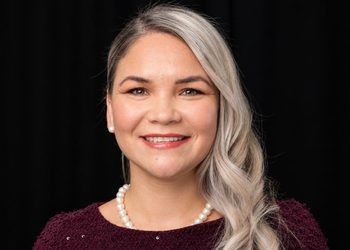
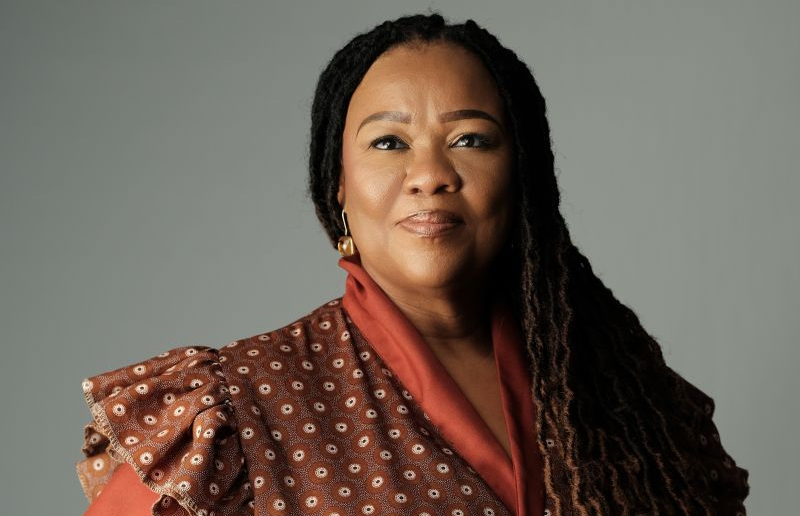
* Zenzi Awases is a Namibian geologist, sustainability consultant, and Founder of Empowermine Consulting Services, a boutique advisory firm dedicated to sustainable mining, gender equity, and responsible sourcing across Africa. She is the President of the Association of Women in Mining in Africa (AWIMA) and Co-Founder and Chairperson of the Women in Mining Association of Namibia (WiMAN).