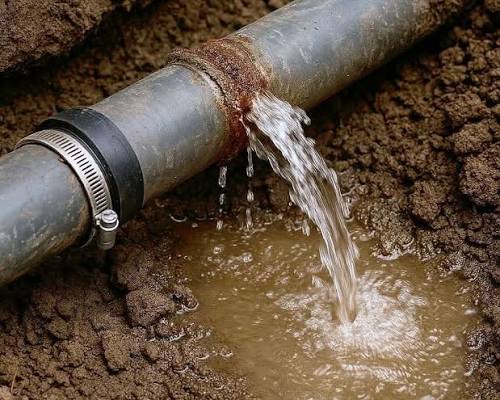
Namibian municipalities are losing up to 60% of treated water through ageing and leaking distribution networks, despite bulk water supplier NamWater limiting its own water losses to between 10% and 15%, water sector experts have warned.
Speaking during Africa Public Service Day 2026 in Swakopmund, Global Water Partnership Organisation (GWPO) Chief Executive Officer Alex Simalabwi said the country’s biggest water challenge lies in municipal distribution systems rather than bulk water supply.
“NamWater’s water efficiency is one of the best on the continent, with between 10% and 15% water losses. The world average is around 10% to 12%. But some municipalities lose up to 60% of water. Once it leaves NamWater, it becomes the responsibility of municipalities. Some of that treated water, paid for with taxpayers’ money, is lost through leakages in distribution networks,” Simalabwi said.
He said reducing distribution losses should become a national priority, arguing that development financiers are more willing to invest in countries that demonstrate sound governance and efficient water management.
Simalabwi said the Global Water Partnership has helped mobilise more than US$2 billion in water investments across over 90 countries during the past decade and aims to influence a further US$15 billion between 2026 and 2030 to address the global water financing gap.
Despite the losses, he said Namibia has achieved water access of about 90% in urban areas and 83.8% in rural communities, with future investment expected to focus on desalination, water technology and innovation.
Meanwhile, International University of Management (IUM) lecturer Michael Mulondo said national coverage statistics mask the realities faced by residents in informal settlements.
Presenting findings from research conducted in Havana informal settlement, Mulondo said some households walk up to one kilometre to access water, while many cannot afford the cost of purchasing it. He added that inadequate sanitation continues to expose communities, particularly children, to health risks.
Chief Hydrologist at the Ministry of Agriculture, Fisheries, Water and Land Reform, Asteria Mwetulundila, attributed delays in expanding water infrastructure to funding constraints, procurement processes, shortages of specialist skills and fragmented policy implementation.
She said government continues to lose hydrologists and hydrogeologists to the private sector, weakening its capacity to deliver water projects.
Namibia University of Science and Technology (NUST) lecturer and researcher Paul Tuhafeni said the Water Resources Management Act of 2023 has strengthened integrated water governance but warned that vandalism remains a major challenge, with water infrastructure worth about N$120 million damaged during 2023 and 2024.
The remarks were made during Africa Public Service Day 2026 under the theme: “Enhancing Public Sector Institutions and Empowering Multi-Stakeholder Partnerships to Achieve Universal Water Availability and Safe Sanitation by 2063.”