Namibia is updating its marine conservation framework and exploring the creation of additional protected ocean areas as it seeks to strengthen biodiversity protection and meet international conservation commitments.
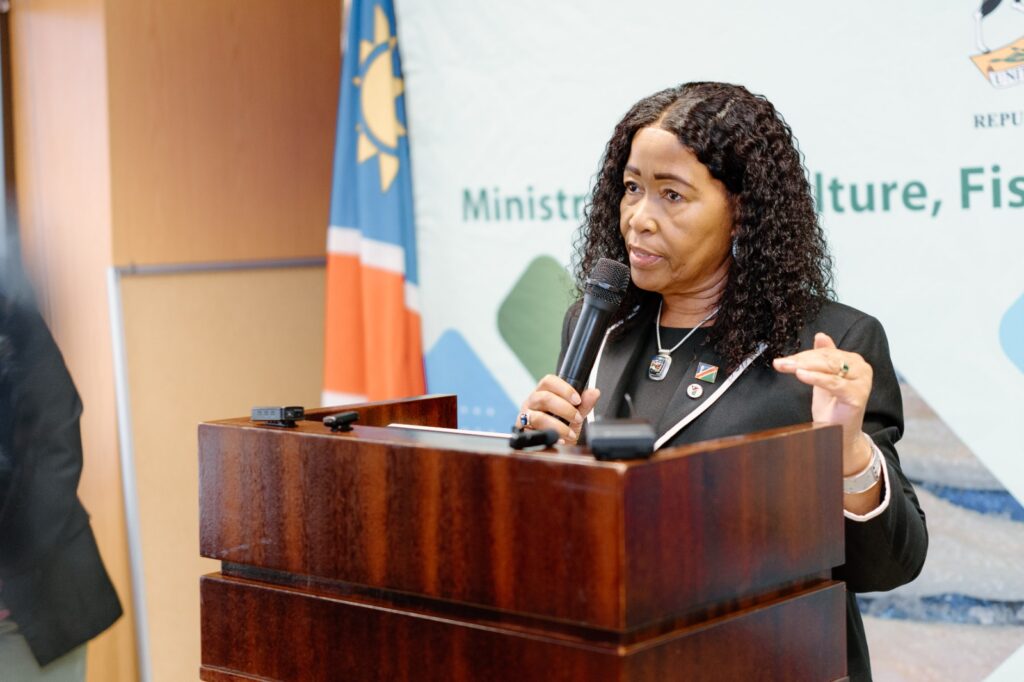
Speaking at the commemoration of World Oceans Day 2026, Agriculture, Fisheries, Water and Land Reform Minister Inge Zaamwani said the government is finalising a new management plan and regulations for the Namibian Islands’ Marine Protected Area (NIMPA), one of the country’s key marine conservation zones.
Established in 2012, NIMPA was created to protect marine biodiversity and vulnerable seabird populations along Namibia’s coastline.
Zaamwani said the ministry has also identified several Ecologically and Biologically Significant Areas and is working towards granting some of them protected status.
The move forms part of Namibia’s commitment to the Convention on Biological Diversity’s “30 by 30” target, which seeks to conserve at least 30% of the world’s land, inland waters, coastal and marine areas by 2030.
According to the 2026 UNEP Target Tracker, Namibia has already protected 39.92% of its terrestrial areas, exceeding the global target. However, only 1.69% of its marine areas currently fall under formal protection.
“This means we need to do more in terms of marine areas,” Zaamwani said.
The minister said conservation efforts are being complemented by sustainable fisheries management practices, including annual scientific assessments that determine total allowable catches for commercially important species such as hake and horse mackerel.
Additional measures, including seasonal fishing closures, protected fishing zones, mesh-size regulations and bycatch controls, are aimed at ensuring the long-term health of marine ecosystems.
Namibia has also adopted an ecosystem-based approach to fisheries management and works with Angola and South Africa through the Benguela Current Convention to coordinate marine resource management and monitor shared fish stocks.
The renewed focus on marine protection comes amid growing international pressure on countries to expand ocean conservation areas and strengthen measures to protect biodiversity from overexploitation, pollution and climate change.