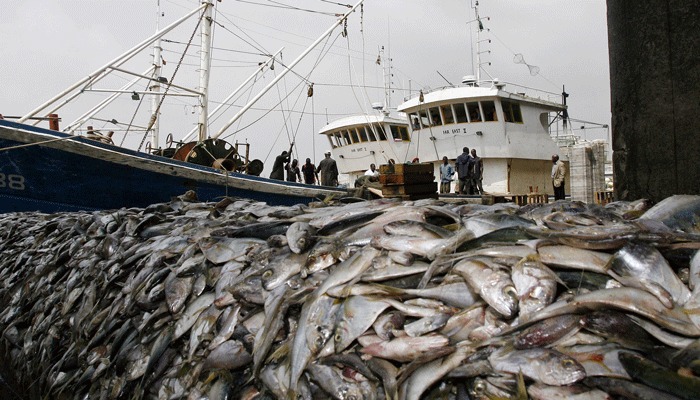
Namibia’s fisheries sector recorded inland landings of about 3,000 metric tonnes valued at N$240 million in 2025, as government moves to strengthen sustainability, enforcement and economic returns under a proposed N$1.027 billion budget for water and marine resources.
Deputy Minister of Agriculture, Fisheries, Water and Land Reform Ruthy Masake said the allocation will support water security, improve marine resource management and expand livelihoods.
The inland fisheries segment remains a key source of income and food security, supporting more than 280,000 people in riparian communities and fish traders along major river systems, particularly in the Zambezi and Kavango regions.
“Inland fisheries are not only an economic activity but a vital livelihood for thousands of Namibians, and our focus is to ensure their sustainability while improving community benefits,” Masake said.
In aquaculture, Namibia produced about 700 metric tonnes of fish in 2025, employing 509 people across marine and freshwater subsectors. The sector is attracting growing private investment, particularly in high-value projects such as seaweed, Atlantic salmon and abalone in Lüderitz.
“Private sector interest in aquaculture is encouraging, and we are positioning the sector to unlock new investment opportunities while safeguarding resources,” she said.
Government has finalised the Blue Economy Policy, which is expected to be launched in the first quarter of the current financial year. The policy aims to maximise economic returns from marine resources while ensuring fair distribution of benefits.
A performance scorecard for fishing rights holders has also been developed to guide quota allocations in line with the Marine Resources Act of 2000.
“The scorecard will ensure accountability in the allocation of fishing rights and reward those who contribute meaningfully to the sector,” Masake said.
Namibia has retained its Marine Stewardship Council certification, reinforcing its standing in global markets, while all marine surveys and stock assessments for 2025/26 have been completed to guide catch limits.
To curb illegal fishing, N$104.5 million has been allocated to monitoring, control and surveillance, including joint patrols with the Ministry of Defence and NamPol.
Government also plans to table the World Trade Organisation Fisheries Agreement for ratification and has set aside N$15.68 million for policy, planning and the review of 163 fishing rights.
The ministry is planning a National Fisheries and Aquaculture Indaba in mid-2026 to support sector reforms and improve measurement of the industry’s contribution to the economy.
“Our focus is on building a fisheries sector that delivers sustainable growth, economic value and meaningful employment for all Namibians,” Masake said.