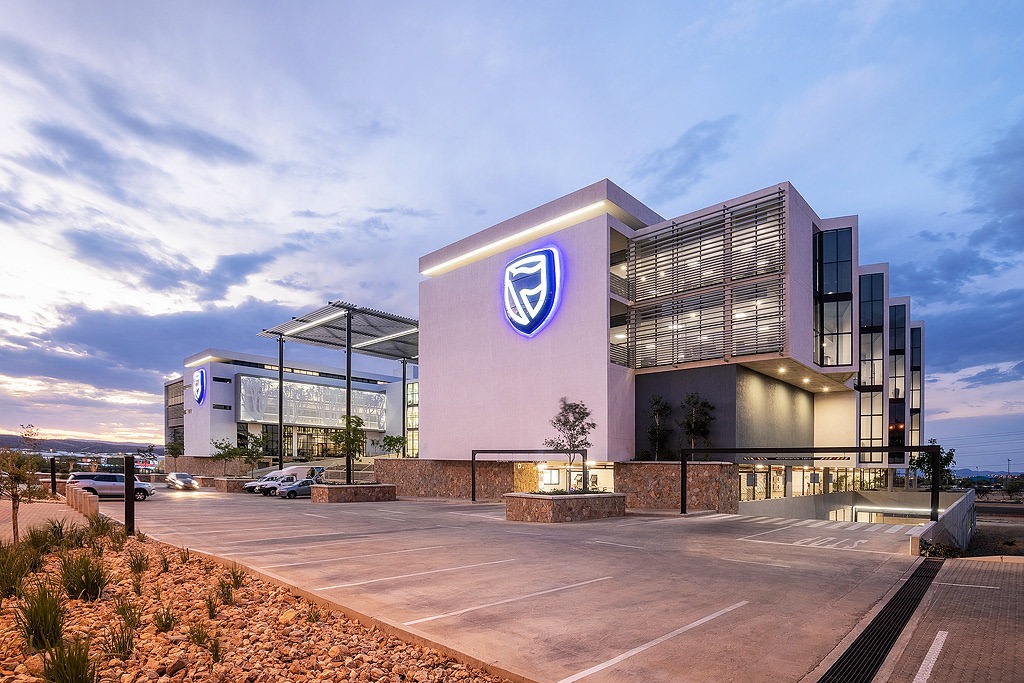
Standard Bank Namibia Group reported profit after tax of N$1.19 billion for the financial year ended 31 December 2025, a 12.8% increase from N$1.05 billion recorded in 2024, supported by strong lending growth, lower credit impairments and disciplined cost management.
Profit before tax rose 8.1% to N$1.65 billion from N$1.53 billion in the previous year, reflecting steady income growth and improved credit performance.
Chief Finance and Value Management Officer Arlington Matenda said the result follows a record year in 2024 when the group surpassed the N$1 billion headline earnings milestone for the first time in its 110-year history.
“Following an exceptional and historic 2024 financial year in which the group celebrated surpassing the N$1 billion headline earnings mark for the first time in its 110 years of driving Namibia’s growth, this year marked a period of normalisation and, more importantly, sustainability,” Matenda said.
Net interest income increased by 3% to N$2.14 billion, supported by an 11% rise in average interest-earning assets as lending activity expanded.
Gross loans and advances to customers grew by 17.5%, driving 8.8% growth in average loans and advances, particularly in the latter part of the year.
Despite the stronger lending activity, the group’s net interest margin declined by 20 basis points to 5.4%, reflecting pressure from lower interest rates and regulatory adjustments affecting the repo-prime spread.
Net loans and advances to customers increased 18.2% year on year, significantly outperforming private sector credit extension growth of 4.4% in the broader economy.
Corporate and Investment Banking recorded strong lending growth, with loans rising 49.1% to N$8.5 billion. Matenda said the increase was largely driven by sovereign and public sector exposures, including a N$2 billion facility extended to the Ministry of Finance to support Namibia’s Eurobond redemption programme.
Corporate lending also contributed to balance sheet expansion, with the portfolio increasing 16.1%, supported by infrastructure financing, sustainability-linked lending and public sector funding.
Growth in the group’s Business and Commercial Banking and Personal and Private Banking portfolios was broad-based across product lines.
Business lending and unsecured lending increased 18.4%, while vehicle and asset finance rose 18.1%. Card and payments balances rebounded strongly, increasing 24.1% after contracting in the previous year.
The home loan portfolio declined marginally by 0.1%, although origination activity remained active, with N$1.2 billion in new home loans advanced during the year.
Improved economic conditions and stronger repayment performance contributed to a decline in credit impairments.
Credit impairment charges fell 36% year on year, reflecting improved macroeconomic conditions, stronger customer repayment ability, effective debt recovery strategies and fewer new defaults.
Credit quality also strengthened as non-performing loans declined to N$1.38 billion from N$1.52 billion.
The IFRS-based non-performing loan ratio improved to 4.34% from 5.33%, while the regulatory NPL ratio declined to 2.81% from 3.77%, remaining below the industry average. Coverage on the non-performing loan portfolio increased from 34.3% to 42.6%.
Operating costs declined about 2% year on year as the bank implemented efficiency initiatives and tighter cost controls.
Staff costs increased 9% due to headcount growth, annual remuneration adjustments and performance-related incentives. However, these increases were offset by lower professional fees and reduced premises costs following the disposal of most of the Spearmint property portfolio, which reduced external portfolio management expenses.
Technology costs were also contained through vendor optimisation initiatives, while other operating expenses declined 23.7% due to lower operational risk losses and tighter discretionary spending.
Deposits from customers declined 4.5% year on year, largely due to the normalisation of temporary project-related balances held during the previous year.
Savings and term deposits recorded modest growth as the bank maintained client retention in a competitive funding environment, while deposits from banks increased as part of short-term liquidity placements aimed at improving funding flexibility.
Despite the decline in customer deposits, the group said its liquidity position remains strong, supported by a diversified portfolio of marketable assets and capital levels that remain comfortably within regulatory requirements.
Standard Bank Namibia Chief Executive Officer Erwin Tjipuka said the bank will continue strengthening its core banking franchise while investing in digital capabilities and operational efficiency.
“Our focus remains on building a competitive transactional franchise, prudent credit extension, active client growth, cost discipline and targeted investment in digital and operational capabilities to serve our clients effectively,” Tjipuka said.
He added that the group’s core businesses remain resilient and well positioned to deliver sustainable performance as lending demand continues to track economic activity in Namibia.