Executive Director at the Ministry of Finance, Oscar Capelao, says government has structured the 2026/27 national budget to balance fiscal sustainability with realistic expenditure, ensuring that both operational and development priorities are funded.
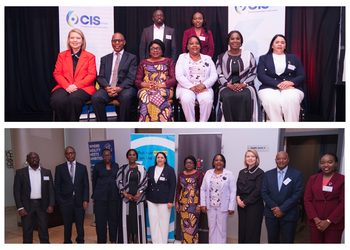
He was speaking at a National Budget in Focus session hosted by Deloitte Namibia and Cirrus Capital in Windhoek.
Capelao said total expenditure for the upcoming financial year stands at N$89 billion, with N$6 billion allocated to capital projects aligned with historical implementation capacity.
“This ensures capital projects are deliverable rather than a wish list. Including funding through public enterprises that access capital markets directly, effective capital expenditure should be closer to N$10 billion to N$12 billion,” he said.
He noted that the ministry had spent considerable time assessing fiscal space before setting expenditure ceilings to ensure revenue assumptions are realistic and supportive of growth.
“We spent significant time determining the fiscal space. We needed to make sure that the N$89 billion is realistic. We can’t afford unnecessary pessimism and forced cuts,” Capelao said.
Internal deliberations focused on revenue potential, the primary balance, debt levels and interest obligations in order to avoid unsustainable deficits.
“Those who generate revenue are few, those who want to spend are many. We had to demonstrate fiscal indicators and determine where cuts were required to ensure sustainability,” he added.
On operational spending, Capelao said growth would be contained over the medium-term expenditure framework, supported by savings measures and stricter oversight.
“Given the interest expense and debt numbers, we need to manage these collectively. The public sector is expected to operate within allocated ceilings, with Treasury approval required for any additional spending,” he said.
Revenue for the current fiscal year is projected at N$87.4 billion, slightly below earlier mid-term estimates, but expected to rise to just under N$100 billion over the medium term.
“Each line has been interrogated, and the budget is a baseline figure. There is no optimism or pessimism embedded in the N$87.4 billion for the current year,” Capelao said.
He acknowledged risks stemming from global and regional developments, including pressures in agriculture and geopolitical uncertainty, but maintained that the fiscal framework remains credible.
“Risks exist, but our numbers are sound. No single line is designed to artificially balance the budget,” he said.
However, economists and tax specialists at the session raised concerns about revenue underperformance, rising expenditure and reliance on growth assumptions.
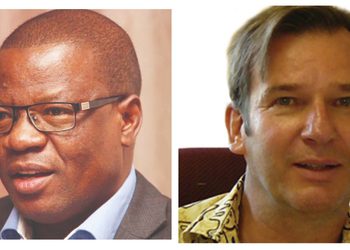
Cirrus Capital economist Oliver Diggle said revenue for 2025/26 had been revised down to N$87.4 billion, around N$4 billion below earlier projections, while expenditure increased to N$105.9 billion, complicating deficit reduction efforts.
“The budget has become increasingly dependent on revenue growth rather than expenditure restraint. Relying on the revenue line instead of tightening spending is concerning,” Diggle said.
He added that interest payments are estimated at N$14 billion, equivalent to around 16% of revenue, with public debt remaining close to 60% of gross domestic product. Government aims to stabilise debt over the medium term.
Deloitte Namibia Country Leader Melanie Harrison said the budget reflects competing pressures between fiscal consolidation and economic support.
“The National Budget tells a wider story about priorities: balancing consolidation and growth, maintaining fiscal discipline while enabling expansion through infrastructure investment and stronger public services,” she said.
Harrison noted that development expenditure has declined to just over 6% of total spending, raising concerns about capital formation and long-term growth capacity.
On taxation, Deloitte Tax Director Gerda Brand said several reforms are advancing towards legislative implementation.
“It is not just words any more. There are tangible changes to the laws that we are starting to see,” she said.
Proposed measures include a 10% dividend withholding tax for local shareholders, adjustments to the taxation of long-term insurers, reinstatement of mining rehabilitation deductions and a reduced 20% corporate tax rate for qualifying small and medium enterprises.
Additional reforms under consideration include accelerated capital allowances, a review of individual tax brackets, expanded ring-fencing provisions and changes to VAT administration.