Namibia is intensifying reforms to strengthen its anti-money laundering and counter-terrorism financing framework, with support from the European Union, as the country prepares for key international assessments and works towards exiting the Financial Action Task Force (FATF) grey list.
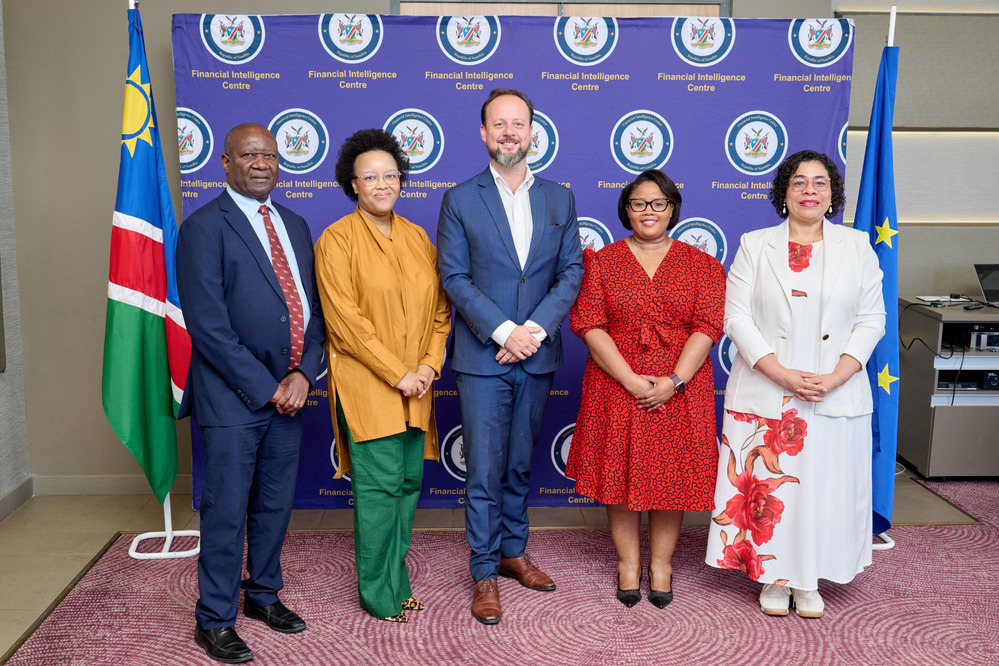
The Financial Intelligence Centre (FIC), in partnership with the European Union, this week launched a National Risk Assessment (NRA) workshop in Windhoek.
The initiative forms part of Namibia’s broader strategy to reinforce its Anti-Money Laundering, Combating the Financing of Terrorism and Countering Proliferation Financing (AML/CFT/CPF) regime.
Speaking at the opening, on behalf of the FIC Director, the FIC’s General Manager for LegalPolicy and Enforcement, Zenobia Barry said the initiative aims to safeguard the integrity of Namibia’s financial system, strengthen investor confidence and support sustainable economic growth.
She said the process also supports Namibia’s efforts to exit the FATF grey list and prepares the country for the upcoming mutual evaluation by the Eastern and Southern African Anti-Money Laundering Group (ESAAMLG).
“Over the course of this training, stakeholders will be empowered to understand the process of conducting a National Risk Assessment, appreciate its significance and prepare for active participation when the assessment commences,” Barry said.
“A National Risk Assessment can only be truly national if it reflects the experience, data and insights of all stakeholders,” she added.
The workshop brings together representatives from key institutions involved in Namibia’s financial integrity framework, including the Bank of Namibia, the Namibia Financial Institutions Supervisory Authority (NAMFISA), the National Planning Commission and the Bankers Association of Namibia.
Other participants include the Office of the Prosecutor-General, the Business and Intellectual Property Authority (BIPA), the Master of the High Court, the non-banking financial sector, the Law Society of Namibia, the Namibian Police, the Anti-Corruption Commission and the Council of Churches.
European Union Deputy Head of Mission Ian Dupont said tackling financial crime requires coordinated action across multiple institutions and sectors.
“Combating financial crime cannot be achieved by one institution alone. It requires coordinated action across government agencies, financial institutions, designated non-financial businesses and professions, and international partners,” Dupont said.
He added that the success of the exercise will ultimately depend on the reforms and institutional improvements that follow the assessment process.
“The real success of this exercise will not be measured solely by the completion of the report, but by the reforms, institutional improvements and operational outcomes that follow. The EU is a proud partner of Namibia in this journey,” he said.