Wednesday, September 9, 2026
Subscribe
The Brief | Namibia's Leading Business & Financial News
  • Home
  • Companies
    • Finance
    • Agriculture
    • Technology
    • Property
    • Trade
    • Tourism
  • Business & Economy
  • E-PAPERreader
  • Mining & Energy
  • Opinions
    • Analysis
    • Columnists
  • Africa
No Result
View All Result
The Brief | Namibia's Leading Business & Financial News
  • Home
  • Companies
    • Finance
    • Agriculture
    • Technology
    • Property
    • Trade
    • Tourism
  • Business & Economy
  • E-PAPERreader
  • Mining & Energy
  • Opinions
    • Analysis
    • Columnists
  • Africa
No Result
View All Result
The Brief | Namibia's Leading Business & Financial News
Subscribe
No Result
View All Result
Home Opinions

Measuring green impact: How do we know a business is truly making a difference?

by reporter
August 19, 2026
in Opinions
8
A A
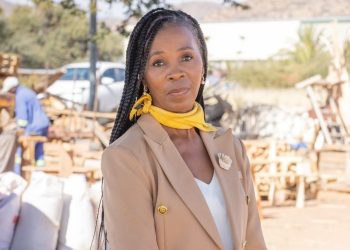
Smiling Black woman with long box braids in a sleeveless white top, indoors with plants in the background.

By Pennah Shigwedha

When a business says it is “green”, what does that actually mean?

It might use solar power. It might recycle its waste. It might have introduced water-saving technology, planted trees, or switched to more efficient machinery. These are all positive steps, but are they the same thing as green impact?

The more important question is “What has actually changed because of these actions?”

This distinction is becoming increasingly important as businesses, investors and financial institutions place greater emphasis on sustainability.

Global organizations such as the Green Climate Fund (GCF) are increasingly focused not only on financing climate-related projects, but also on monitoring whether those investments are delivering measurable results.

The GCF uses results-based management to track whether projects are achieving their intended outcomes and to understand why results are or are not being achieved.

For businesses in Namibia, this presents an important opportunity to move beyond simply being labelled “green” and start demonstrating the difference they are making.

Green activity is not the same as green impact

Consider a Namibian agricultural business that installs a solar-powered irrigation system.

The installation of the solar system is an activity.

The amount of renewable energy generated is an output.

The reduction in electricity consumption or diesel use is an outcome.

The reduction in greenhouse-gas emissions, together with potentially lower pressure on electricity costs represents the impact.

The difference may seem small, but it matters.

Saying “we installed solar panels” tells us what the business did. Saying “our solar system generated X amount of renewable energy and reduced our reliance on conventional electricity by X%” tells us what difference that action made.

Measurement gives substance to green impact.

Without measurement, it is difficult to know whether a project is working, whether resources are being used effectively, or whether the intended environmental benefits are actually being achieved.

Measuring green impact does not mean that every business needs to be perfect from day one.

For many SMEs, particularly in developing markets, the journey may begin with something as simple as establishing a baseline.

How much water are we currently using?

How much electricity?

How much waste are we producing?

How much diesel are we consuming?

Once that baseline is established, the business can begin setting targets and tracking progress.

From “green” to meaningful impact

Namibia has an opportunity to develop businesses that do more than respond to environmental challenges by turning those challenges into opportunities for innovation, employment and economic growth.

But to unlock that opportunity, we need to look beyond labels.

A business being “green” is a starting point. Green impact is the evidence of change.

For businesses, this means understanding and tracking the environmental outcomes they create.

For investors and financiers, it means asking better questions about what their capital is helping to achieve.

And for the wider economy, it means building a culture where sustainability is not simply something we claim, but something we can increasingly measure, demonstrate and improve.

Ultimately, the most important question is not “Is this business green?” instead, it is “What difference is this business making and can we prove it?” That is where green impact begins.

* Pennah is an analyst with strong interest in research and uncovering insights that support sound investment decisions.


author avatar
reporter
See Full Bio
Previous Post

Protecting pension benefits: How the financial institutions and markets act changes employer deduction rights in Namibia

Next Post

Windhoek building plan approvals rise to N$203.2m in July

Must Read

Portrait of a Black man in a navy suit and blue tie, facing the camera with a neutral expression against a light gray background
Opinions

Namibia’s N$126 million internship subsidy is the right policy. What is missing is the system between the lecture hall and the office.

September 9, 2026
Professional headshot of a smiling woman in a black blazer and white shirt against a neutral backdrop.
Opinions

Collaboration is key to greater social impact

September 8, 2026
Namibia’s race to exit the FATF grey list: Progress, pressure, and the politics of global finance
Opinions

The Welwitschia fund: Namibia’s Sovereign Wealth Fund: Progress, promise, and what Norway’s example teaches us

September 8, 2026
Smiling woman with a shoulder-length brown bob, wearing a pink satin blouse against a beige background.
Opinions

The expo is over: What creative sport tourism means for Namibia’s education sector

September 8, 2026
Digital future stalled by old-school thinking
Opinions

Namibia must take control of the ‘empty country’ narrative

September 7, 2026
21st Centaury organisational learning and development at the backdrop of industrial-organisational psychology
Opinions

When public healthcare gets it right: A thank you to those who cared for my mother

September 7, 2026
Load More

Related News

Namibia confronts World Bank on lending rates

Namibia confronts World Bank on lending rates

November 7, 2023
Phase 1 of Windhoek District Hospital 40% complete, on track for 2025

Govt prepares seven hospitals as civil servant public healthcare rollout advances

February 25, 2026
Zim to introduce gold coins as local currency tumbles

Zim to introduce gold coins as local currency tumbles

July 5, 2022

Browse by Category

  • Africa
  • Agriculture
  • Analysis
  • Business & Economy
  • Columnists
  • Companies
  • e-edition
  • Finance
  • Finance
  • Fisheries
  • Green Hydrogen
  • Health
  • Investing
  • Latest
  • Market
  • Mining & Energy
  • namibia
  • Namibia
  • News
  • Opinions
  • Property
  • Retail
  • Technology
  • Tourism
  • Trade
The Brief | Namibia's Leading Business & Financial News

The Brief is Namibia's leading daily business, finance and economic news publication.

CATEGORIES

  • Business & Economy
  • Companies
    • Agriculture
    • Finance
    • Fisheries
    • Health
    • Property
    • Retail
    • Technology
    • Tourism
    • Trade
  • e-edition
  • Finance
  • Green Hydrogen
  • Investing
  • Latest
  • Market
  • Mining & Energy
  • namibia
  • News
    • Africa
    • Namibia
  • Opinions
    • Analysis
    • Columnists

CONTACT US

Cell: +264814612969

Email: newsdesk@thebrief.com.na

© 2026 The Brief | All Rights Reserved. Namibian Business News, Current Affairs, Analysis and Commentary

Welcome Back!

Login to your account below

Forgotten Password?

Retrieve your password

Please enter your username or email address to reset your password.

Log In
No Result
View All Result
  • Home
  • Companies
  • Mining & Energy
  • Business & Economy
  • Opinions
    • Analysis
    • Columnists
  • Africa

© 2026 The Brief | All Rights Reserved. Namibian Business News, Current Affairs, Analysis and Commentary

This website uses cookies. By continuing to use this website you are giving consent to cookies being used. Visit our Privacy and Cookie Policy.