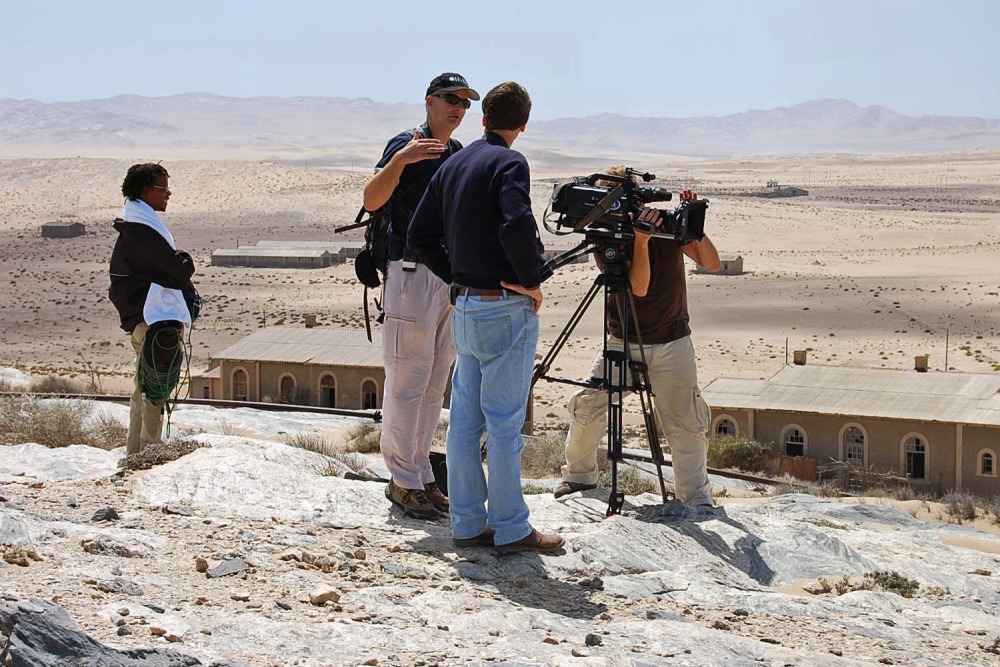
Namibia is emerging as a major international filming destination and the growth of this industry is becoming an important driver of tourism, Simonis Storm Economist Almandro Jansen said.
He said Namibia’s landscapes offer “an unparalleled range” of cinematic environments including the red dunes of Sossusvlei, the Skeleton Coast, the Namib Desert plains and the mountains of Damaraland.
These natural settings require little artificial enhancement, he noted, making them attractive to filmmakers seeking dramatic visuals without heavy CGI costs.
“Over the past two decades, several high-profile international productions have showcased Namibia on global screens. Blockbusters such as Mad Max: Fury Road, filmed extensively around Swakopmund, and the more recent Dune franchise have highlighted the country’s desert landscapes to millions of viewers worldwide,” he said.
Jansen said these productions have become closely tied to Namibia’s visual identity, embedding its dunes, coastal landscapes and desert plains into popular culture.
Earlier films including 10,000 BC, Flight of the Phoenix, A Far Off Place, Starship Troopers 3 and parts of The Mummy also strengthened Namibia’s reputation as a versatile filming location.
Automotive brands such as Mercedes-Benz, Land Rover, Porsche and Audi frequently choose Namibia for global advertising campaigns, thanks to the “premium visual value” of its landscapes, he added.
Nature productions from BBC Earth, National Geographic and Netflix regularly film in Etosha, Damaraland and the Skeleton Coast, which Jansen said gives Namibia sustained international visibility.
According to the Swakopmund Municipality, there has been a noticeable rise in filming applications from South African studios, with kykNET lifestyle, travel, food and reality shows increasingly using Namibia’s coast as a base. Jansen said these productions employ hotels, restaurants, tour operators, equipment rentals and local support staff, while showcasing local culture and scenery to Southern African audiences.
He said the wider economic impact is film-induced tourism, where visitors travel because they recognise the scenery from films.
“Tourism operators in Swakopmund, Walvis Bay, Sesriem and along the Skeleton Coast increasingly report visitors who recognise scenery from Dune or Mad Max, with rising demand for dune drives, photography tours and filming-location excursions,” he said.
Jansen said Namibia can develop film tourism into a strategic industry under competitive incentives and stronger support for local skills through the Namibia Film Commission.
“Medium-sized infrastructure investments, such as sound stages, storage facilities and post-production hubs, would position Namibia to handle more complex shoots while supporting local employment,” he said.
The film sector expansion coincides with government plans to develop Namibia’s first Film and Creative City. President Netumbo Nandi-Ndaitwah launched the Expressions of Interest process in September at the 80th United Nations General Assembly during the Experience Namibia in New York event.
According to the Namibia Investment Promotion and Development Board (NIPDB), the facility will include world-class studios, casting agencies and hospitality services, and will be developed as a Special Economic Zone (SEZ) aimed at positioning Namibia as a leading creative hub in Africa.