Namibia is borrowing more than twice as fast as it is growing, adding between N$8 billion and N$10 billion in new debt each year while foreign direct investment (FDI) inflows continue to decline.
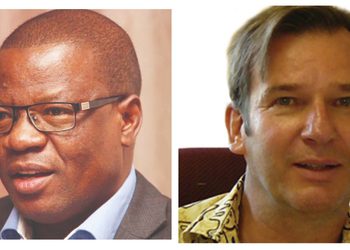
Simonis Storm Economist, Almandro Jansen, said the country is now accumulating more debt per quarter than it receives in foreign investment, signalling a growing structural imbalance in the economy.
“Namibia’s debt burden is expanding faster than its ability to attract productive investment,” Jansen said. “The debt trajectory has become the most pressing macroeconomic risk, with borrowing accelerating while foreign investment weakens.”
Public debt is projected to exceed N$170 billion by the 2026/27 financial year, he said.
According to the Bank of Namibia, FDI inflows dropped to N$6.8 billion in the second quarter of 2025, down from N$12.7 billion in the first quarter, as oil companies reduced equity injections and shifted from exploration to appraisal.
Jansen said this was one of the sharpest quarterly declines in recent years and comes as public debt continues to climb. He noted that Namibia’s public debt now stands at around N$168 billion, or 67.2% of GDP, up from 51% a decade ago.
“The pace of debt accumulation is far outstripping economic growth, which has expanded by only about N$25 billion in nominal terms since 2020,” he said.
He explained that the ratio between FDI and borrowing has inverted, showing that the economy is now more dependent on debt than investment. “Much of the borrowing has gone towards refinancing and operational spending rather than infrastructure or productive assets that can generate future revenue,” Jansen said.
He warned that nearly one in every five Namibian dollars collected in revenue is now used to service debt, with the interest-to-revenue ratio rising to 19%.
Jansen added that the composition of FDI remains narrow, with about 68% of inflows in 2024 coming from extractive industries such as oil, gas and mining, which are capital-intensive but create few jobs.
“When exploration slows, inflows dry up, and no other sector is yet positioned to fill that gap. This concentration risk leaves Namibia heavily exposed to global commodity cycles,” he said.
He also cautioned that Namibia’s growing reliance on domestic borrowing is tightening liquidity in financial markets. “Around 80% of public debt is now held within Namibia, forcing the government to compete with the private sector for funding,” Jansen said.
“The bid-cover ratio at Treasury Bill auctions has dropped from 2.3 to 1.6 since early 2024. This means the state is soaking up liquidity, crowding out businesses that need credit to grow,” he added.
Jansen proposed structural reforms to restore balance, including an investment facilitation desk and a public-private investment council to monitor large projects and speed up approvals.
“Namibia’s fundamentals are sound, but without stronger execution and better investment management, stability will remain an illusion. The real test of fiscal success is not how much we borrow, but how productively we invest,” Jansen said.