Prime Minister Elijah Ngurare says government’s decision to introduce free tertiary education at all state institutions will eliminate a major barrier and open doors to every young Namibian, regardless of their background.
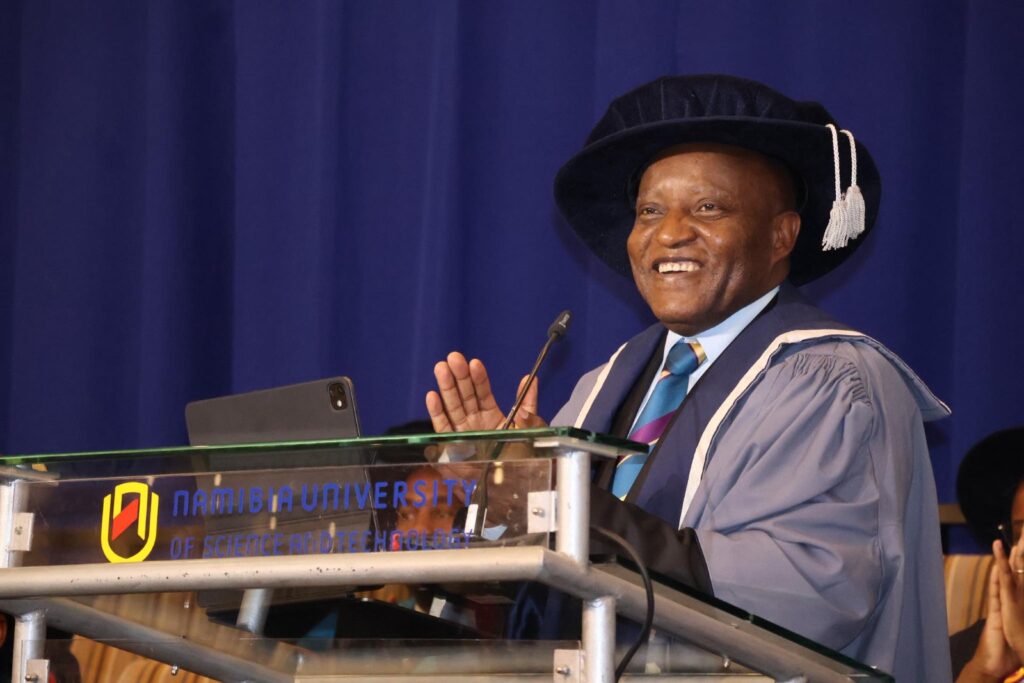
Speaking during the Namibia University of Science and Technology (NUST) graduation ceremony, Ngurare said the move reflects government’s commitment to making education more equitable and accessible.
“This move reaffirms our government’s unwavering dedication to inclusive education. It also positions Namibia as a global example of how investing in young people drives sustainable national development,” he said.
Ngurare emphasised that for countless families, the high cost of higher education has been a major obstacle to opportunity. He said empowering young people with knowledge, skills and confidence will help build a stronger, more equitable Namibia prepared for long-term prosperity.
The Prime Minister’s remarks follow President Netumbo Nandi-Ndaitwah’s announcement in her maiden State of the Nation Address in April that free tertiary education will be introduced at all public institutions from next year.
The President said the policy will be implemented gradually, with initial contributions from students covering accommodation and related expenses, while government will finance the majority of costs through funds previously allocated to the Namibia Students Financial Assistance Fund (NSFAF).
Last year, NSFAF had a budget of N$2.5 billion, supporting more than 53,000 students, including both continuing and new intakes.
Currently, registration fees at public tertiary institutions such as NUST and the University of Namibia range between N$1,900 and N$3,000 for undergraduate programmes, and up to N$4,500 for some courses. Postgraduate registration fees can reach N$9,000, while tuition fees range between N$25,000 and N$40,000 per year.
The Ministry of Education has clarified that non-tuition expenses, including accommodation, meals and transport, will for now remain the responsibility of students, but may be reviewed in future policy discussions.