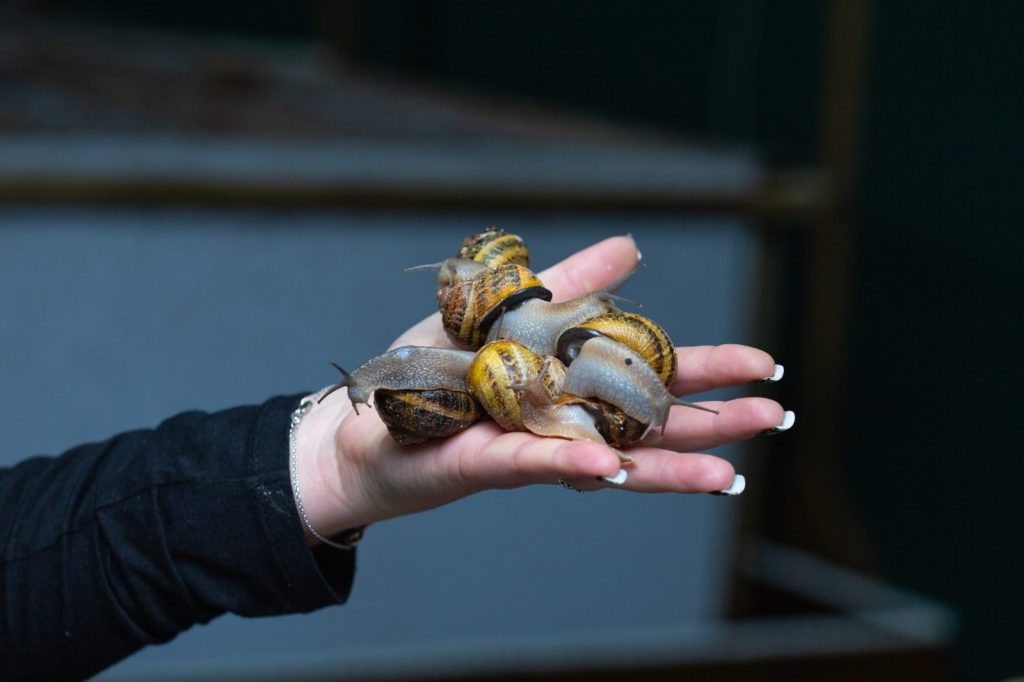
NamSnails, Africa’s first fully climate-controlled snail farm, is targeting exports to the European Union and South African markets after securing certification from the Directorate of Veterinary Services (DVS).
The company is now working towards obtaining an EU import number, which will allow it to expand into regions where demand for high-quality snails is significantly higher than in Namibia.
NamSnails Chief Executive Officer, André Mouton, said local consumption remains largely limited to high-end restaurants, but the company is also exploring strategies to grow domestic demand while positioning Namibia as a competitive exporter.
“In order to successfully export snails, we engaged the Directorate of Veterinary Services to certify NamSnails as an export entity. We successfully completed the certification process. DVS is currently conducting the application process to present our facilities to the EU in order for NamSnails to get their European import number,” he said.
Mouton added that NamSnails has created more than 50 jobs in Swakopmund and plans to expand as production increases.
He described the certification as a critical step towards meeting international standards, particularly for the European market.
The farm is currently operating at 60% capacity, with plans to activate the remaining 40% by the end of 2026.
It began its first harvesting season in July and aims to reach a production rate of 1,000 kilograms per day.
With seasonality no longer a limiting factor, harvesting is expected to be continuous, with the focus on improving efficiencies and maximising production.
“Traditionally snails are harvested from the wild and when farmed, it takes place in open fields that make the process subjected to various natural limitations such as predators and weather, mostly forcing them into hibernation to survive the winter. By providing an environment that manages the ideal growth environment for the snails, we can expand production making it a viable farming venture,” Mouton said.
NamSnails specialises in premium species, Aspersa Maxima and Müller, and employs a sophisticated climate-controlled farming system.
Each 5,000-square-metre unit is divided into sections that regulate temperature, wind and humidity, enabling year-round production.
Located in Swakopmund, the company operates a 25,000-square-metre facility that uses intensive farming techniques and an innovative curtain production system.
Its activities include breeding, hatching and fattening snails for export, as well as processing them for meat, slime and shells, with the choice of species guided by customer demand.