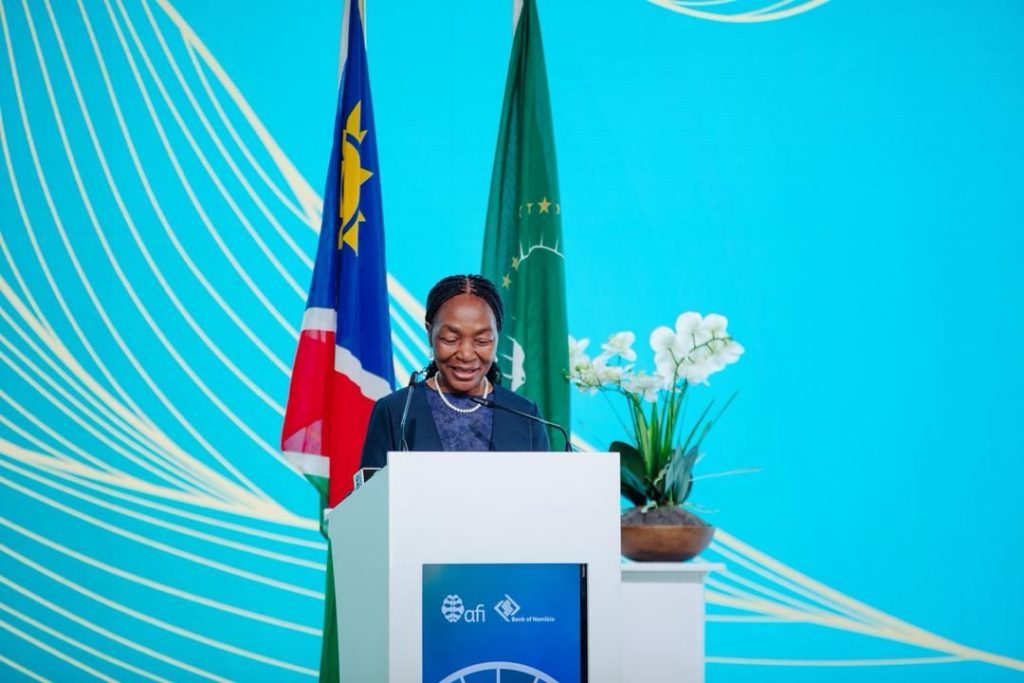
Namibia is exploring emerging technologies such as blockchain, artificial intelligence, and other innovations to advance financial inclusion, Finance Minister Ericah Shafudah has revealed.
Speaking at the 2025 Alliance for Financial Inclusion Global Policy Forum in Swakopmund, Shafudah said the Bank of Namibia, together with key national institutions, has embarked on a comprehensive gap analysis of the country’s digital public infrastructure.
The findings, she noted, will inform a national strategy and roadmap to accelerate rollout and ensure effective implementation.
According to the Minister, these efforts extend beyond payments and basic banking, with government focused on innovation as a driver of inclusion.
Shafudah highlighted that 78% of Namibian adults now have access to formal or informal financial services, a sharp increase from 51% a decade ago.
“According to the FinScope Consumer Survey of 2023, 78% of Namibian adults now have access to formal or informal financial services—a remarkable increase from 51% a decade earlier,” she said.
She credited the progress to deliberate government policies supporting mobile money platforms, financial cooperatives, and regulatory reforms.
But she cautioned that 22% of Namibians remain excluded, with women, youth, rural communities, persons with disabilities, and those in the informal sector most affected.
True inclusion, she said, must go beyond opening accounts to empowering citizens to save, invest, and build resilience. “Reaching them efficiently is our next great frontier, and one which we commit to rapidly achieve,” she said.
The Minister outlined government initiatives aimed at closing the gap, including the Financial Sector Transformation Strategy (2025–2035), which will focus on digital innovation, access to finance, and financial literacy.
Other measures include the N$257 million National Youth Fund to support young entrepreneurs and reforms to social grant disbursements through NamPost to improve access for vulnerable communities.
“The Government has been exploring various measures to deal with this challenge facing the largest and arguably the most critical segment of our demography, the youth,” she said.