Thursday, August 6, 2026
SUBSCRIBE
The Brief | Namibia's Leading Business & Financial News
  • Home
  • Companies
    • Finance
    • Agriculture
    • Technology
    • Property
    • Trade
    • Tourism
  • Business & Economy
  • E-PAPERreader
  • Mining & Energy
  • Opinions
    • Analysis
    • Columnists
  • Africa
No Result
View All Result
The Brief | Namibia's Leading Business & Financial News
  • Home
  • Companies
    • Finance
    • Agriculture
    • Technology
    • Property
    • Trade
    • Tourism
  • Business & Economy
  • E-PAPERreader
  • Mining & Energy
  • Opinions
    • Analysis
    • Columnists
  • Africa
No Result
View All Result
The Brief | Namibia's Leading Business & Financial News
Subscribe
No Result
View All Result
DSTV WC26 Campaign
Home Latest

The role of traditional authorities in agriculture

by reporter
July 17, 2025
in Latest
6
A A

By Hanks Saisai

Namibia is home to many communal areas under the administration of Traditional Authorities.

The country’s aspirations of achieving food security and the crucial role of land in this endeavour, emphasise the influence of Traditional Authorities in overseeing land for Agricultural Production.

For instance, during a recent potato harvest, King Omukwanilwa Fillemon Nangolo and the leadership of the Ondonga Traditional Authority demonstrated the vital role these authorities play in agriculture.

Land is considered a crucial factor of production in any agricultural business. To this end, Traditional Authorities that oversee communal land are essential stakeholders that can help transform communal areas into food producing hubs.

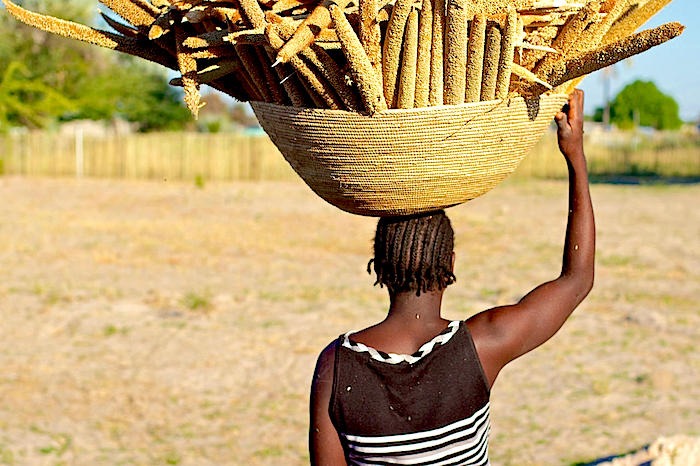
Traditional Authorities can play a crucial role by making land available for the development of agricultural projects aimed at producing cereal crops such as maize, mahangu, wheat and sorghum, vegetables, fruit trees and fodder, among others.

By availing land to the Government for developmental purposes, Traditional Authorities can help create employment opportunities for local communities.

These communities can be involved in land clearing, which could include slashing, burning, stumping and the levelling of land. Additionally, the fencing of such land can also create employment opportunities.

Another role Traditional Authorities can play in Agriculture is by gathering community members to discuss the importance of developing local agricultural projects. These initiatives can be funded through donations raised through monthly contributions, which can be in the form of cash or in-kind donations such as tools, machinery, and labour, among others.

For example, in the Ngoma area of the Zambezi Region, the chief and his community could designate a 50-hectare plot of land next to the Chobe River and invite 50 members to donate funds and in-kind services to help with fencing off, clearing, levelling the land and installing an irrigation system.

This land could be utilised for the production of maize under irrigation from August to November, or under rainfed conditions. During the period of May to August, it could be used for the production of winter vegetables or livestock fodder.

Moreover, the produce from such a project could be sold directly to Government institutions such as school hostels, military bases and hospitals. Approximately 60% of the proceeds can be reinvested in the project to expand its operations, while the remaining 40% can be distributed to project members as dividends.

This model can be expanded to all communal areas that have land that is administered by Traditional Authorities across Namibia to enhance local agricultural production by teaching communities the importance of collective investments.

Additionally, Traditional Authorities can encourage community members in rural areas to venture into small-scale crop, poultry and livestock production. Moreover, to support this initiative, these authorities can connect with markets and input suppliers to advocate for the availability of services needed by farmers, thereby enabling them to expand their operations.

Lastly, since most traditional authorities are aware of most of the agricultural operations of their communities, they can assist farmers to request tailor-made training from training institutions and help them access financing from Development Finance Institutions. These initiatives could significantly enhance productivity, unlock opportunities to secure household food security, create employment and generate income.

* Hanks Saisai is a Technical Advisor: Crops & Poultry at Agribank

author avatar
reporter
See Full Bio
Previous Post

Market dominance in Namibia linked to high prices, poor product quality

Next Post

O&L talent programme empowers 123 youth since 2007

Must Read

Smiling woman with round glasses and a white ruffled collar against a plum background.
Latest

Beyond Skills: Why intellectual property is Namibia’s next creative frontier

August 6, 2026
Blue diesel locomotive with yellow stripe parked on a desert track, pulling a railcar under a clear blue sky in a barren landscape.
Latest

Walvis Bay-Karibib rail corridor targets 25,000 tonnes of freight monthly

August 5, 2026
Woman wearing glasses speaks into a handheld microphone at a National Council event, with a banner in the background.
Latest

Namibia to establish National Data Centre under N$639.2m ICT budget

August 5, 2026
Man in a dark blue traditional outfit presenting at a conference, seated at a desk with a laptop and microphone, a large slide screen behind him.
Latest

Namibia seeks up to US$250m climate funding to drive green industrialisation

August 5, 2026
Namibia’s Green Schemes spend up to N$1 million each a month on power
Latest

Govt ramps up spending to strengthen agriculture and food security

August 5, 2026
A large trade show hall with groups of people networking at booths along colorful exhibitor banners.
Latest

Mining Expo records highest exhibitor turnout as global interest in Namibia grows

August 5, 2026
Load More

Related News

NamRA pays N$10.4bn in tax refunds, collects N$86.9bn

NamRA pays N$10.4bn in tax refunds, collects N$86.9bn

May 16, 2024
NTB staff secure 4.25% salary increase under new wage agreement

NTB staff secure 4.25% salary increase under new wage agreement

September 17, 2025
Africa ready to develop its socio-economic measures

Africa ready to develop its socio-economic measures

October 20, 2023

Browse by Category

  • Africa
  • Agriculture
  • Analysis
  • Business & Economy
  • Columnists
  • Companies
  • Finance
  • Finance
  • Fisheries
  • Green Hydrogen
  • Health
  • Investing
  • Latest
  • Market
  • Mining & Energy
  • namibia
  • Namibia
  • News
  • Opinions
  • Property
  • Retail
  • Technology
  • Tourism
  • Trade
The Brief | Namibia's Leading Business & Financial News

The Brief is Namibia's leading daily business, finance and economic news publication.

CATEGORIES

  • Business & Economy
  • Companies
    • Agriculture
    • Finance
    • Fisheries
    • Health
    • Property
    • Retail
    • Technology
    • Tourism
    • Trade
  • Finance
  • Green Hydrogen
  • Investing
  • Latest
  • Market
  • Mining & Energy
  • namibia
  • News
    • Africa
    • Namibia
  • Opinions
    • Analysis
    • Columnists

CONTACT US

Cell: +264814612969

Email: newsdesk@thebrief.com.na

© 2026 The Brief | All Rights Reserved. Namibian Business News, Current Affairs, Analysis and Commentary

Welcome Back!

Login to your account below

Forgotten Password?

Retrieve your password

Please enter your username or email address to reset your password.

Log In
No Result
View All Result
  • Home
  • Companies
  • Mining & Energy
  • Business & Economy
  • Opinions
    • Analysis
    • Columnists
  • Africa

© 2026 The Brief | All Rights Reserved. Namibian Business News, Current Affairs, Analysis and Commentary

This website uses cookies. By continuing to use this website you are giving consent to cookies being used. Visit our Privacy and Cookie Policy.