Saturday, September 12, 2026
Subscribe
The Brief | Namibia's Leading Business & Financial News
  • Home
  • Companies
    • Finance
    • Agriculture
    • Technology
    • Property
    • Trade
    • Tourism
  • Business & Economy
  • E-PAPERreader
  • Mining & Energy
  • Opinions
    • Analysis
    • Columnists
  • Africa
No Result
View All Result
The Brief | Namibia's Leading Business & Financial News
  • Home
  • Companies
    • Finance
    • Agriculture
    • Technology
    • Property
    • Trade
    • Tourism
  • Business & Economy
  • E-PAPERreader
  • Mining & Energy
  • Opinions
    • Analysis
    • Columnists
  • Africa
No Result
View All Result
The Brief | Namibia's Leading Business & Financial News
Subscribe
No Result
View All Result
Home Companies Agriculture

IMF calls for stronger investment in agriculture to combat climate shocks in Namibia

by reporter
July 17, 2025
in Agriculture
10
A A

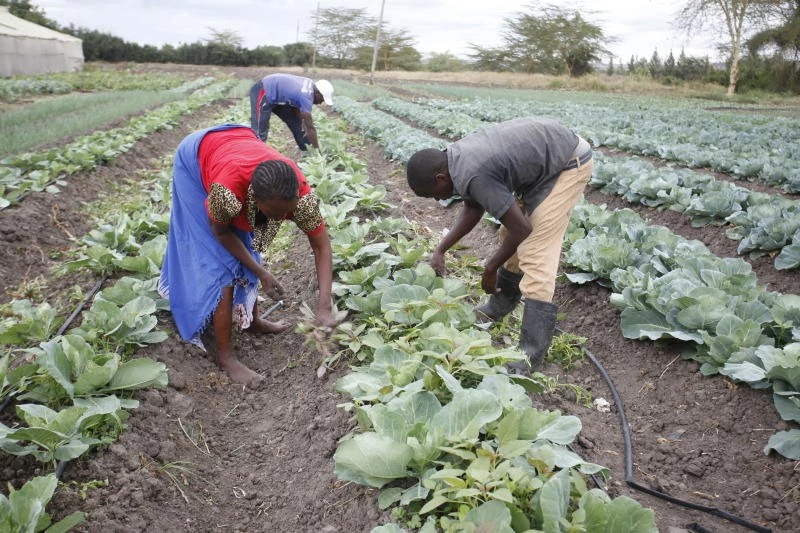
The International Monetary Fund (IMF) has called on Namibia to significantly expand investment in agriculture resilience, warning that worsening drought conditions pose a severe threat to food security, economic growth and fiscal stability.

The IMF’s Selected Issues Paper finds that 92% of Namibia’s land is arid, with rainfall becoming increasingly unpredictable and temperatures rising by 1.2°C over the past century.

Agriculture supports 70% of the population either directly or indirectly, but output has dropped by 31.7% in 2023 and 6.6% in 2024 due to drought.

“Approximately 40% of the population is already facing high levels of acute food insecurity and 84% of food reserves are exhausted as of September 2024,” the IMF stated.

Water stress has compounded challenges. Dam levels fell by 70% in 2024, and reduced flows in the Kunene River cut hydropower output. Namibia now imports over half of its electricity, particularly during the dry season.

“Erratic floods can lead to damages worth 0.4% of GDP by 2030,” the paper notes, adding that urban water scarcity and rural supply failures are both worsening.

The IMF warns that climate shocks could push internal migration, strain social services, and deepen unemployment. In past droughts, up to 550,000 people were affected and damages reached 4% of GDP.

“Namibia ranks 109th out of 187 countries for climate vulnerability, with heightened vulnerabilities in water and food security,” the report highlights.

IMF noted that Agriculture is highly vulnerable to climate change. Indeed, extreme weather events in Namibia have affected primarily the agricultural sector, with consequences for food security given the prevalence of subsistence farming.

“Investment in agriculture is important for raising productivity and reducing future damages to output that could be caused by intensified weather-related shocks,” said the IMF.

The Fund supports a dual strategy combining development and adaptation investment. Its simulations show that a mixed approach using 1.5% of GDP annually, 0.1% for adaptation and 1.4% for development, can significantly cushion long-term output losses.

“Reallocating a modest amount of public development investment to adaptation investment would reduce damages considerably,” it stated.

Underinvestment in adaptation is projected to shrink total output by 7% and raise agricultural imports by 45% by 2050. By contrast, with mixed investment, output losses can be held below 0.5% and import dependency reduced.

“A severe drought condition is estimated to have an adverse impact on GDP growth of 0.7 percentage points in the year following the shock,” the IMF said.

This comes as Namibia has committed 0.9% of GDP toward drought relief since FY23/24, with programs targeting food aid, seed supply and water access. Future spending on water infrastructure is expected to average 0.3% of GDP annually over the medium term.

“Balancing investments between adaptation and broader development goals would help minimise climate-related losses while using fiscal resources more efficiently,” the Fund advised.

A key recommendation is to reduce food import reliance, which currently stands at 39% of agricultural consumption. Climate-resilient farming, insurance schemes, and early warning systems were also proposed.

“It is crucial to plan and implement a sound and fiscally feasible adaptation investment strategy to boost the resilience of agriculture,” the report noted.

author avatar
reporter
See Full Bio
Previous Post

O&L talent programme empowers 123 youth since 2007

Next Post

Voluntary separation: Not a loophole for disguised retrenchment

Must Read

Young corn plants growing in a cracked, dry field under a blue sky, showing drought stress.
Agriculture

Namibia faces agriculture, water and energy pressure as dry 2026/27 season looms

September 7, 2026
Workers in hard hats and gloves stretch a large gray fabric over a worktable in an industrial textile setting.
Agriculture

Meatco targets EU, Asian markets for Namibian leather

September 2, 2026
Namibia among countries seeing modest recovery in cereal output
Agriculture

Namibia’s 2026 cereal output forecast at 155,000 tonnes

September 1, 2026
Professional portrait of a smiling man in a dark suit and blue tie against a white background with glasses on.
Agriculture

LLPBN officially appoints Vehaka Tijimune as CEO

August 31, 2026
Namibia slaughtered over 14 million chickens by end of September
Agriculture

Namibia’s poultry output forecast to rise 13.8% to 3.81 million kg

August 28, 2026
Namibia’s beef exports plunge nearly 50% in Q2
Agriculture

Govt targets Q1 2027 reopening of Oshakati abattoir

August 25, 2026
Load More

Related News

NamibRe declares N$5m dividend

NamibRe declares N$5m dividend

April 12, 2022
//Kharas, Erongo, Hardap and Omaheke pay highest price for maize meal

//Kharas, Erongo, Hardap and Omaheke pay highest price for maize meal

April 8, 2025
Shiimi defends FIMA preservation clause

Shiimi defends FIMA preservation clause

April 12, 2022

Browse by Category

  • Africa
  • Agriculture
  • Analysis
  • Business & Economy
  • Columnists
  • Companies
  • e-edition
  • Finance
  • Finance
  • Fisheries
  • Green Hydrogen
  • Health
  • Investing
  • Latest
  • Market
  • Mining & Energy
  • Namibia
  • namibia
  • News
  • Opinions
  • Property
  • Retail
  • Technology
  • Tourism
  • Trade
The Brief | Namibia's Leading Business & Financial News

The Brief is Namibia's leading daily business, finance and economic news publication.

CATEGORIES

  • Business & Economy
  • Companies
    • Agriculture
    • Finance
    • Fisheries
    • Health
    • Property
    • Retail
    • Technology
    • Tourism
    • Trade
  • e-edition
  • Finance
  • Green Hydrogen
  • Investing
  • Latest
  • Market
  • Mining & Energy
  • namibia
  • News
    • Africa
    • Namibia
  • Opinions
    • Analysis
    • Columnists

CONTACT US

Cell: +264814612969

Email: newsdesk@thebrief.com.na

© 2026 The Brief | All Rights Reserved. Namibian Business News, Current Affairs, Analysis and Commentary

Welcome Back!

Login to your account below

Forgotten Password?

Retrieve your password

Please enter your username or email address to reset your password.

Log In
No Result
View All Result
  • Home
  • Companies
  • Mining & Energy
  • Business & Economy
  • Opinions
    • Analysis
    • Columnists
  • Africa

© 2026 The Brief | All Rights Reserved. Namibian Business News, Current Affairs, Analysis and Commentary

This website uses cookies. By continuing to use this website you are giving consent to cookies being used. Visit our Privacy and Cookie Policy.