Friday, September 11, 2026
Subscribe
The Brief | Namibia's Leading Business & Financial News
  • Home
  • Companies
    • Finance
    • Agriculture
    • Technology
    • Property
    • Trade
    • Tourism
  • Business & Economy
  • E-PAPERreader
  • Mining & Energy
  • Opinions
    • Analysis
    • Columnists
  • Africa
No Result
View All Result
The Brief | Namibia's Leading Business & Financial News
  • Home
  • Companies
    • Finance
    • Agriculture
    • Technology
    • Property
    • Trade
    • Tourism
  • Business & Economy
  • E-PAPERreader
  • Mining & Energy
  • Opinions
    • Analysis
    • Columnists
  • Africa
No Result
View All Result
The Brief | Namibia's Leading Business & Financial News
Subscribe
No Result
View All Result
Home Companies Agriculture

Namibia’s dairy industry production plummets, faces farmer exodus

by editor
January 24, 2025
in Agriculture
8
A A

Namibia’s dairy industry experienced a 35% decline in local milk production over five years, decreasing from 24 million litres in 2017 to 15.6 million litres in 2022.

According to a report released by the Ministry of Agriculture, Water and Land Reform, the number of dairy farmers in the industry has declined, dropping from 27 in 2017 to just four in 2022. There is one intensive dairy production farm and three semi-intensive dairy farmers.

High feed and fodder costs, which are largely imported, have been a major factor driving up production costs and making local dairy less competitive compared to imports from South Africa. 

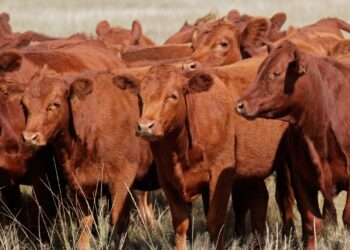
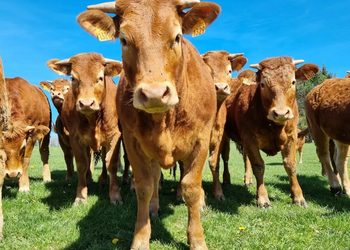
Namibia’s dairy production is split between two primary systems: the intensive system, which relies solely on Friesian cows for milk production, and the semi-intensive or extensive system, which uses Jersey breed and dual-purpose Brown Swiss cattle for both milk and meat production.

The intensive system is dominated by a single large-scale farm, accounting for 90-95% of the country’s total milk production, producing around 1.4 million litres per month.

The few remaining extensive or semi-intensive dairy farmers produce both milk and meat but generate much lower volumes, as they rely on natural grazing. Moreover, the extensive system allows the cow to raise its calf, further reducing milk yields.

To protect and revitalise Namibia’s struggling dairy sector, the report puts emphasis on the comprehensive study by the Livestock and Livestock Products Board (LLPB).

“This study will analyse the dairy value chain and explore mechanisms to safeguard and grow the industry, such as implementing a market protection scheme similar to that already in place for pork and poultry. The study will evaluate options like import levies or quantitative market share restrictions, aiming to level the playing field for local producers against cheaper imports, especially from South Africa,” the document read.

“Follow-up measures for the dairy sub-sector will be guided by the outcome of that study and can include the introduction of producer and retail pricing guidelines to protect local dairy farmers from volatile market conditions, promoting local fodder production and offering support programmes for dairy farmers (such as subsidies for feed and improved access to technology) to reduce production costs.”

Developing and implementing a National Dairy Master Plan, building on the outcomes of the LLPB study, is expected to reverse the decline in local milk production, stabilise the industry and enhance national food security.

Namibia’s agri-food sector consists mainly of subsistence and commercial farming. About 70% of the population is directly or indirectly dependent on the agri-food sector for their livelihoods, with 10% of the population’s income derived from subsistence farming, while commercial farming accounts for 0.3%.

Since 1990, the agricultural sector has contributed an average of 5.1% to GDP but has been declining from around 8% to around 3.5% since 2006, partly due to climate change and reduced investment in the sector.

An estimated 8% of the country receives average rainfall suitable for crop production. Climate variability affects agricultural production and exacerbates household food insecurity in many areas. However, there is potential to increase production through irrigation.


author avatar
editor
See Full Bio
Previous Post

Namibia advances 5G strategy 

Next Post

Who owns Namibia’s green future?

Must Read

Young corn plants growing in a cracked, dry field under a blue sky, showing drought stress.
Agriculture

Namibia faces agriculture, water and energy pressure as dry 2026/27 season looms

September 7, 2026
Workers in hard hats and gloves stretch a large gray fabric over a worktable in an industrial textile setting.
Agriculture

Meatco targets EU, Asian markets for Namibian leather

September 2, 2026
Namibia among countries seeing modest recovery in cereal output
Agriculture

Namibia’s 2026 cereal output forecast at 155,000 tonnes

September 1, 2026
Professional portrait of a smiling man in a dark suit and blue tie against a white background with glasses on.
Agriculture

LLPBN officially appoints Vehaka Tijimune as CEO

August 31, 2026
Namibia slaughtered over 14 million chickens by end of September
Agriculture

Namibia’s poultry output forecast to rise 13.8% to 3.81 million kg

August 28, 2026
Namibia’s beef exports plunge nearly 50% in Q2
Agriculture

Govt targets Q1 2027 reopening of Oshakati abattoir

August 25, 2026
Load More

Related News

The leap from Gen-AI to Agentic AI: Where are we (Namibia)?

The leap from Gen-AI to Agentic AI: Where are we (Namibia)?

August 28, 2025
The power of budgeting

The power of budgeting

October 30, 2024
GIPF acquires 49% shareholding in Tsumeb Private Hospital

GIPF acquires 49% shareholding in Tsumeb Private Hospital

October 18, 2021

Browse by Category

  • Africa
  • Agriculture
  • Analysis
  • Business & Economy
  • Columnists
  • Companies
  • e-edition
  • Finance
  • Finance
  • Fisheries
  • Green Hydrogen
  • Health
  • Investing
  • Latest
  • Market
  • Mining & Energy
  • Namibia
  • namibia
  • News
  • Opinions
  • Property
  • Retail
  • Technology
  • Tourism
  • Trade
The Brief | Namibia's Leading Business & Financial News

The Brief is Namibia's leading daily business, finance and economic news publication.

CATEGORIES

  • Business & Economy
  • Companies
    • Agriculture
    • Finance
    • Fisheries
    • Health
    • Property
    • Retail
    • Technology
    • Tourism
    • Trade
  • e-edition
  • Finance
  • Green Hydrogen
  • Investing
  • Latest
  • Market
  • Mining & Energy
  • namibia
  • News
    • Africa
    • Namibia
  • Opinions
    • Analysis
    • Columnists

CONTACT US

Cell: +264814612969

Email: newsdesk@thebrief.com.na

© 2026 The Brief | All Rights Reserved. Namibian Business News, Current Affairs, Analysis and Commentary

Welcome Back!

Login to your account below

Forgotten Password?

Retrieve your password

Please enter your username or email address to reset your password.

Log In
No Result
View All Result
  • Home
  • Companies
  • Mining & Energy
  • Business & Economy
  • Opinions
    • Analysis
    • Columnists
  • Africa

© 2026 The Brief | All Rights Reserved. Namibian Business News, Current Affairs, Analysis and Commentary

This website uses cookies. By continuing to use this website you are giving consent to cookies being used. Visit our Privacy and Cookie Policy.