The Benguela Current Commission (BCC) has called for a review of Namibia’s aquaculture sector growth potential, suggesting the Master Plan’s projections may have been overly optimistic.
BCC said with oyster and abalone farming now commercially established, it emphasised the importance of securing EU market access to drive expansion and profitability.
“Oyster and abalone farming are commercially established and set to grow organically from the sound value chain base that has been established. The need is to open new markets, with EU shellfish health certification being critical in the short term. If EU market access can be secured, the existing farms can expand to profitable economies of scale,” said the BCC.
The development follows a recent acquisition of an Environmental Clearance Certificate (ECC) by the Ministry of Fisheries and Marine Resources and BCC to develop marine aquaculture in Namibia specifically in the coastal towns of Swakopmund, Walvis Bay (in Erongo Region) and Lüderitz in the //Kharas Region.
Meanwhile, the Ministry said Namibia needs a shellfish sanitation regulation to get EU certification, which it currently doesn’t have.
“For Namibia to get an EU certification, the country is first required to have a shellfish sanitation regulation in place. Which currently, the country does not have,” said Fisheries Ministry spokesperson Uaripi Katjiukua.
Meanwhile, the report further highlighted Namibia’s challenging physical environment for marine aquaculture and the importance of supportive government policies and a strong regulatory framework in establishing a commercial aquaculture sector focused on oysters, abalone and mussels.
“Sulphur eruptions in 2008 and toxin-related closures due to harmful algal blooms have significantly constrained aquaculture production in Walvis Bay, leading to closures and consolidations,” the report noted.
Despite efforts, production of economically significant mariculture species has declined from 2016 to 2021, accompanied by a 25% decrease in sector employment rates, largely due to variable environmental conditions along the Atlantic coast.
According to a report by the BCC, “aquaculture production has remained stagnant at around 600,000 tonnes over the last decade, posing challenges to meeting the targets of the Master Plan for Aquaculture in Namibia.”
BCC said a logical new opportunity is for the existing oyster value chain to diversify into other bivalves such as scallops and clams, which is again contingent on EU market access.
“The future of mussel culture is uncertain given the complete dependence on Walvis Bay and the erratic production due to closures as a result of DSP and the threat of sulphur eruption events,” said the overview.
Banguela recommends that Rock lobster (Jasus Lalandii) could be a small commercial niche opportunity, through the growing of puerulus harvested off oyster and mussel lines.
However, “there is no established commercial technology for this and a pilot project would be required to test the feasibility. Excess small mussels from the mussel farm in Walvis Bay could provide a low-cost feed source.”
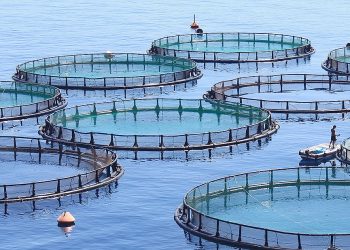
Namibia’s ambitions for finfish culture face a near-term setback as the country lacks the ideal water conditions needed for successful cage aquaculture.
Additionally, the BCC points out that raising marine fish in land-based systems (shore-based recirculating systems) isn’t a viable alternative due to high production costs and the distance to markets.
BCC said any investment in marine finfish hatchery and grow-out production would require a substantial minimum production volume (500-1000t) with access to a premium market.
“As the Namibian market is very small, an export market would be required,” said the Commission.
This comes as the 2013-2023 Master Plan for Marine Aquaculture in Namibia aimed to increase total aquaculture production to 5,500 tonnes by 2023.
Targets included expanding oyster and abalone production, establishing new farms at Oranjemund, developing marine finfish recirculation at Walvis Bay, launching tuna ranching, and initiating pilot projects for new species by 2017.