Livestock farmers continue to face difficult times exacerbated by climate change manifested through adverse events such as drought, floods, pests, and disease outbreaks that have been experienced in many parts of the country in recent years.
It is evident that these events are increasing in frequency, and therefore farmers need to re- assess their farm resources such as grazing, fodder, water, and finances regularly to effectively respond to such changes. Furthermore, veld fires and heat waves are yet to come, and farmers should adequately prepare to lessen the impact of these adverse events on their enterprises.
Some of these challenges or risks cannot be eliminated, but their impact can be minimized through proper planning and adoption of appropriate and sustainable farming practices. These will continue to threaten livestock health, nutrition, reproduction, and general wellbeing. Thus, farmers need to continuously ensure that their livestock does not succumb to these challenges.
Annual plans for vaccinations to prevent common diseases such as Anthrax, Brucellosis, Pasteurellosis, Enterotoxaemia, Lumpy skin disease, and controlling of both internal and external parasites, as well as seasonal lick and feed supplementation, and general livestock husbandry and welfare practices must be developed and rigorously adhered to.
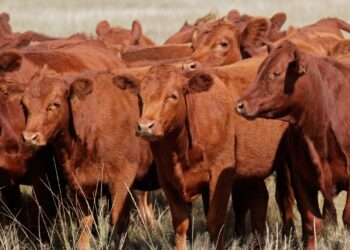
Nutritional supplementation is critical as livestock require a sufficient supply of nutrients throughout the year to respond to seasonal changes in rangeland conditions and body demands. Grazing livestock such as cattle and sheep are the most vulnerable to nutritional deficiency, especially mineral deficiencies as a result of the soil-mineral concentration, especially in sandy areas that are beyond the grass root zones for uptake.
Moreover, most valuable grasses have been overutilized and are scarce or have completely disappeared from some grazing areas due to overgrazing practices. During the rainy season or the summer months, the focus has been on mineral supplementation, with greater emphasis on phosphorus as it is deficient in soils. Phosphorus plays a principal role in the metabolism, where is it needed to enhance chemical reactions in the
body especially when animal feed intake is higher. It also plays a significant role in structural capacity (e.g., strong bones) and reproductive performance. The deficiency of phosphorus is characterized by animals developing an appetite known as “Pica” where they are observed to eat bones, rocks, plastics, rubbers, etc. In addition, they also develop joint pain and a weak bone structure amongst others.
Generally, as winter approaches, grasses stop growing and go into the dormancy period where the nutrients are relocated to the root system as reserves for regrowth in the next season. During this time, grasses dry up and shed seeds thus resulting in the loss of vitamin A and much of the protein in the process. Thus, they are the first nutritional constituents to be deficient in animals.
Therefore, farmers need to inoculate their animals with vitamin A and shift to dry season lick supplements to principally provide protein to the animals. One of the ingredients needed in the dry season supplements is urea as it enhances the digestion of dry forage materials through increased population and strength of the rumen microorganisms responsible for digestion in ruminant animals.
In the latter part of the dry season, the animal’s demand for energy increases as the grass plants become depleted or scarcer or grazed to the maximum and animals will be compelled to walk long distances as the foraging radius increases. Thus, energy supplements need to be added to the protein supplements, and in certain cases especially when there is a grazing shortage, roughage feeds or hay will be needed to fill the rumen. Since many farmers have planted crops, they can cheaply use processed crop residues and forage materials such as pods as dry season feed supplements.
In many areas, winter is also the period during which goats and sheep will be giving birth for some farmers. This is a critical period that requires extra effort in ensuring that the birth process is smooth and that the lambs and kids survive. The most prominent challenge the lambs and kids will face is to survive the cold conditions of the winter months, thus, farmers need to provide shelters to keep them warm. These include houses, digging pits, and enclosures covered with heat-trapping material such as black plastic sheets or conveyer belts (rubber) used in mining amongst others.
The cold conditions can also result in respiratory infections, mainly pneumonia (Pasteurellosis). Thus, the mothers must have been vaccinated already to pass the immunity to the young ones through milk (colostrum) at least in the first month, or the young can be vaccinated at least at two weeks of age. In addition, the lambs and kids need sufficient milk and feeds (creep feeds) to generate heat to keep warm and maintain optimal growth. Therefore, mothers (ewes and does) need sufficient feeds to produce adequate milk for their young.
Another challenge for the young ones will be parasites such as mites, fleas, and lice. These parasites will compromise the health and growth potential of lambs and kids; thus, they need to be controlled.
Furthermore, dirty (e.g., dusty, excessive dung) kraals are a health hazard, predisposing them to diseases such as respiratory, eye infections, and parasite infestation amongst others. A clean, healthy, and safe kraal environment plays a big role in the survival of lambs and kids, and the general wellbeing of your animals.
Therefore, all potentially harmful conditions in your production environment need to be addressed.
In conclusion, your farm productivity depends on the animal, the environment, and your management. A successful production cycle is one where the animal is born and raised to survive until it reproduces or is marketed. Therefore, farmers need to develop appropriate management plans that are responsive to the changing conditions in their production environment.
These include seasonal feed shortages, pest and disease outbreaks, and market changes amongst others. Lastly, closer, and regular inspection of livestock behavior and condition is critical to ensure early responses.
* Erastus Ngaruka is Technical Advisor: Livestock & Rangeland at Agribank