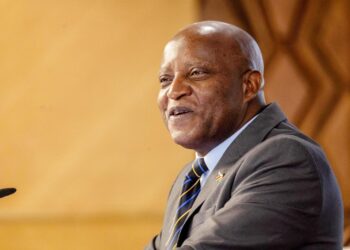
The Minister of Agriculture, Water and Land Reform, Calle Schlettwein, has emphasised the importance of addressing the divide in Namibia’s agricultural livestock sector, particularly in relation to the Redline.
In an address to the Meat Board of Namibia’s board members, the Minister stated that the Redline represents the divide between the commercial, disease-free livestock sector in the south and the communal sector in the northern parts of the country, where diseases still exist.
“The split between the commercial, disease-free livestock sector south of the Redline and the communal sector in the northern parts of the country, where diseases are still prevalent, is an ugly remnant of the divide-and-rule strategies of the colonial powers,” he said.
The Minister further emphasised the need to address the disparity between the commercial and communal sectors, ensuring equal market opportunities and prospects for farmers throughout the country.
He noted that Namibia has always been a surplus producer of cattle, and export trade has created significant wealth pre- and post-independence.
According to Schlettwein, the dual economy in Namibia, with a commercial agricultural livestock sector south of the fence and a communal farming sector north of it, makes the divide most explicitly in the agricultural livestock sector.
Schlettwein said: “It is in the public’s interest that the livestock sector flourishes and provides the Nation with food, creates and maintains jobs and equal economic opportunities to all farmers, regardless whether north or south of the VCF.”
However, he asserts that to be successful in these regards, there is a need to comply with market conditions related to the quality of the product, traceability of products, off-take quantity and best prices for the producer.
“While at the same time, consumer interest related to health and hygiene provisions and reasonable prices are equally maintained, the meat industry was made a regulated industry. You, the Meat Board are saddled with a task to manage this complex and important industry,” he added.
Minister Schlettwein stressed that the prosperity of the livestock sector is in the public interest, as it contributes to food security, job creation, and equal economic opportunities for all farmers, regardless of their location.
The Minister also called upon the Meat Board to manage this complex and vital industry, with the joint mandate of improving the meat industry, enhancing value addition, and ultimately improving the livelihoods of livestock farmers.
Acknowledging the complexity and emotional attachment of farmers to their land and animals, Minister Schlettwein emphasised the need to enhance productivity, wealth creation, and overall satisfaction within the sector.
Addressing governance issues within the meat industry, the Minister reiterated the purpose of the Meat Board as a statutory institution aimed at regulating the sector.
“Namibia’s history as a surplus producer of cattle and the significant wealth generated through export trade is motivation behind establishing effective regulation,” he said.
This comes as Northern communal farmers have for years been deprived of markets due to rampant diseases in the area, while their counterparts in the south of the Redline had access to lucrative export markets in the EU and Norway, and the United States.
The NCA, which comprises Zambezi, Kavango East, Kavango West, Oshikoto, Ohangwena, Omusati, Oshana, and Kunene regions, is a livestock-rich part of Namibia with approximately 1.6 million cattle representing 64% of the national cattle herd estimated to be at 2.5 million.
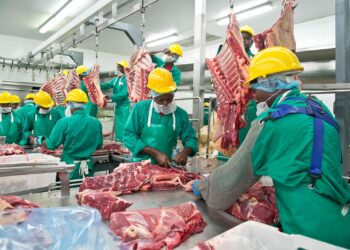
On a positive note, Northern communal farmers may get an opportunity to export beef to the European market following plans to construct a N$35 million meat processing plant at Katima Mulilo funded by the European Union (EU).
Similarly, Namibia’s first consignment of Namibian beef from the NCA arrived at Tema port in Accra, Ghana last year in June.
The shipment consisted of 14 tonnes of beef from Meatco’s Katima Mulilo Abattoir, imported by Abanga Farms and Food Systems, a Ghanaian company that has signed a contract with Meatco as a sole distributor. The Ghanaian company is targeting to also distribute beef in West Africa.