Government is seeking to link domestic and foreign investment to job creation, local procurement and skills transfer under proposed legislation aimed at ensuring greater participation by Namibian businesses in the economy.
Minister of International Relations and Trade Selma Ashipala-Musavyi said investors must deliver on commitments to create employment, develop local capacity and support domestic enterprises, while government addresses barriers to doing business.
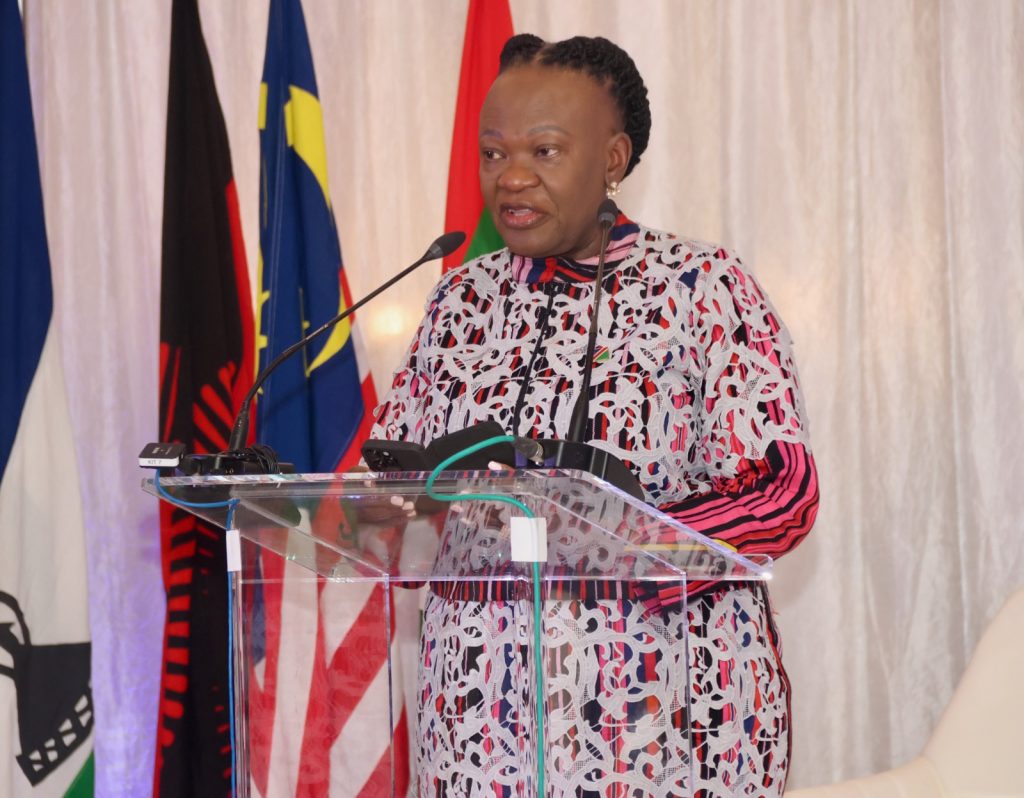
Speaking at the second Namibia Public-Private Forum (NamPPF II) in Windhoek, Ashipala-Musavyi said the Namibia Investment Promotion and Facilitation Bill, introduced in Parliament in November 2026, seeks to attract and retain investment that contributes directly to the country’s economic development.
“Partnership cannot be built on expectations alone. It must be built on mutual commitments that are realistic, responsibilities that are clearly defined and actions that can be measured,” she said.
The proposed legislation would empower the minister to reserve selected economic sectors for exclusive participation by Namibians.
“Most importantly, the Bill empowers the Minister to designate certain economic sectors for the exclusive participation of Namibians. This is to ensure that local Namibians, young entrepreneurs, women and MSMEs benefit from the economy,” Ashipala-Musavyi said.
The minister said large investors should operate alongside domestic enterprises, creating opportunities for local businesses to supply goods and services, participate in procurement and integrate into national and regional supply chains.
She identified access to finance, markets and procurement opportunities as critical to supporting the growth of micro, small and medium enterprises (MSMEs).
The proposed investment legislation, which underwent consultations across all 14 regions, also provides for the establishment of an investment promotion agency, investment admission criteria, dispute resolution mechanisms and investor protection guarantees.
Meanwhile, the government introduced the International Trade Management Bill in Parliament in October 2026 to strengthen the country’s trade regulatory framework and protect domestic industries against unfair competition.
The bill provides for the establishment of a commission to investigate and recommend adjustments to customs duties, rebates and refunds.
It also proposes anti-dumping, countervailing and safeguard measures to protect domestic producers against unfairly priced imports, subsidised goods and import surges.
Provision is also made for infant industry protection under Article 26 of the Southern African Customs Union (SACU) Agreement, allowing emerging industries time to build production capacity, create jobs and become competitive.
“These important pieces of legislations are some of the tools to enhance our competitiveness, as they will provide investor confidence and certainty,” Ashipala-Musavyi said.
She said the government must also address regulatory bottlenecks, administrative delays, infrastructure constraints, skills shortages and the cost of doing business to improve Namibia’s investment competitiveness.
Ashipala-Musavyi said attracting investment alone was insufficient, stressing that economic growth must translate into employment, business opportunities and greater economic participation for Namibians.