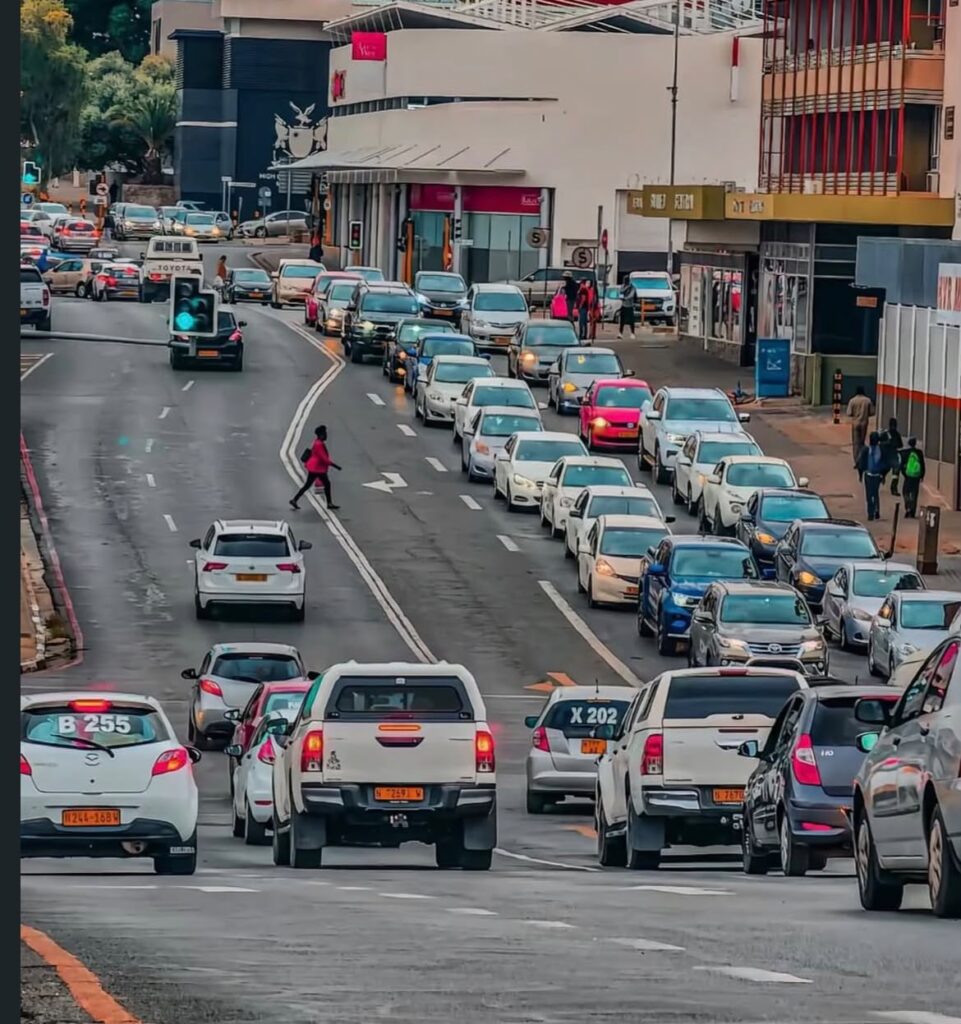
Windhoek’s rising vehicle population, fuelled in part by a surge in grey imports from Japan, the United Kingdom and, more recently, Singapore, is putting mounting pressure on the capital’s road network, with nearly 420,000 registered vehicles in a city of approximately 500,000 residents.
The City of Windhoek has acknowledged that the growing number of vehicles is contributing to increased traffic congestion, as existing road infrastructure struggles to accommodate rising demand.
City of Windhoek spokesperson Harald Akwenye said while vehicle imports were contributing to higher traffic volumes, congestion needed to be addressed as a broader urban mobility challenge.
“The increasing number of vehicles on our roads, including imported vehicles, contributes to the overall growth in traffic volumes and places additional pressure on the existing road network,” Akwenye said.
He said population growth, urban expansion, increased economic activity and changing commuting patterns were also contributing to congestion, alongside the concentration of commercial activities in certain areas.
Pressure on the capital’s road network is further compounded by approximately 20,500 vehicles entering Windhoek daily through its northern and southern corridors.
Khomas Governor Sam Nujoma previously warned that the capital’s dependence on private vehicles had become unsustainable, calling for urgent investment in alternative public transport systems.
“The City of Windhoek continues to face significant urban mobility pressures, with approximately 16,000 vehicles entering Windhoek daily via the northern corridor and 4,500 via the southern corridor, against nearly 420,000 registered vehicles in a city of around 500,000 residents, reflecting an unsustainable, car-dependent mobility model that requires proactive and decisive investment in alternative forms of public transportation,” Nujoma said.
Despite the growing pressure on road infrastructure, Akwenye said the availability of relatively affordable imported vehicles had economic and social benefits, particularly for Namibians unable to afford new or locally available vehicles.
He said increased access to private transport had improved mobility and access to economic opportunities while making vehicle ownership more affordable for households.
As Windhoek continues to expand, the municipality is prioritising road infrastructure improvements, better traffic management and improved traffic flow at major intersections.
The City is also promoting public transport and alternative modes of transport to ease pressure on the capital’s road network.
“Ultimately, the challenge is to balance the benefits of increased vehicle ownership and affordability with the need to manage traffic congestion and ensure a sustainable, efficient and accessible urban transport system for all residents,” Akwenye said.