Wednesday, November 18, 2026
Subscribe
The Brief | Namibia's Leading Business & Financial News
  • Home
  • Companies
    • Finance
    • Agriculture
    • Technology
    • Property
    • Trade
    • Tourism
  • Business & Economy
  • E-PAPERreader
  • Mining & Energy
  • Opinions
    • Analysis
    • Columnists
  • Africa
No Result
View All Result
The Brief | Namibia's Leading Business & Financial News
Subscribe
No Result
View All Result
Home Green Hydrogen

Namibia needs US$14bn for climate action, seeks 90% from international funders

by reporter
November 18, 2026
in Green Hydrogen
5
A A
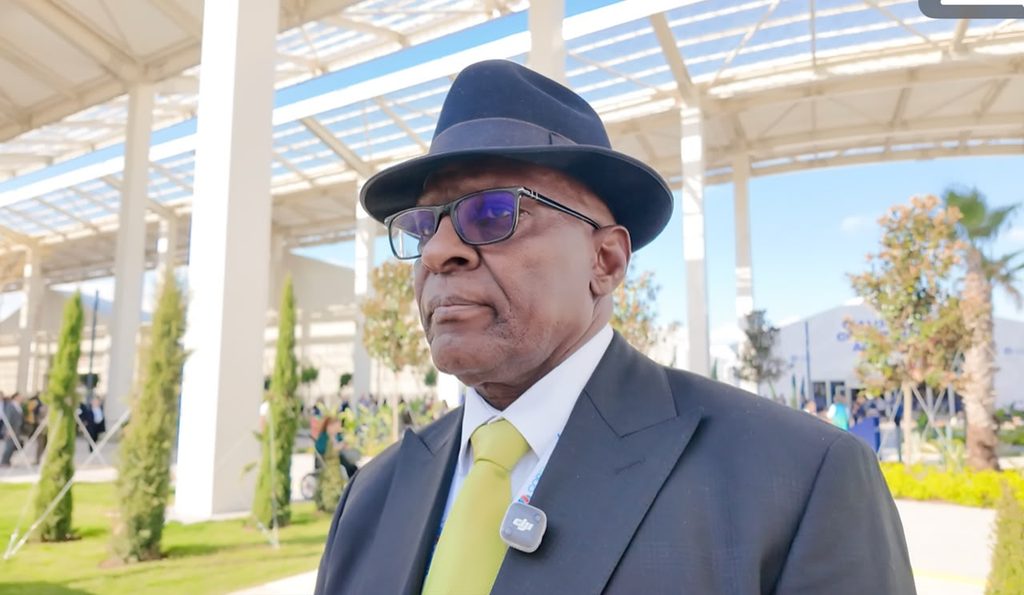
Man in a dark suit and lime-green tie, wearing a fedora and glasses, at an outdoor event; a clip-on microphone rests on his lapel with a sunny, columned venue in the background.

Namibia requires US$14 billion to implement its climate commitments by 2035, with approximately 90% of the funding dependent on international financial support, National Planning Secretariat Director General Kaire Mbuende has said.

Speaking at the high-level segment of the United Nations Climate Change Conference (COP31) in Antalya, Türkiye, on Wednesday, Mbuende said Namibia could not achieve its climate targets without substantial financial assistance from developed countries.

The funding requirement forms part of Namibia’s Third Nationally Determined Contribution (NDC), which targets reductions of approximately 23 million tonnes of carbon dioxide-equivalent emissions while strengthening the country’s resilience to climate change.

Based on the funding estimates, Namibia would require approximately US$12.6 billion in international support, with the remaining US$1.4 billion expected to be mobilised through domestic resources.

“Ambition without adequate means of implementation risks becoming an empty promise,” Mbuende said.

He raised concerns over the shortage of climate finance reaching developing countries, warning that increasing reliance on loans to finance climate adaptation and mitigation could worsen debt burdens in vulnerable economies.

“It is unacceptable that countries least responsible for this crisis must increasingly finance their survival through loans, thereby deepening their debt burdens,” he said.

Mbuende called for climate adaptation funding to be provided primarily through grants and highly concessional financing to help developing countries protect communities, infrastructure and livelihoods against climate-related risks.

He cited estimates showing that developing countries require between US$455 billion and US$584 billion annually to implement their NDC commitments, highlighting the gap between climate financing needs and available resources.

Mbuende said Namibia remained particularly vulnerable to climate change, with rising climate risks already affecting livelihoods, economic development and long-term growth prospects.

Despite these challenges, he said Namibia remained committed to implementing its climate targets and pursuing development strategies that strengthen resilience to climate change.

He also warned that the world was at risk of exceeding the Paris Agreement’s 1.5°C temperature target, calling for greater responsibility from countries with historically high greenhouse gas emissions.

Mbuende said global climate action should be guided by the polluter-pays principle, historical responsibility, equity and the principle of common but differentiated responsibilities and respective capabilities.

“Climate action must be anchored in climate justice, intergenerational equity and respect for national circumstances and development priorities,” he said.

He urged COP31 participants to prioritise the implementation of existing climate commitments and the delivery of financial resources rather than continuing to negotiate targets without adequate funding.

“We cannot continue to negotiate commitments while failing to deliver the resources necessary to implement them,” Mbuende said.

He said the success of COP31 should be measured by the extent to which countries translate climate commitments into practical action and deliver financial and technical support to vulnerable developing economies.

author avatar
reporter
See Full Bio
Previous Post

Namibia’s exports to EU rise 17% to N$17.6bn, supporting 40,000 jobs

Must Read

Close-up of a man in a dark suit and red tie speaking at a climate finance conference, with banners reading 'Delivering Finance for Climate Action' in the background.
Green Hydrogen

CIF requires 50% private sector allocation in Namibia’s green industrialisation financing plan

November 16, 2026
Aerial view of dark solar panels arranged in rows on sandy desert with a cluster of white buildings in the distance.
Green Hydrogen

SDG Namibia One secures N$2.15 billion in funding commitments for green hydrogen projects

November 4, 2026
Industrial facility in a desert with large metal equipment, yellow safety railings, and rows of solar panels in the distance under a clear blue sky.
Green Hydrogen

Namibia secures N$1 billion for green hydrogen, industrial projects

October 29, 2026
Five adults in smart attire posing outdoors with a plaque at the Innovent Wind Farm site in a desert under a clear blue sky.
Green Hydrogen

Institutional investors back N$1.6bn Diaz Wind Farm

October 27, 2026
NCAA appoints Nelson Ashipala as Communications Manager
Green Hydrogen

ECB, NamPower to convene electricity sector forum on industry transformation

October 8, 2026
Hyphen launches national census to identify skills for green hydrogen sector
Green Hydrogen

Hyphen secures N$106m AfDB grant for green hydrogen project

September 22, 2026
Load More

Related News

Namibia could hold one of the world’s largest lithium deposits – AfriTin

Namibia could hold one of the world’s largest lithium deposits – AfriTin

June 8, 2022
SARB considers interest rate modelling changes

SARB considers interest rate modelling changes

May 10, 2023
Keller’s imagery and feelings: what you see is what you feel

Keller’s imagery and feelings: what you see is what you feel

August 21, 2024

Browse by Category

  • Africa
  • Agriculture
  • Analysis
  • Business & Economy
  • Columnists
  • Companies
  • e-edition
  • Finance
  • Finance
  • Fisheries
  • Green Hydrogen
  • Health
  • Investing
  • Latest
  • Market
  • Mining & Energy
  • namibia
  • Namibia
  • News
  • Opinions
  • Property
  • Retail
  • Technology
  • Tourism
  • Trade
The Brief | Namibia's Leading Business & Financial News

The Brief is Namibia's leading daily business, finance and economic news publication.

CATEGORIES

  • Business & Economy
  • Companies
    • Agriculture
    • Finance
    • Fisheries
    • Health
    • Property
    • Retail
    • Technology
    • Tourism
    • Trade
  • e-edition
  • Finance
  • Green Hydrogen
  • Investing
  • Latest
  • Market
  • Mining & Energy
  • namibia
  • News
    • Africa
    • Namibia
  • Opinions
    • Analysis
    • Columnists

CONTACT US

Cell: +264814612969

Email: newsdesk@thebrief.com.na

© 2026 The Brief | All Rights Reserved. Namibian Business News, Current Affairs, Analysis and Commentary

Welcome Back!

Login to your account below

Forgotten Password?

Retrieve your password

Please enter your username or email address to reset your password.

Log In
No Result
View All Result
  • Home
  • Companies
  • Mining & Energy
  • Business & Economy
  • Opinions
    • Analysis
    • Columnists
  • Africa

© 2026 The Brief | All Rights Reserved. Namibian Business News, Current Affairs, Analysis and Commentary

This website uses cookies. By continuing to use this website you are giving consent to cookies being used. Visit our Privacy and Cookie Policy.