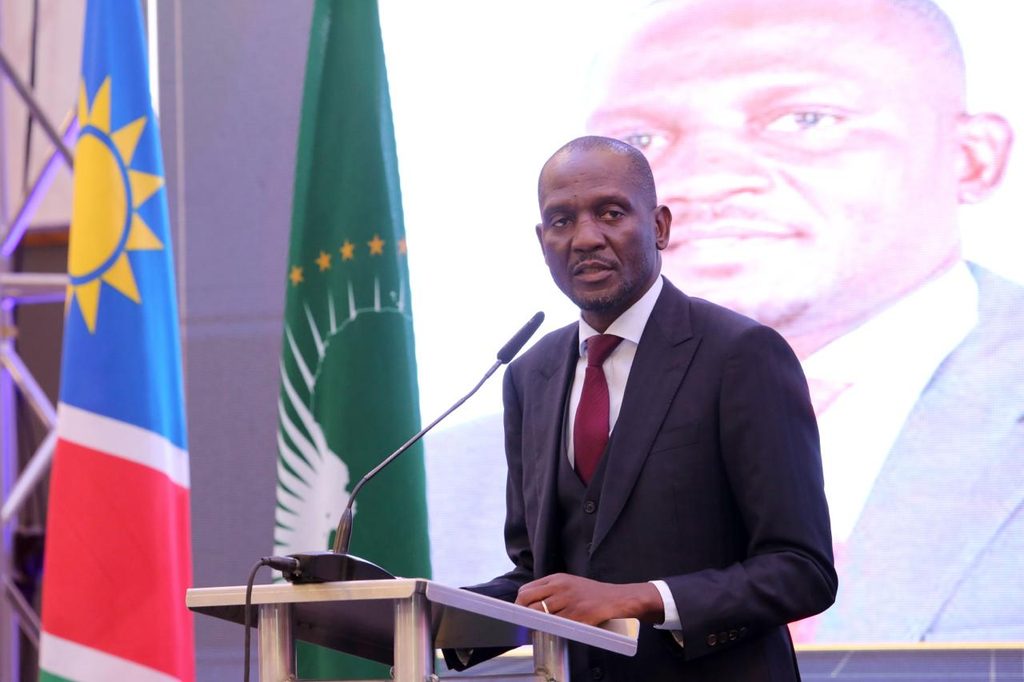
Namibia plans to upgrade critical sections of four major regional trade corridors to improve road safety, ease capacity constraints and reduce transport and logistics costs, Works and Transport Minister Veikko Nekundi has said.
Speaking at the opening of the World Road Association and Roads Authority seminar in Windhoek on Wednesday, Nekundi said the government remained committed to upgrading and maintaining the Trans-Kalahari, Trans-Zambezi, Trans-Kunene and Trans-Orange corridors to strengthen Namibia’s position as a regional logistics hub.
The Trans-Kalahari Corridor connects Namibia through Botswana to South Africa’s Gauteng economic hub, while the Trans-Zambezi Corridor provides access to Zambia, the Democratic Republic of Congo (DRC) and other Southern African markets.
The Trans-Kunene Corridor links Namibia to Angola, while the Trans-Orange Corridor connects southern Namibia to South Africa.
Nekundi said improving the condition and capacity of these routes was critical to facilitating cross-border trade and strengthening access to regional and international markets.
“By protecting the condition of these important routes, addressing capacity and safety requirements, and progressively upgrading critical sections, we aim to enhance the reliability and efficiency of cross-border transport,” he said.
The minister said stronger cooperation between countries and improved corridor management would be necessary to ensure the routes remain reliable and support growing regional trade.
He also called for greater private sector participation in road infrastructure development through public-private partnerships (PPPs), particularly for commercially viable trade corridor projects.
However, Nekundi stressed that infrastructure financing arrangements must demonstrate economic value, ensure appropriate risk allocation and protect long-term public interests.
He said Namibia should prioritise the maintenance of existing road infrastructure while investing in rural feeder roads to improve access to markets and connect communities to major trade routes.
Nekundi further called for transparent procurement processes, fair competition and stronger accountability in the implementation of road infrastructure projects.
He said road authorities should consider the full lifecycle costs of infrastructure projects, including future maintenance and rehabilitation requirements, during the planning and design stages to ensure the long-term sustainability of the country’s road network.