The Namibian government has allocated more than N$867 million for the development, maintenance and rehabilitation of water infrastructure, as overall funding for the water sector increases by nearly 39% to more than N$1.039 billion.
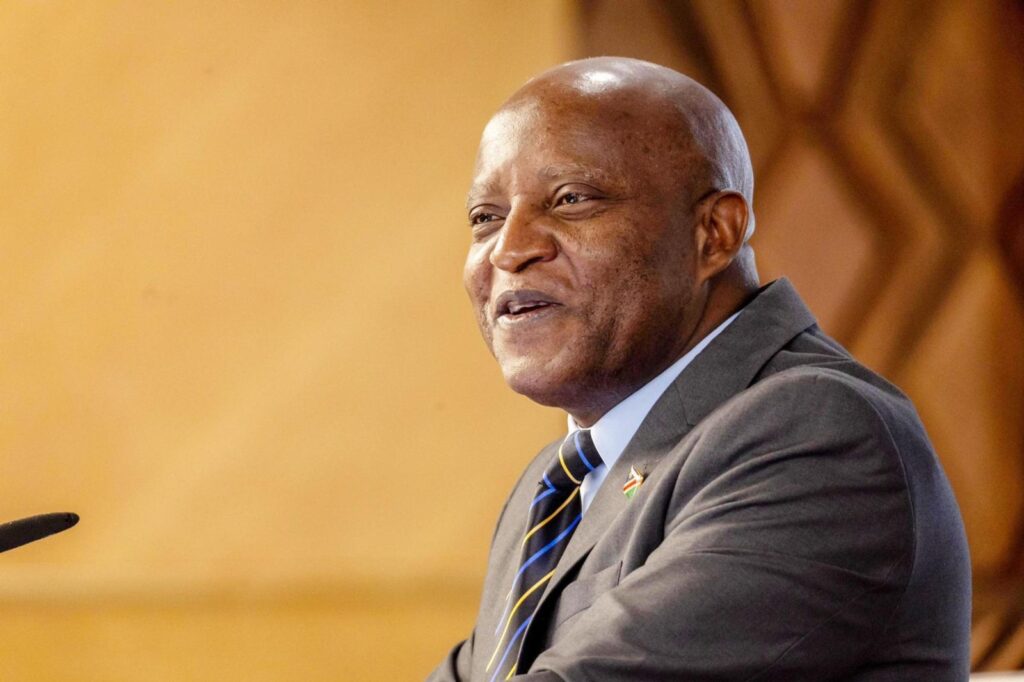
Prime Minister Elijah Ngurare announced the allocation during his keynote address at the Third Namibia Regional Water Symposium, saying the funding would support the construction of new earth dams, rehabilitation of existing water supply networks and expansion of rural water harvesting infrastructure.
“As Government we recognise that securing our water future requires sustained investment. We must expand infrastructure to meet growing demand while maintaining, rehabilitating, and protecting the systems upon which our communities already depend,” Ngurare said.
He said the government had also secured financing from international development partners to expand bulk water supply and sanitation infrastructure.
Through the Namibia Water Sector Support Programme, the government has mobilised more than N$1.89 billion in partnership with the African Development Bank (AfDB) for priority water supply and sanitation projects.
In addition, cooperation with the German Development Bank (KfW) under the Water Sector Support Programme II includes a N$1.5 billion (€75 million) loan facility to modernise critical water infrastructure.
Ngurare said infrastructure investment must be accompanied by adequate funding for operations and maintenance to ensure that water supply systems remain functional, particularly in rural areas.
“We must also ensure that new infrastructure is accompanied by adequate provision for operation and maintenance. A completed project fulfills its purpose when it continues to serve communities effectively throughout its intended lifespan. In practice this means that rural water supply offices must be adequately funded to respond to the needs of rural communities,” he said.
The Prime Minister said Namibia’s household access to safe drinking water stood at 91.4%, with access in urban areas reaching 98%, compared with 83.5% in rural areas.
However, he noted that sanitation remained a major challenge, with more than 40% of the population still practising open defecation.
Ngurare also called for increased investment in desalination technology to supplement existing water sources and improve access in underserved communities.
“Namibia must scale up desalination plants including mini desalination plants,” he said.
He further directed NamWater and officials from the Ministry of Agriculture, Fisheries, Water and Land Reform to urgently address water shortages affecting the Otamanzi, Tsandi and Okahao constituencies, as well as other affected areas.
Ngurare said the government must ensure that infrastructure development is supported by sufficient maintenance funding to prevent deterioration and guarantee reliable water supplies over the long term.