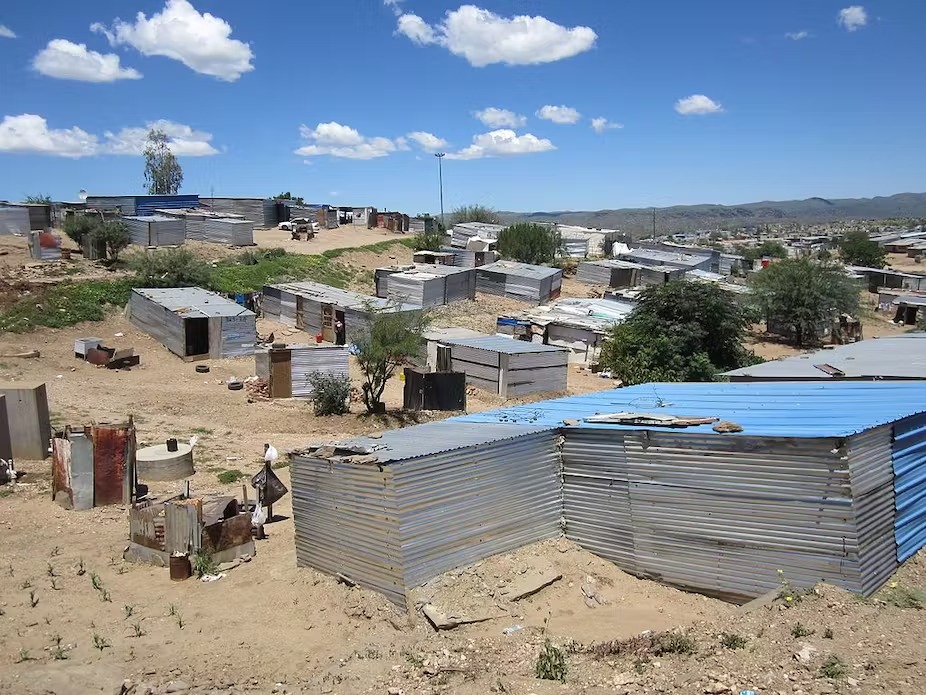
One-third of Windhoek’s population lives in informal housing, much of it in environmentally fragile areas exposed to flash floods and house fires, as rapid urbanisation continues to increase disaster risks in the capital.
Windhoek Mayor Sakarias Uunona said the growing number of people living in vulnerable settlements was placing additional pressure on the municipality to strengthen urban planning, improve infrastructure and protect households from disasters.
Speaking at the International Day for Disaster Risk Reduction commemoration in Otjomuise on Tuesday, Uunona said Windhoek’s population had reached 486,186 in 2023, according to the Population and Housing Census, with an annual growth rate of 3.3%.
He said the city’s population was expected to have exceeded 500,000 by 2026, increasing pressure on housing, municipal services and infrastructure.
The mayor cited flash floods in January 2025 that affected approximately 300 households in Otjomuise as an example of the risks facing residents in informal settlements and developing neighbourhoods.
Uunona said the municipality had adopted a Disaster Risk Reduction Strategy and Action Plan for 2026–2030 to address the growing exposure of communities and infrastructure to natural and human-induced disasters.
The strategy, approved by the Municipal Council in May 2026, seeks to integrate disaster risk management into urban planning, infrastructure investment and municipal governance.
“Please note that the Municipal Council of Windhoek recognises that a reactive emergency response is not sufficient or sustainable. Disasters undermine municipal investments and delay our developmental aspirations,” Uunona said.
He said the municipality needed to shift its focus from responding to emergencies towards preventing disasters and reducing their impact on households and public infrastructure.
Under the strategy, the city plans to update multi-hazard risk maps, strengthen the enforcement of risk-sensitive zoning regulations and establish an integrated disaster information management system.
The municipality also plans to operationalise a dedicated Disaster Risk Reduction Fund and explore partnerships with private businesses to develop insurance and other risk-transfer products.
Other planned measures include strengthening early warning systems, improving emergency preparedness and conducting disaster awareness campaigns in schools and communities.
The strategy identifies five priorities: improving the understanding of disaster risks, strengthening disaster risk governance, investing in community resilience, promoting innovation and knowledge management, and enhancing preparedness and recovery.
Uunona called on the private sector to invest in resilient urban infrastructure and urged residents to take greater responsibility for disaster preparedness and safety at household level.
City of Windhoek Chief Executive Officer Moses Matyayi said informal settlements and developing neighbourhoods remained particularly vulnerable to recurring seasonal hazards, including flash floods and house fires.
He said Otjomuise was selected to host the commemoration because of the disaster risks facing communities in the area.
“The theme ‘Resilience Starts at Home’ reminds us that disaster risk reduction is not an abstract concept discussed only in conference rooms. It is a human-centred endeavour that must protect every individual, child, elder, and person right at the household level,” Matyayi said.
He said community participation was essential to identifying local risks and developing effective measures to protect vulnerable households.
Matyayi noted that community risk assessments and focus group discussions conducted across the Khomasdal Constituency in 2019 had involved women, young people and persons with disabilities.
Windhoek became Namibia’s first local authority to join the Making Cities Resilient 2030 campaign in May 2023, receiving technical support from GIZ and the United Nations Office for Disaster Risk Reduction.
The city’s new strategy is aligned with Namibia’s Disaster Risk Management Act of 2012, the national Disaster Risk Management Policy of 2009, the Sixth National Development Plan and regional and international disaster risk reduction frameworks.
The municipality said implementing the strategy would require cooperation between central government, development partners, businesses and residents to reduce disaster exposure and protect vulnerable communities.