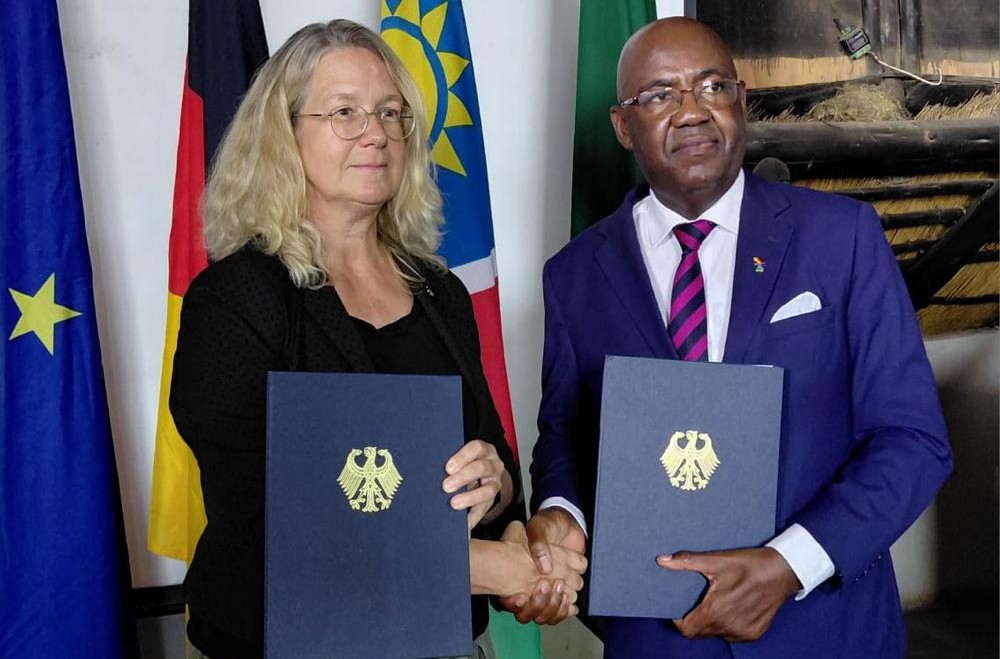
Namibia and Germany have agreed to concentrate their development cooperation on two priority areas, shifting the partnership towards climate-resilient water security and biodiversity, alongside green energy and skills development.
The agreement was reached during a Strategic Dialogue held in Opuwo from 29 to 30 September 2026, as the two countries reviewed more than 35 years of bilateral development cooperation.
Under the revised approach, the first priority will focus on climate-resilient water security, biodiversity and livelihoods, while the second will target a just green energy transition and skills transformation.
The two governments said concentrating resources in these areas is aimed at increasing the impact of development cooperation while supporting Namibia’s Sixth National Development Plan.
The partnership will target climate-change adaptation, access to safe water and the sustainable management and conservation of biodiversity, particularly in rural communities.
Namibia and Germany also agreed to explore options to strengthen the country’s preparedness to mitigate the effects of El Niño through existing cooperation programmes.
On energy, the two countries plan to use the partnership to support Namibia’s green industrialisation ambitions while expanding trade and investment opportunities and creating employment.
Skills development will form part of the programme, with continued support planned for labour-market-oriented technical and vocational education and training.
The focus will be on equipping more Namibians, particularly young people, with skills required to access employment opportunities linked to the emerging green economy.
Germany committed €43.8 million, approximately N$822 million, to Namibia in 2025 for sustainable urban development, vocational training, green and sustainable energy, and sustainable natural resource management.
The current German development cooperation portfolio in Namibia comprises more than 50 projects implemented through KfW Development Bank, GIZ and the Federal Institute for Geosciences and Natural Resources, using a combination of grants and concessional loans.
The two countries cited the securing of 283,000 livelihoods through communal conservancies and the expansion and rehabilitation of the 437-megawatt Ruacana Hydropower Plant among outcomes of previous cooperation.
Namibia and Germany also agreed to explore additional development financing instruments as they move into the next phase of their bilateral development partnership.