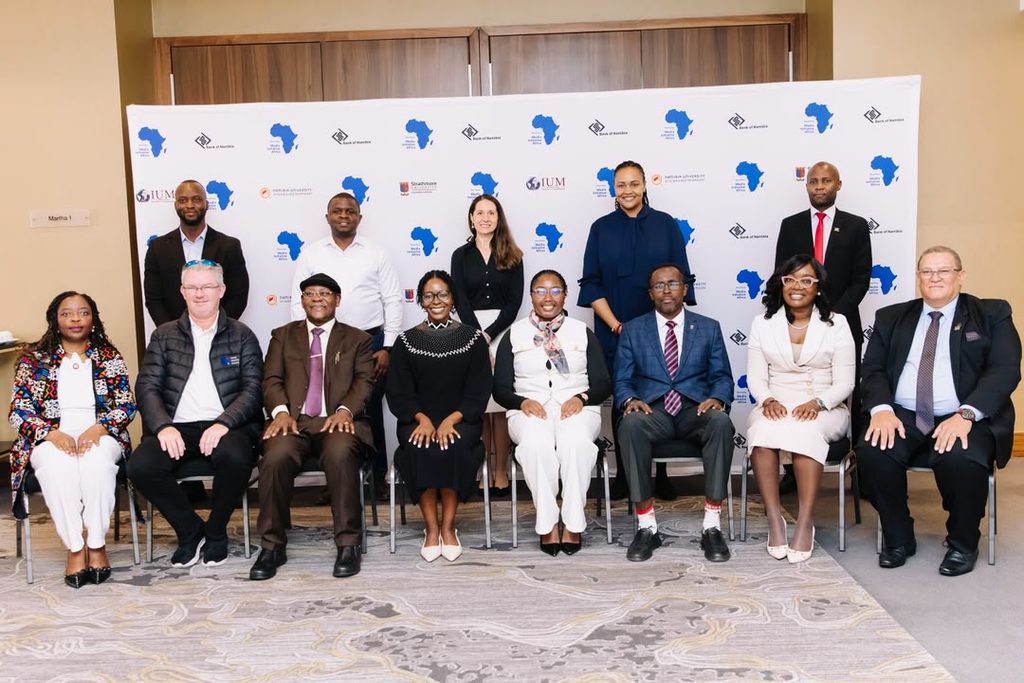
Sixty participants have been selected from more than 800 applicants for Namibia’s first Bloomberg Media Initiative Africa (BMIA) Financial Journalism Training Programme, which will run for seven months and focus on strengthening business, economic and data-driven reporting.
The programme was officially launched in Windhoek on Tuesday through a partnership between Bloomberg Philanthropies, the Namibia University of Science and Technology (NUST), the International University of Management (IUM) and Strathmore Business School.
NUST Executive Dean of the Faculty of Commerce, Human Sciences and Education Professor Efigenia Semente said Namibia is the 10th African country to host the programme, following previous editions in Kenya, Nigeria, South Africa, Ghana, Zambia, Tanzania, Côte d’Ivoire, Senegal and Ethiopia.
“These 60 participants were selected from more than 800 applicants. They come from various local media houses, such as the Namibia Broadcasting Corporation, newspapers, community radio stations, banks, ministries and regulatory institutions,” Semente said.
The Namibian cohort comprises journalists, communications professionals and participants from financial, government and regulatory institutions. The programme is expected to conclude in May 2027.
According to Semente, more than 1,000 journalists have graduated from the programme across Africa.
“Read data first, then write a story. Financial journalism demands much more of this discipline,” she said.
International University of Management Vice Chancellor Professor Osmund Mwandemele said the programme comes as Namibia’s economy becomes increasingly data-driven, creating a need for stronger financial reporting and analytical skills.
“The long-term benefits of this programme extend beyond increasing the number of highly trained business and financial journalists. It enhances financial and data reporting skills and creates a lasting network of professionals,” Mwandemele said.
Bank of Namibia Technical Advisor to the Governor Romeo Nel said financial journalism plays a role in improving public understanding of economic developments, monetary policy decisions and financial risks.
“Financial journalism is part of the infrastructure of financial stability, not by carrying the central bank’s narrative, but by turning data into understanding, building financial literacy and subjecting institutions to scrutiny,” Nel said.
He urged participants to prioritise accuracy, context and verification when reporting on financial and economic matters.
“Numbers tell us what happened. Good journalists tell us what it means,” he said.
Information and Communication Technology Minister Emma Theofelus said a gap remains between the economic information being published and the public’s understanding of how it affects their daily lives.
“There is a gap between the number being published and the number being understood. All 60 of you become an integral part in being asked to close that gap,” Theofelus said.
Bloomberg Program Manager for Corporate Philanthropy in Africa and the Middle East Ndivhuwo Nemukula said the BMIA programme was established in 2014 to strengthen data-driven financial journalism across Africa.
“Today, Namibia becomes the 10th country across the continent to deliver the Financial Journalism Training Programme,” Nemukula said.
She said the initiative has equipped more than 1,000 journalists from 21 countries with skills to report on business, finance and economic issues.
The curriculum covers economics, finance, public policy, financial markets, data analysis, climate reporting and financial journalism. Participants will also have access to Bloomberg Terminal resources and industry practitioners