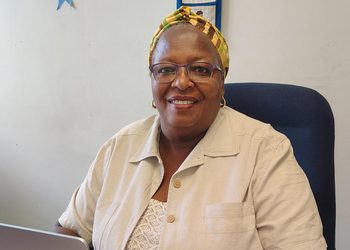
By Leena Shimpanda
At a time when my family was going through one of the most difficult periods of our lives, I experienced something in Namibia’s public healthcare system that deserves to be acknowledged.
I would like to express my sincere gratitude to the Ministry of Health and Social Services, and particularly to the staff at the Onandjokwe Intermediate Hospital, for the exceptional care they provided to my mother during the final weeks of her life.
My mother was receiving treatment in the gynaecology ward after suffering severe medical complications associated with cancer. It was an extremely difficult and emotional period for our family. Yet, throughout those challenging weeks, the doctors, nurses, counsellors, cleaners and other healthcare workers treated my mother with dignity, compassion and professionalism.
As the person who was constantly by my mother’s side, I was also deeply touched by the way the healthcare workers treated me.
I was not made to feel like an inconvenience. I was welcomed as someone who was there to care for her mother. The medical staff understood that, while their responsibility was to provide medical treatment, my responsibility was to provide emotional and personal support to my mother.
That distinction made a significant difference.
The professionalism of the doctors and nurses was evident throughout my mother’s treatment. The doctors consistently communicated with me about her condition and explained the available options. Whenever I needed to sit down with a doctor to understand her diagnosis, discuss her condition or consider how we could make her remaining time as comfortable as possible, I was met with patience and empathy.
One doctor whose care deserves particular mention is Dr. Palapala. The compassion and professionalism demonstrated during our consultations will remain with me. At a time when every conversation about my mother’s health carried enormous emotional weight, being treated with dignity and understanding mattered tremendously.
Another aspect that genuinely surprised me was the availability of medication and medical supplies.
There is often public criticism about shortages of medicines and resources in public hospitals. However, my personal experience during my mother’s treatment was different. The medication and medical supplies she required were available, and she received the treatment and supervision she needed.
This experience reminded me that while challenges undoubtedly exist within the public healthcare system, there are also healthcare professionals working every day under difficult circumstances to ensure that patients receive quality care.
The physical environment also deserves recognition.
The ward was clean and well maintained. The cleaners worked consistently to ensure that the environment remained hygienic, and their contribution should not be overlooked. Cleanliness in a hospital is not simply about appearance. For patients whose health is already compromised, a clean environment is an important part of quality care.
I also appreciated the counselling and emotional support that were made available during this difficult period. Healthcare is not only about medication, procedures and diagnoses. It is also about humanity.
And sometimes, it is the humanity shown by a healthcare worker that a family remembers long after the medical details have faded.
My mother remained under the care and supervision of the doctors and nurses until her final days. They continued attending to her until she took her last breath.
For that, I will always be grateful.
We often hear stories about what is wrong with government institutions. We hear about what is failing, what is unavailable and what should be improved. These conversations are necessary because accountability matters.
But perhaps we should also learn to acknowledge what is working.
Instead of constantly throwing stones at government institutions and speaking only about their shortcomings, perhaps we should also recognise the people who are doing their jobs exceptionally well.
My experience at the hospital demonstrated to me that public healthcare can provide care that is compassionate, professional and, in many respects, comparable to what one might expect from a private healthcare facility.
For approximately three weeks, my mother received care that I would describe as nothing short of world-class.
No amount of money can compensate a family for losing a loved one. But when a person is nearing the end of life, knowing that they are being treated with dignity, compassion and professional care provides a measure of comfort that is difficult to put into words.
To the doctors, nurses, counsellors, cleaners and every other member of staff who cared for my mother: thank you.
Thank you for seeing her not merely as another patient, but as a human being.
Thank you for allowing me to be beside my mother and for understanding how important that was to both of us.
Thank you for answering my questions, explaining her condition, providing treatment and making difficult days a little easier.
And thank you for remaining there until the very end.
To the management of the hospital, the Ministry of Health and Social Services, and particularly the staff of the gynaecology ward: please know that your work is noticed.
Sometimes, the people working inside our public institutions may not realise the profound difference they make in the lives of ordinary Namibians.
This is my way of saying: we see you.
And, from the bottom of my heart, thank you for taking care of my mother when my family needed you most.