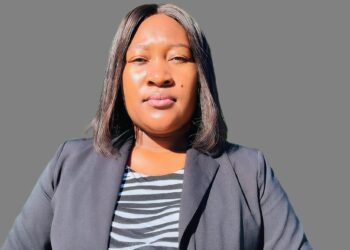
By Awie Thompson
Agriculture has always required a long-term view. A farmer makes decisions today that may only bear fruit months or even years later.
A herd takes time to rebuild, infrastructure takes time to deliver a return, and the effects of a good or difficult season extend well beyond the farm gate.
I learnt this first-hand during the seven years I spent in primary agriculture, farming cattle and crops and gaining experience in agro-processing.
Today, working with agricultural businesses from a financial perspective, I see the same principle from a different angle: the businesses that navigate difficult periods best are often those that understand their operations, know their numbers and are prepared to adapt when circumstances change.
That matters because Namibian agriculture is navigating considerable change. Climate variability, animal health, rising input costs, shifting markets, technology and logistics are all influencing the decisions producers make.
The current Foot-and-Mouth Disease (FMD) situation brings some of these pressures into sharp focus. For affected farmers, this is not simply about market disruption.
Movement restrictions can affect production cycles, cash flow, market access and livelihoods, with consequences that extend to employees, transporters, processors and rural communities.
The immediate priority must be care, cooperation and practical support for those affected. But the situation also reminds us just how exposed agriculture can be to circumstances beyond the control of any individual farmer or business.
Resilience is tested in moments like these
Agriculture has never offered certainty. Farmers make long-term decisions in an environment where weather, disease, markets and costs can change quickly, sometimes in ways that no individual business could reasonably prevent.
For producers affected by FMD, the focus right now is understandably on protecting their livestock, managing disruption and navigating the immediate impact on their businesses and livelihoods.
This is not the moment to suggest that every risk could have been anticipated or planned for.
It is, however, a reminder of why the strength of the wider agricultural ecosystem matters. Farmers need strong industry bodies, responsive financial partners, effective animal health systems, reliable markets and a sector that can work together when circumstances become difficult.
Over time, individual businesses can also build greater room to respond through sound financial management, investment in productive capacity and careful management of the resources within their control. But resilience in agriculture should never be confused with immunity from difficult circumstances.
Sometimes resilience is not about avoiding the disruption. It is about having the support, options and capacity to find a way through it.
Understanding the farm behind the balance sheet
My own journey from primary agriculture into agricultural banking has taught me that there is a practical consequence behind every number on a balance sheet.
A piece of equipment needs to improve the operation. Infrastructure must make sense within the production cycle. Livestock needs to be supported by available resources. Debt has to be managed against the timing and realities of agricultural income.
This is why financial institutions need to understand agriculture beyond the funding request.
Good agricultural banking starts with understanding the business behind that request: how it produces, where it is vulnerable, where it wants to grow and whether the financial structure supports those ambitions.
But understanding the business also means looking beyond today’s pressures to where the next opportunity for agriculture lies. And that brings us to what I believe is one of the most important questions for the next chapter of Namibian agriculture.
Rather than asking only how much more can we produce?, we should increasingly ask: How much more value can we create from what we produce?
That is a different conversation. It means looking at productivity as seriously as we look at scale, and at how stronger businesses can be built around what Namibia already produces well.
As I step into the role of Head of Agriculture at FNB Namibia, that is the conversation I want us to deepen with our clients. Our value should extend beyond financing to understanding agricultural businesses well enough to have the right conversations at the right time.
There will undoubtedly be difficult seasons ahead. But uncertainty does not remove opportunity. It makes the quality of our decisions more important.
The agricultural businesses that thrive in the years ahead will not necessarily be the biggest. They will be those able to do two things at the same time: manage today’s risks while continuing to invest in tomorrow’s opportunities.
Namibian agriculture has always demanded resilience. Our opportunity now is to turn that resilience into greater productivity, stronger businesses and more value from everything we produce.
* Awie Thompson, Head of Agriculture, FNB Namibia