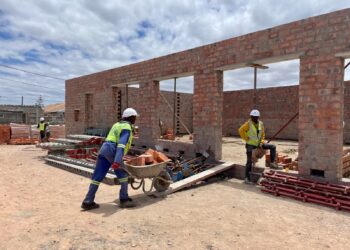
Namibian households added N$438.7 million in debt in July, driven largely by increased borrowing for houses and vehicles, as household credit continued its strongest run of annual growth in nearly three years.
Total credit extended to individuals increased by 0.6% month-on-month to N$72.74 billion, while annual household credit growth accelerated to 4.6% from 4.5% in June, according to IJG Securities.
Mortgage lending accounted for the largest share of the additional borrowing, with household mortgage balances rising by N$238.5 million, or 0.5%, during the month to N$47.12 billion.
Annual mortgage credit growth accelerated to 2.4%, its fastest pace since December 2023, pointing to increased borrowing for residential property.
Vehicle and asset finance also increased, with instalment sale and leasing credit rising by N$88.2 million, or 0.9%, to N$9.69 billion.
Annual growth in the category remained elevated at 14.6%, despite easing slightly from 14.8% in June, with IJG saying the figures continued to indicate resilient demand for vehicle and asset finance.
“Household credit growth accelerated further to 4.6% YoY from 4.5% YoY in June, extending the strongest run of annual expansion since August 2023,” IJG said.
Households also took on an additional N$108.1 million in other loans and advances, pushing the total to N$13.39 billion. Annual growth in the category increased to 5% from 4.9% in June.
Overdraft balances increased marginally by N$4 million, or 0.2%, to N$2.54 billion, although annual growth slowed sharply to 8.9% from 12.5% in June.
The increase in household borrowing contrasted with weaker demand for credit from businesses.
Corporate credit declined by N$778.7 million, or 1.5%, during July to N$52.41 billion, with annual growth slowing to 3.7% from 4.5% in June.
IJG, citing the Bank of Namibia, said the slowdown reflected lower credit uptake and net repayments by businesses in manufacturing, fishing, agriculture, wholesale and retail trade, financial services, and the energy, oil and petroleum sectors.
Corporate other loans and advances fell by N$1.79 billion, or 8.5%, to N$19.25 billion, while overdraft balances declined by N$212.4 million, or 2%, to N$10.24 billion.
Corporate mortgage lending bucked the trend, increasing by N$1.20 billion, or 9.2%, to N$14.23 billion. Annual growth accelerated to 6.5%, the strongest pace since September 2022.
The decline in corporate borrowing outweighed increased household credit uptake, resulting in overall private sector credit extension growth slowing to 4.2% year-on-year in July from 4.5% in June.
Total claims on the private sector declined by N$340 million, or 0.3%, to N$125.14 billion, marking the first monthly contraction since October 2025.