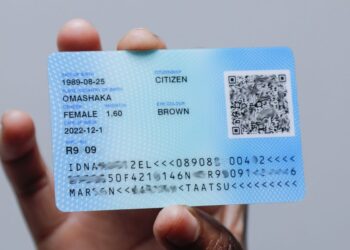
The Namibian government is moving to integrate digital services across ministries and agencies as it seeks to create a secure and interoperable public-sector digital environment.
Speaking at the launch of the National Public Key Infrastructure (PKI), Minister of Home Affairs, Immigration and Social Security Lucia Iipumbu said the next phase of the government’s digital transformation must move beyond simply placing existing services online and focus on connecting systems to improve service delivery.
The initiative is aimed at strengthening digital trust by enabling citizens, businesses and government institutions to securely verify identities, authenticate electronic signatures and confirm the integrity of documents and transactions.
“We are putting in place national infrastructure that will make it safer and easier for citizens, businesses and government to identify one another. We are also here to give meaning to the exchange of information, so that documents can be transacted with confidence,” Iipumbu said.
She said government will have to prioritise high-impact services and institutions that are ready for integration while establishing common technical, security and interoperability standards.
Strong data governance, access controls and mechanisms for measuring the impact of digital services will also be required as more government systems become connected.
Iipumbu said ministries and agencies should move away from developing isolated digital systems that cannot communicate with one another.
Instead, new government systems should be designed around common standards, secure data exchange and interoperability while protecting citizens’ privacy and personal information.
“Every ministry, office and agency cannot build its own isolated technology island. We must move towards common standards, secure data exchange, proper access controls and systems that communicate without compromising privacy and security,” she said.
“These requirements should be built into government systems. They should be designed and procured from the outset so that today’s investments do not become tomorrow’s silos. Interoperability must become a government-wide operating principle, not an afterthought.”
The Ministry of Home Affairs is expected to play a central role in the integration drive because of its responsibility for legal identity, civil registration, the national population register, identity documents, passports, citizenship, immigration and border management.
Iipumbu said a reliable digital identity system could also help reduce identity theft, fraud, compromised credentials and the unlawful movement of people using false or unverified identities.
The Civil Registration and Identification Act of 2024 is expected to further modernise Namibia’s civil registration and identification system once it comes into operation.