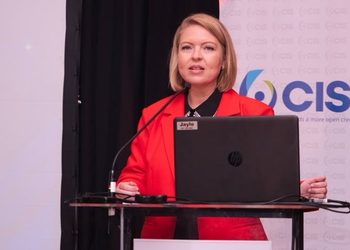
By Corny Zaaruka
Across the country, new economic frontiers are emerging. Mining continues to expand, the green hydrogen sector is attracting global attention, infrastructure investment is gathering momentum, and Walvis Bay is steadily strengthening its position as one of Africa’s most strategic trade gateways.
Opportunities that once seemed aspirational are increasingly becoming commercial realities. Yet for thousands of small and medium-sized enterprises (SMEs), the doorway into these opportunities remains frustratingly narrow.
The reasons are often misunderstood. For years, conversations around SME growth have centred on access to finance, with the assumption that capital is the primary constraint. While funding remains important, it is only part of the equation.
The more fundamental question is whether businesses are bankable: whether they are structured, documented and positioned to participate credibly in local and international trade.
Access to finance and bankability are not the same thing. A business may have a compelling product, an entrepreneurial owner and a genuine market opportunity, but still struggle to secure a major supply contract or enter an export market.
Large buyers and trade partners require more than a good business idea; they require financial records, operational capability, compliance standards and the ability to manage commercial risk. Without these foundations, many SMEs remain excluded from high-value opportunities despite having the potential to succeed.
In trade finance, I have come to think of this challenge as the Bankability Bridge—the pathway that connects entrepreneurial ambition with meaningful participation in regional and global commerce.
Building that bridge requires more than capital. It requires a deliberate approach built on four interconnected pillars.
The first pillar is risk mitigation. One of the greatest barriers facing SMEs is the risk associated with trading with unfamiliar customers and suppliers, particularly across borders.
Businesses are often expected to trust that a buyer will honour payment obligations or that goods will be delivered as agreed. For many smaller enterprises, a single failed transaction can have significant consequences.
Trade finance instruments such as Letters of Credit, bank guarantees and structured risk solutions help replace uncertainty with assurance, enabling businesses to transact with greater confidence and opening doors that might otherwise remain closed.
The second pillar is cash flow enablement. Growth creates funding pressures. Businesses frequently need to purchase raw materials, manufacture products or fulfil orders long before payment is received. This creates a financing gap that can constrain expansion, even when demand is strong.
Well-structured trade finance solutions aligned to actual business cycles give entrepreneurs the working capital they need to execute contracts, fulfil orders and pursue growth opportunities without placing unsustainable pressure on their cash resources. This is not about supporting survival; it is about enabling scale.
The third pillar, and perhaps the most transformative, is ecosystem integration. Too often, SMEs are expected to compete in isolation. In reality, the strongest pathway to growth is through participation in established value chains.
Mining operations, energy developments, infrastructure projects and large corporate supply chains create opportunities for local suppliers to grow alongside larger enterprises. When SMEs are intentionally integrated into these ecosystems, commercial demand already exists, risk is reduced and a platform for sustainable growth is created.
The fourth pillar is capability development and advisory support. Trade finance is often viewed purely through the lens of funding, but expertise can be just as valuable as capital.
Navigating trade documentation, compliance requirements, transaction structuring and market entry strategies can be daunting for emerging businesses.
Many entrepreneurs need a partner who can help them understand and overcome these complexities. Financial institutions that position themselves solely as lenders risk missing a far greater opportunity to contribute to enterprise development and economic growth.
This philosophy is not theoretical. It is increasingly shaping how we support businesses at Standard Bank Namibia.
Through the Standard Bank Blue Growth Series, delivered in partnership with the Namibia Investment and Finance Academy, we are investing in the capabilities that underpin long-term bankability.
The programme has expanded significantly for 2026, supporting 80 micro, small and medium enterprises—double the intake of the pilot cohort.
Importantly, the programme extends well beyond financial literacy. Participants receive support in areas such as business modelling, investment readiness, compliance, market access and strategic growth planning.
Recognising that many businesses begin their journeys outside the formal economy, the programme also includes a dedicated track for informal enterprises, helping entrepreneurs take the critical steps towards formalisation and commercial readiness.
The results have been encouraging. From 696 applicants in the pilot year, 40 businesses were selected to participate, demonstrating the significant demand for this type of support.
The success of Ontoko Foods, led by Jane Auala, which emerged as the 2025 programme winner, illustrates what becomes possible when entrepreneurial potential is matched with structured development, mentorship and market access.
The expanded 2026 programme seeks to build on this momentum, connecting participants with specialists, networks and trade opportunities that can unlock new avenues for growth.
Ultimately, building a more bankable SME sector cannot be the responsibility of banks alone. Policymakers have an important role to play in strengthening trade infrastructure, promoting export development and removing barriers that limit participation in established value chains.
Corporates can create meaningful impact by opening procurement opportunities to local suppliers and investing in supplier development programmes.
Development institutions can maximise their effectiveness by aligning support with commercial realities and measurable business outcomes.
When these efforts converge, the benefits extend across the economy. SMEs become stronger and more competitive.
Corporates gain capable and reliable local partners. Financial institutions can support growth with greater confidence. Most importantly, Namibia develops a more inclusive and resilient economic ecosystem capable of translating opportunity into prosperity.
The future of Namibia’s economy will not be determined solely by how much funding is made available to small businesses.
It will be determined by how many small businesses become capable of competing for, securing and delivering on the opportunities emerging across the country and the region.
That is the Bankability Bridge. And if we are serious about inclusive economic growth, it is a bridge we must build together.
* Corny Zaaruka, Head: Trade, Corporate and Investment Banking, Standard Bank Namibia