Wednesday, October 14, 2026
Subscribe
The Brief | Namibia's Leading Business & Financial News
  • Home
  • Companies
    • Finance
    • Agriculture
    • Technology
    • Property
    • Trade
    • Tourism
  • Business & Economy
  • E-PAPERreader
  • Mining & Energy
  • Opinions
    • Analysis
    • Columnists
  • Africa
No Result
View All Result
The Brief | Namibia's Leading Business & Financial News
  • Home
  • Companies
    • Finance
    • Agriculture
    • Technology
    • Property
    • Trade
    • Tourism
  • Business & Economy
  • E-PAPERreader
  • Mining & Energy
  • Opinions
    • Analysis
    • Columnists
  • Africa
No Result
View All Result
The Brief | Namibia's Leading Business & Financial News
Subscribe
No Result
View All Result
Home Latest

Finance Ministry flags major obstacles to government’s local procurement ambitions

by reporter
August 10, 2026
in Latest
8
A A
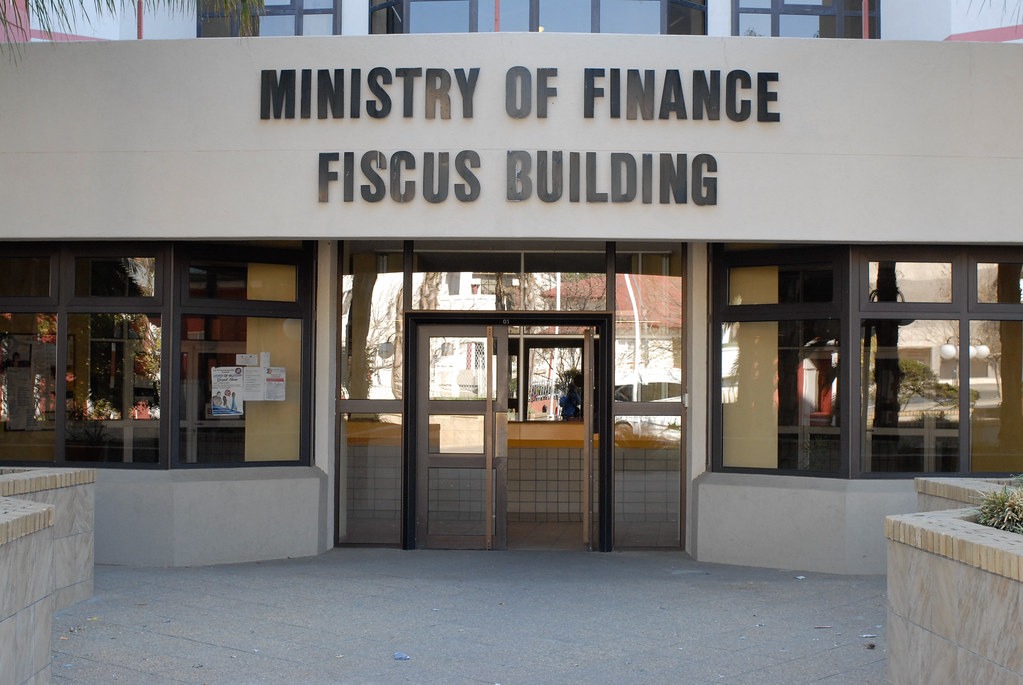
Front entrance of the Ministry of Finance, with a large sign reading'MINISTRY OF FINANCE FISCUS BUILDING' above glass doors.

Namibia’s efforts to use public procurement to support local businesses continue to face major implementation challenges, with funding constraints, limited supplier capacity, delayed payments and weak compliance monitoring undermining the objectives of the Code of Good Practice, according to the Ministry of Finance.

Speaking at the Developmental and Empowerment Policies in Government Public Procurement event held at the Government Information Centre, the Ministry’s Deputy Director for Legal Support and Compliance, Amalia Shikongo, said both public institutions and local businesses face obstacles that limit the effectiveness of the procurement framework.

Shikongo said one of the biggest challenges is the limited understanding of the Code of Good Practice among some public entities, resulting in inconsistent implementation.

“There’s limited understanding of the code in some areas. That then affects their implementation or application of the code as it’s supposed to be,” she said.

She said financial constraints also make it difficult for public entities to prioritise local suppliers while balancing value for money and competitive pricing.

“They have got an issue of limited funding for public entities. It makes it difficult for them to balance value for money and competitive pricing with developmental objectives. Because of the limited funds, they will opt for competitive bidding rather than restricting it for local businesses,” Shikongo said.

She further identified delayed payments to suppliers as a major concern, warning that late settlement of invoices places unnecessary pressure on the cash flow of local businesses.

“Most of the times public entity bidders provide the services required, but then it takes longer for their invoices to be honoured. That affects bidders because at the end of the day it impacts their cash flow,” she said.

On the supply side, Shikongo said some local businesses lack the capacity to deliver the goods and services required by government, forcing public entities to open tenders to international competition.

“Sometimes there’s no capacity to supply or provide the services. If public entities find after market research that there’s not sufficient capacity within the local market, they will have to go for open advertised bidding, which is not just for Namibian suppliers but open for every bidder,” she said.

She also said many local businesses fail to participate in procurement opportunities despite being eligible.

“There is lack of awareness within the business community. Sometimes bids are advertised for identified categories, but even those categories themselves are not participating,” Shikongo said.

The ministry also acknowledged that limited staffing affects its ability to monitor compliance with procurement regulations nationwide.

“We need to do compliance and monitoring, but because we find ourselves limited in terms of personnel, we cannot carry out the required monitoring nationwide,” she said.

Speaking at the same event, Deputy Executive Director for the Procurement Policy Unit, Phineas Nsundano, said government’s procurement policies are designed to support local businesses without compromising quality or value for money.

“If you look at the Code of Good Practice, it specifically mentions that we are going to grant this advantage, but we will not compromise on quality, on standards and value for money,” Nsundano said.

He urged local businesses to use the procurement preferences to build sustainable and competitive enterprises rather than viewing them as guaranteed government support.

“The purpose of preference to local suppliers is for them to upscale themselves so that they can compete in the mainstream of the economy. But they should not take it as a form of government handout,” he said.


author avatar
reporter
See Full Bio
Previous Post

Corporate Namibia must stop killing the entrepreneurs it claims to support

Next Post

Standard Bank Namibia becomes first local bank to offer direct access to China’s CIPS

Must Read

NSFAF disburses N$3.1bn to support 30,138 students in 2025
Latest

NSFAF recovers less than 1% of N$11.7bn student loan book

October 13, 2026
Blue diesel locomotive with yellow stripe parked on a desert track, pulling a railcar under a clear blue sky in a barren landscape.
Latest

TransNamib plans real-time train and cargo tracking system

October 13, 2026
Bar chart of wholesale basket costs by wholesaler for Sept 2026 (N$).
Latest

NAMICA records lowest wholesaler basket in September 2026

October 11, 2026
Group of officials and community members standing on a highway, cutting a red ribbon to open a new road.
Latest

Germany finances N$372.6m of Karibib-Usakos road upgrade

October 9, 2026
Four professionals pose and smile for a group photo on a stage in front of a large 'Soft Skills' banner at a conference event.
Latest

Technical skills alone not enough for career growth, young professionals told

October 8, 2026
Namibia fuel prices set to drop in June
Latest

Fuel costs push Namibia’s inflation to 5.4% in September

October 8, 2026
Load More

Related News

NamPower plans to invest N$19 billion into generation, distribution infrastructure

NamPower plans to invest N$19 billion into generation, distribution infrastructure

February 14, 2024
PowerCom plans million-dollar nationwide tower construction projects

PowerCom plans million-dollar nationwide tower construction projects

September 14, 2023
BoN makes Namibia Deposit Guarantee Authority appointments

BoN makes Namibia Deposit Guarantee Authority appointments

May 19, 2022

Browse by Category

  • Africa
  • Agriculture
  • Analysis
  • Business & Economy
  • Columnists
  • Companies
  • e-edition
  • Finance
  • Finance
  • Fisheries
  • Green Hydrogen
  • Health
  • Investing
  • Latest
  • Market
  • Mining & Energy
  • namibia
  • Namibia
  • News
  • Opinions
  • Property
  • Retail
  • Technology
  • Tourism
  • Trade
The Brief | Namibia's Leading Business & Financial News

The Brief is Namibia's leading daily business, finance and economic news publication.

CATEGORIES

  • Business & Economy
  • Companies
    • Agriculture
    • Finance
    • Fisheries
    • Health
    • Property
    • Retail
    • Technology
    • Tourism
    • Trade
  • e-edition
  • Finance
  • Green Hydrogen
  • Investing
  • Latest
  • Market
  • Mining & Energy
  • namibia
  • News
    • Africa
    • Namibia
  • Opinions
    • Analysis
    • Columnists

CONTACT US

Cell: +264814612969

Email: newsdesk@thebrief.com.na

© 2026 The Brief | All Rights Reserved. Namibian Business News, Current Affairs, Analysis and Commentary

Welcome Back!

Login to your account below

Forgotten Password?

Retrieve your password

Please enter your username or email address to reset your password.

Log In
No Result
View All Result
  • Home
  • Companies
  • Mining & Energy
  • Business & Economy
  • Opinions
    • Analysis
    • Columnists
  • Africa

© 2026 The Brief | All Rights Reserved. Namibian Business News, Current Affairs, Analysis and Commentary

This website uses cookies. By continuing to use this website you are giving consent to cookies being used. Visit our Privacy and Cookie Policy.