The Ministry of Health and Social Services will channel N$1.69 billion to regional governments in the 2026/27 financial year as Namibia accelerates the decentralisation of healthcare services.
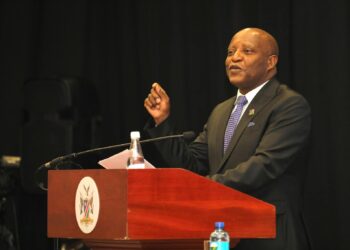
Presenting the Ministry’s strategic direction to Parliament’s Standing Committee on Tuesday, Deputy Director and Financial Advisor Almecro Boois said the allocation marks a significant shift in health funding following the transfer of delegated health functions to Regional Councils in November 2025.
The allocation, which falls under Subsidies and Current Transfers, will increase to N$1.79 billion by the 2028/29 financial year.
“A new N$1.69 billion allocation for Subsidies and Current Transfers begins in 2026/27 under Programme 02, rising to N$1.79 billion by 2028/29. This increases the category’s share of the Vote from 2.8% to 13.1% due to the delegation of various functions to regional governments,” Boois said.
He said the funding will strengthen Regional Directorates and District Health Services through the recruitment and training of healthcare workers, while improving planning, budgeting, procurement and financial management at regional level.
The ministry also plans to strengthen monitoring and evaluation systems and improve coordination between Regional Councils, local authorities and communities to ensure more effective service delivery.
The decentralisation allocation forms part of the ministry’s N$13.12 billion budget for the 2026/27 financial year, which is projected to rise to N$13.47 billion by 2028/29.
In addition to decentralisation funding, the ministry has allocated N$792.6 million for healthcare infrastructure, including hospital upgrades, new clinics, dialysis and intensive care expansion, and the replacement of ageing medical equipment.
Boois said the ministry is also targeting an improvement in medicine availability at the Central Medical Stores, with service levels expected to increase from 62% in 2024/25 to 90% over the medium-term expenditure period.
The Public Health Programme will receive N$141.46 million in 2026/27, supporting disease prevention programmes and expanding the number of people receiving antiretroviral therapy from 193,261 to 230,000 by 2028/29.