Namibia has generated nearly N$250 million from its plastic bag levy since its introduction in 2021.
Responding to questions from Member of Parliament Ester Haikola in the National Assembly, Environment, Forestry and Tourism Minister Indileni Daniel revealed that the plastic bag levy generated N$249.75 million between the 2021/22 financial year and the first half of the 2025/26 financial year. The funds have been used to support waste management, recycling and green economy projects across the country.
According to the minister, the levy generated N$24.23 million during the third and fourth quarters of the 2021/22 financial year, N$59.36 million in 2022/23, N$69.54 million in 2023/24 and N$67.68 million in 2024/25.
A further N$28.94 million was collected during the first six months of the 2025/26 financial year.
“This brings the total recorded plastic levy revenue to approximately N$249,750,858.91 over the period under review. These figures demonstrate a relatively stable and consistent revenue stream, with some fluctuations likely influenced by consumption patterns, economic conditions and policy enforcement,” Daniel said.
The minister said part of the revenue is channelled through the Environmental Investment Fund (EIF), with approximately 12% of its annual budget allocated to waste management and recycling programmes.
Funding for these initiatives increased from N$12.5 million in 2023/24 to N$20 million in 2024/25 and N$26.41 million in 2025/26, with N$26 million budgeted for the 2026/27 financial year.
Daniel said the funding has supported the development of waste management infrastructure, recycling and waste reduction programmes, environmental rehabilitation projects and public awareness campaigns aimed at reducing waste and encouraging responsible disposal practices.
She added that a significant portion of the levy has also been invested through the Green Impact Facility (GIF), which is administered by two fund managers on behalf of the EIF.
According to Daniel, the facility has invested N$135 million in private sector projects over the past four years, supporting initiatives in recycling, renewable energy, sustainable agriculture and other green economy sectors.
“These allocations support a range of interventions, including the development and improvement of waste management infrastructure, recycling and waste minimisation programmes, environmental remediation and rehabilitation activities, and awareness and behavioural change initiatives related to waste reduction. In addition, a significant portion of the levy is allocated to the Green Impact Facility, which has invested N$135 million in private sector initiatives over the past four years,” she said.
The plastic bag levy forms part of Namibia’s environmental fiscal reform programme aimed at reducing plastic waste while generating funding for environmental protection initiatives.
The levy was introduced under the Customs and Excise Act of 1998, with implementation expanded between 2018 and 2019. Levies on lightweight plastic carrier bags and other selected products were gazetted in August 2019 and are collected by the Namibia Revenue Agency (NamRA).
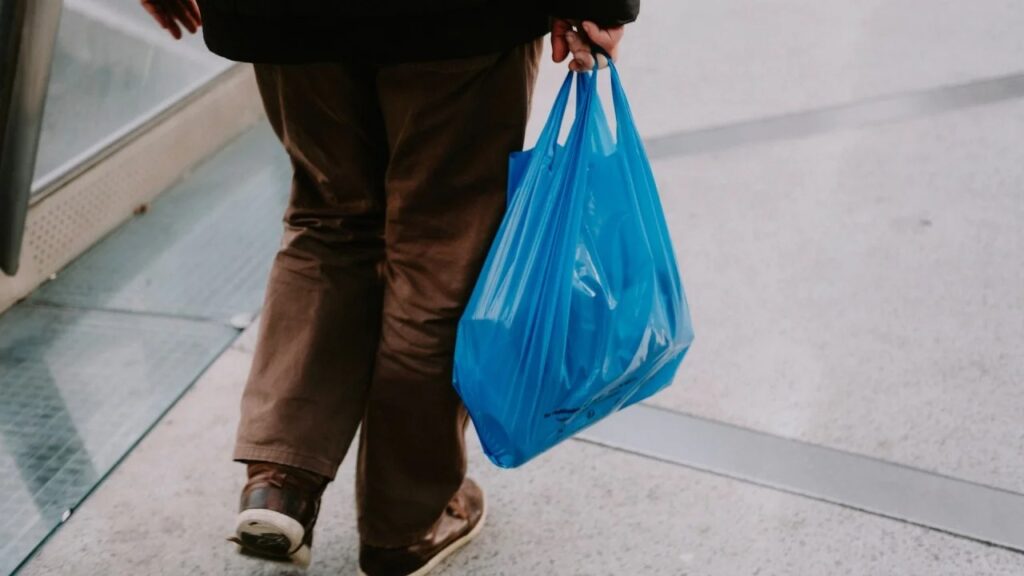
Namibia’s environmental plastic bag levy is an officially mandated N$0.50 per bag charge imposed on manufacturers and importers.
Although the government intended for retailers to pass this 50-cent levy on to consumers, some retailers have faced criticism for charging substantially more for plastic bags.