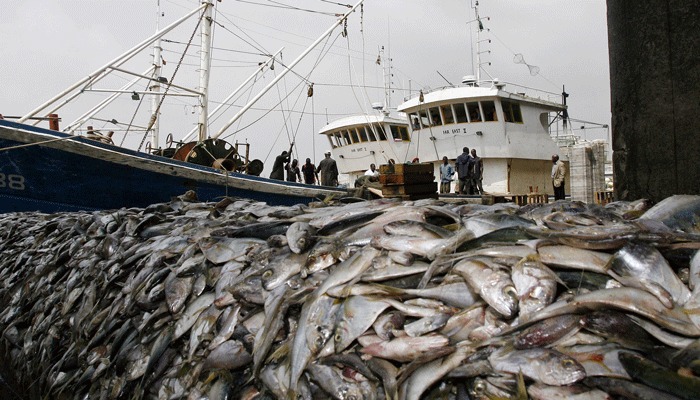
The Namibian government has raised N$68.4 million through the auction of its Governmental Objective Fishing Quotas for horse mackerel and hake following a competitive bidding process held on 22 May 2026.
In a joint statement issued on Wednesday, the Ministry of Finance and the Ministry of Agriculture, Fisheries, Water and Land Reform announced the results of the auction, which covered 11,037.11 metric tonnes (MT) of horse mackerel and 1,719.69 MT of hake.
According to the ministries, the auction generated a total of N$68.4 million, including N$9,000 and N$13,000 collected in application fees for the horse mackerel and hake auctions, respectively.
“The Horse Mackerel and Hake Fish auctions raised a total of N$68.4 million from the sale of 11,037.11 MT and 1,719.69 MT, respectively, inclusive of N$9,000 and N$13,000 raised from application fees. The auctions showed a substantial improvement in prices and no residual MT was recorded,” the statement said.
The horse mackerel auction attracted strong demand, with bidders applying for a combined 24,000 MT, more than double the 11,037.11 MT available. Six bids were received for freezer quotas and three for wet fish quotas. One bid in each category received a full allocation, while one freezer quota bid was partially allocated.
The highest successful bid for freezer horse mackerel quotas was N$3,650 per metric tonne, with a weighted average price of N$3,640.20 per metric tonne. Wet fish quotas reached a highest price of N$1,625 per metric tonne.
The hake auction was similarly oversubscribed, with bidders applying for a combined 8,139.38 MT against the 1,719.69 MT on offer.
Seven bids were submitted for freezer hake quotas and six for wet hake quotas, with one successful bidder in each category receiving a full allocation.
Freezer hake quotas fetched prices of up to N$21,600 per metric tonne, while wet hake quotas reached the same highest price. The lowest successful bids were N$18,005 per metric tonne for freezer hake and N$14,199 per metric tonne for wet hake.
The ministries said the auctions recorded a substantial improvement in prices compared with previous quota sales and resulted in the full allocation of all available quotas, with no unsold tonnage remaining.