The Otjozondjupa Regional Governor, John ||Khamuseb, has urged the government to adopt group resettlement as a key land reform strategy, warning that soaring commercial farm prices are making land ownership unattainable for most Namibians.
Addressing the State of the Region Address (SORA), ||Khamuseb said the government should prioritise shared agricultural resettlement schemes that allow several families to live and farm on the same property, rather than settling single households on large farms.
“I wish to appeal to the government to actively promote group resettlement schemes where multiple families can be accommodated and supported on shared agricultural land,” he said.
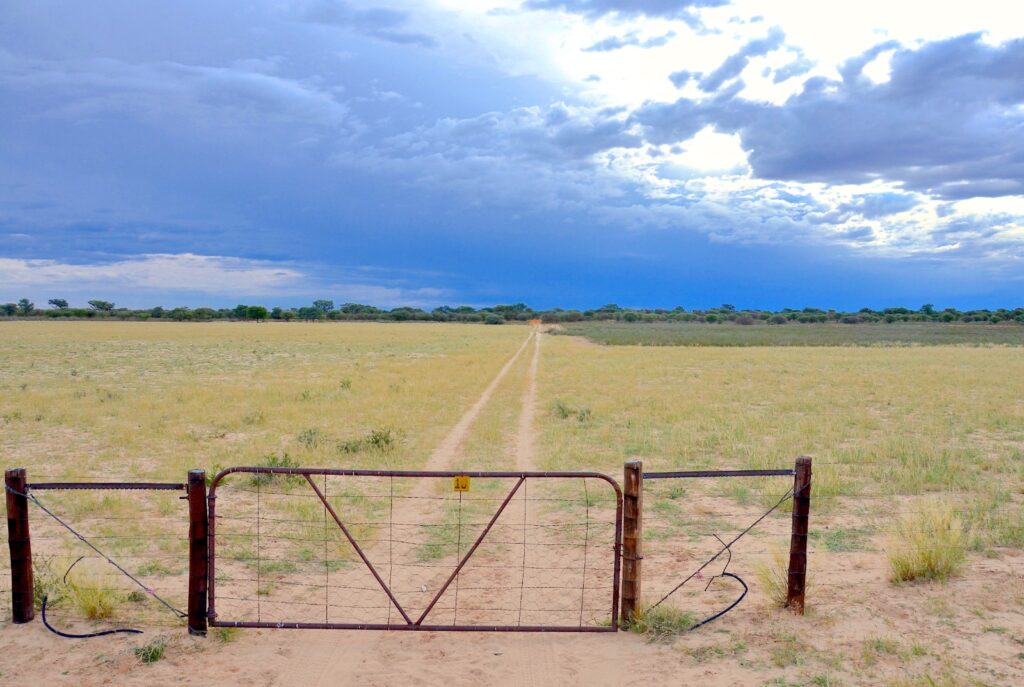
His call comes as demand for residential and agricultural land continues to grow in Coblenz, Okamatapati, Okonjatu, Kalkfeld, Okakarara, Otavi, Grootfontein and Okahandja, placing increasing pressure on government land allocation programmes.
The governor said rising farmland prices have become one of the biggest obstacles to expanding land ownership, describing current market values as unsustainable.
“It is unacceptable that a farm of approximately 2,500 hectares can cost as much as N$12.5 million,” he said, urging the government to introduce measures to curb escalating prices and make farms more affordable.
Beyond land reform, ||Khamuseb called for a tougher industrial policy centred on local value addition, backing President Netumbo Nandi-Ndaitwah’s position that Namibia should no longer export raw minerals without processing them locally.
“No mineral resources should be exported without value addition. This is the only sustainable pathway to industrial growth, job creation and economic transformation,” he said.
He also criticised labour hire practices in the mining industry, arguing that outsourcing weakens labour protections and conflicts with the spirit of the Labour Act.
The governor further revealed that funding earmarked for small and medium-sized enterprises through the Ministry of Mines and Industrialization had been returned to the Treasury after failing to reach intended beneficiaries.
“Such negligence must be treated with the seriousness it deserves. It directly undermines development efforts and denies our people the opportunity for economic empowerment,” he said.
He also called for the upgrading of the Grootfontein-Gam road through public-private partnerships, increased funding for land acquisition to strengthen food security, and vocational training that equips Namibians with skills required by the agriculture and mining sectors.
On governance, ||Khamuseb said effective institutions remain critical to development, while praising the Anti-Corruption Commission for strengthening public awareness on corruption.
“Effective governance and strong institutions remain the backbone of our democracy and sustainable development,” he said.