Thursday, August 20, 2026
Subscribe
The Brief | Namibia's Leading Business & Financial News
  • Home
  • Companies
    • Finance
    • Agriculture
    • Technology
    • Property
    • Trade
    • Tourism
  • Business & Economy
  • E-PAPERreader
  • Mining & Energy
  • Opinions
    • Analysis
    • Columnists
  • Africa
No Result
View All Result
The Brief | Namibia's Leading Business & Financial News
  • Home
  • Companies
    • Finance
    • Agriculture
    • Technology
    • Property
    • Trade
    • Tourism
  • Business & Economy
  • E-PAPERreader
  • Mining & Energy
  • Opinions
    • Analysis
    • Columnists
  • Africa
No Result
View All Result
The Brief | Namibia's Leading Business & Financial News
Subscribe
No Result
View All Result
Home Latest

Medicine pricing under scrutiny as Namaf advances reform

by reporter
June 15, 2026
in Latest
11
A A

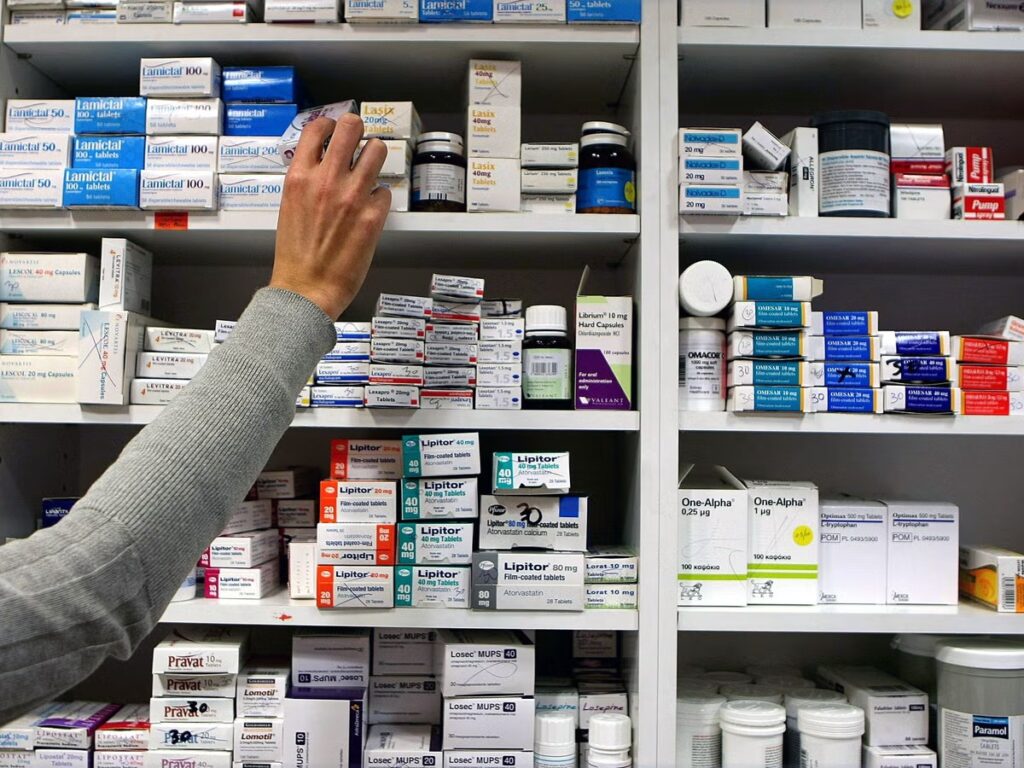
Medical aid members in Namibia are increasingly coming under pressure from rising medicine costs, with concerns growing that pharmacies are charging higher prices for medicines claimed through medical aid than for the same products purchased with cash.

The issue has come under renewed scrutiny as the Namibia Association of Medical Aid Funds (Namaf) moves to introduce a medicine pricing benchmark aimed at improving transparency in a pharmaceutical market worth more than N$3 billion annually.

The pricing disparity has become a major concern for medical aid members, many of whom report exhausting their annual medicine benefits long before the end of the year despite purchasing routine prescription medication.

Namaf Stakeholder Relations and Communication Manager Uatavi Mbai told The Brief that medicine expenditure remains one of the largest healthcare costs in the country.

According to Namaf, the Ministry of Health and Social Services spends at least N$1.2 billion annually on medicines for 80% of the population through public procurement channels, excluding medical devices.

Registered medical aid funds spend a further N$800 million annually on medicines for about 8% of the population, while the Public Service Employees Medical Aid Scheme (PSEMAS) spends at least N$1 billion on medicines for another 12% of Namibians.

“However, the cost of medicines represents the second-largest component of healthcare expenditure in Namibia at about N$3 billion annually,” Mbai said.

The concerns stem from long-standing complaints by medical aid members who say medicines often cost substantially more when processed through medical aid than when purchased directly with cash at pharmacies.

Higher claim values mean medical aid benefits are depleted more rapidly, leaving some members having to pay for medicines out of their own pockets once annual limits are reached.

In response, Namaf is implementing the Namibian NAPPI Benchmark Price File, which is intended to establish a standard benchmark tariff for medicines and medical consumables.

“This is how Namaf ensures that a transparent and fair process is followed for medicines and consumables,” Mbai said.

She said the proposed framework draws on South Africa’s Single Exit Price model while being adapted to Namibia’s healthcare and regulatory environment.

The Namibia Financial Institutions Supervisory Authority (NAMFISA) said it does not regulate pharmacy tariffs directly but oversees the conduct of medical aid funds and reimbursement practices.

NAMFISA Chief Executive Officer Kenneth Matomola, in response to an inquiry from The Brief, said the introduction of the Financial Institutions and Markets Act (FIMA), 2021, strengthens the regulator’s ability to intervene where reimbursement outcomes unfairly affect consumers.

“Although tariffs themselves are not directly regulated, NAMFISA will be better positioned to intervene where pricing practices or reimbursement outcomes result in consumer detriment,” Matomola said.

The Namibian Competition Commission (NaCC), however, said it has not received any complaints relating to anti-competitive practices involving pharmacy claims.

NaCC Corporate Communications Practitioner Dina //Gowases said the commission’s mandate includes investigating anti-competitive conduct such as price-fixing and imposing sanctions where necessary.

“The role of the Commission is enshrined in its mandate of investigating anti-competitive practices, including price-fixing, and imposing penalties and relevant sanctions,” she said.

The commission is also considering its next steps following the Supreme Court ruling in the Pharmaceutical Society of Namibia matter, which centred on medicine pricing.

The Pharmaceutical Society of Namibia, when contacted regarding the concerns, declined to comment.


author avatar
reporter
See Full Bio
Previous Post

FNB, CPBN move to cut procurement delays through faster performance guarantees

Next Post

Telecom Namibia must choose courage over comfort— Before it is too late

Must Read

Bright yellow license plates with large black numbers stacked diagonally in the frame, overlapping each other.
Latest

Govt plans new national standard for vehicle number plates

August 20, 2026
Straight highway through a desert landscape under a blue sky with a few clouds.
Latest

Roads Authority targets N$2.1bn upgrade of nine Oshana roads

August 20, 2026
Smiling woman with a black top and gold jewelry against a dark blue studio backdrop.
Latest

The bankability bridge: Turning Namibia’s economic potential into SME participation

August 18, 2026
Construction workers in high-visibility vests along a dirt road under construction beside a busy highway; muddy tire tracks, piles of soil, and distant hills.
Latest

Auas Road Phase 3 kicks off, targets major expansion over next 12 months

August 18, 2026
Construction-site fence with a Namibian Competition Commission banner in front of a modern brick building; street signs show Marien Ngouabi St and Wisserstraat.
Latest

Namibia’s merger rules out of step with regional peers despite proposed increase

August 17, 2026
Why Namibia urgently needs consumer protection laws on home auctions
Latest

Blood is no longer thicker than water

August 14, 2026
Load More

Related News

Lawmakers call for NIDA’s reintegration into Ministry

NIDA needs N$579.7m injection to sustain industrial projects

March 4, 2026
Namibia fuel prices set to drop in June

Namibia fuel prices set to drop in June

May 30, 2025
Professional headshot of a Black woman with braided hair, wearing a light blazer and pale blue blouse, against a gray studio backdrop.

Understanding the FIMA changes and why staying informed matters

August 20, 2026

Browse by Category

  • Africa
  • Agriculture
  • Analysis
  • Business & Economy
  • Columnists
  • Companies
  • Finance
  • Finance
  • Fisheries
  • Green Hydrogen
  • Health
  • Investing
  • Latest
  • Market
  • Mining & Energy
  • Namibia
  • namibia
  • News
  • Opinions
  • Property
  • Retail
  • Technology
  • Tourism
  • Trade
The Brief | Namibia's Leading Business & Financial News

The Brief is Namibia's leading daily business, finance and economic news publication.

CATEGORIES

  • Business & Economy
  • Companies
    • Agriculture
    • Finance
    • Fisheries
    • Health
    • Property
    • Retail
    • Technology
    • Tourism
    • Trade
  • Finance
  • Green Hydrogen
  • Investing
  • Latest
  • Market
  • Mining & Energy
  • namibia
  • News
    • Africa
    • Namibia
  • Opinions
    • Analysis
    • Columnists

CONTACT US

Cell: +264814612969

Email: newsdesk@thebrief.com.na

© 2026 The Brief | All Rights Reserved. Namibian Business News, Current Affairs, Analysis and Commentary

Welcome Back!

Login to your account below

Forgotten Password?

Retrieve your password

Please enter your username or email address to reset your password.

Log In
No Result
View All Result
  • Home
  • Companies
  • Mining & Energy
  • Business & Economy
  • Opinions
    • Analysis
    • Columnists
  • Africa

© 2026 The Brief | All Rights Reserved. Namibian Business News, Current Affairs, Analysis and Commentary

This website uses cookies. By continuing to use this website you are giving consent to cookies being used. Visit our Privacy and Cookie Policy.